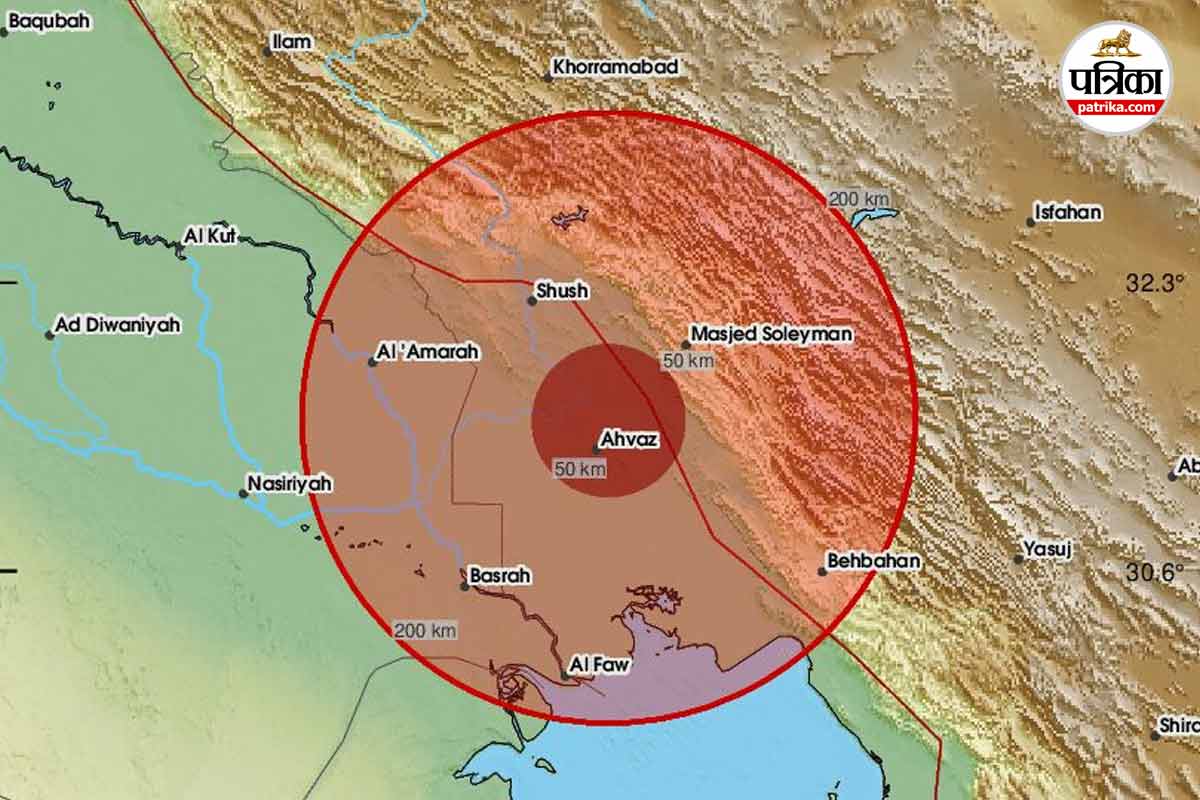
A 5.0 magnitude earthquake struck Iran’s Khuzestan province this morning, sending residents into the streets and triggering emergency mobilization across the oil-rich region. While local authorities report that search and rescue teams have reached the epicenter, the event highlights a recurring failure in regional disaster management. Iran sits atop a complex intersection of tectonic plates, making seismic activity a certainty rather than a possibility. Yet, despite repeated warnings from geologists, the transition from reactive emergency response to proactive structural mitigation remains stalled.
The Khuzestan tremor originated at a shallow depth, a factor that invariably amplifies the shaking intensity felt at the surface. In urban centers like Ahvaz, older masonry structures lack the ductility required to absorb such energy. This specific geological fault line, while not the most active in the Iranian plateau, serves as a recurring reminder of the national reliance on post-disaster logistics rather than pre-disaster fortification.
The Geography of Risk in Southwest Iran
Khuzestan sits on the edge of the Zagros Fold and Thrust Belt. This massive geological feature forms the collision zone between the Arabian and Eurasian plates. The pressure here is constant. As the Arabian plate pushes northward at a rate of roughly 20 to 30 millimeters per year, the sedimentary layers of the Zagros mountains buckle and fracture.
This process creates frequent, moderate-magnitude events like the one witnessed today. Unlike the devastating megathrust earthquakes of the Pacific Rim, these continental crust quakes are often shallower. They produce intense, localized ground acceleration. A magnitude 5.0 event in this geological setting carries enough kinetic energy to compromise unreinforced brick buildings, disrupt local water pipelines, and trigger landslides in the mountainous foothills.
The primary danger is not the magnitude itself. It is the inventory of aging infrastructure built before the implementation of stringent seismic codes in the 1990s. When these tectonic plates shift, they test the integrity of materials that were never engineered for lateral displacement.
Why Retrofitting Remains a Political Casualty
Engineering solutions for earthquake resilience are well understood. Base isolation systems, cross-braced steel frames, and reinforced concrete shear walls can render most modern structures survivable during a 5.0 or 6.0 event. In Iran, the implementation gap is wide.
Construction oversight often suffers from economic volatility. During periods of high inflation, contractors frequently resort to substandard concrete mixes or insufficient rebar density to maintain margins. This results in "paper-compliant" structures—buildings that meet the letter of the law in official blueprints but fail under real-world physical stress.
Government-led retrofitting programs exist, but they are chronically underfunded. Prioritizing the seismic upgrading of schools, hospitals, and high-density residential complexes requires a level of long-term capital allocation that competes directly with immediate social spending demands. Consequently, the state remains trapped in a cycle of disaster financing. It is fiscally easier to allocate emergency funds for tents, food, and temporary housing after a tragedy than it is to mandate the multi-year, multi-billion-dollar overhaul of the nation’s housing stock.
The Hidden Threat to Energy Infrastructure
Khuzestan is the heartbeat of Iran’s energy sector. The province houses the majority of the country's oil production infrastructure and critical downstream refining capacity. Seismic events in this area pose a silent threat to national economic stability that goes beyond human casualties.
Oil and gas pipelines are prone to "soil liquefaction" during shaking. When saturated soil loses its strength and behaves like a liquid, heavy infrastructure can sink, tilt, or rupture. Even a minor rupture in a main transmission line can lead to environmental contamination, fire hazards, and weeks of operational downtime.
Operators in the region utilize automated shut-off valves and leak detection sensors, but these systems are only as reliable as the ground beneath them. A 5.0 earthquake is a stress test. Every time the earth moves, the micro-fractures in legacy piping expand. Without comprehensive geological mapping of local soil conditions beneath every critical junction, the energy sector remains vulnerable to compounding risks that may not manifest until a larger, inevitable tremor occurs.
Moving Toward Seismic Literacy
Public awareness in Iran has improved significantly since the catastrophic Bam earthquake of 2003, which claimed over 26,000 lives. That tragedy fundamentally altered the national conversation regarding building standards. Today, drills are common, and the Iranian Red Crescent Society maintains one of the most efficient rapid-response networks in the Middle East.
However, preparedness is often limited to personal survival strategies rather than structural safety. Citizens have learned to evacuate quickly, yet they return to the same hazardous dwellings because they have no alternatives.
True resilience requires decentralized planning. Municipal governments need the authority to enforce localized zoning laws that reflect specific soil profiles—not just national averages. Furthermore, the private insurance market for catastrophic risks remains underdeveloped, leaving most homeowners entirely responsible for the financial burden of rebuilding. When the state acts as the primary insurer of last resort, it removes the market incentive for builders and property owners to invest in seismic hardening.
Until the financial risk of building poorly exceeds the cost of building correctly, the cycle of destruction will continue. The Khuzestan tremor today is a warning shot, indicating that the tectonic plates are moving exactly as predicted, while human systems continue to lag behind. One day, the magnitude will be higher, the depth shallower, and the proximity to urban density closer. Preparedness is not found in the emergency kits deployed after the ground stops shaking; it is forged in the concrete and steel laid long before the first shockwave arrives.