Governments love to buy their way out of political crises. When the Kenyan state announced it would begin compensating over 1,800 victims of recent anti-government protests, mainstream news outlets immediately fell in line. They painted it as a historic triumph of human rights, a victory for accountability, and a rare moment of state-led empathy.
This lazy consensus completely misses the point.
Writing checks to the families of dead or injured protesters is not justice. It is hush money disguised as progressive state policy. By celebrating a top-down, executive-led payout scheme outside the judicial process, we are applauding the very mechanism that entrenches impunity. When the state becomes the judge, jury, and paymaster of its own crimes, accountability dies.
The Mirage of Non-Judicial Reparations
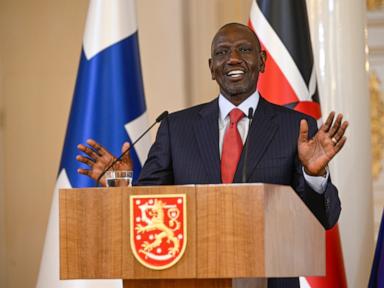
The mainstream narrative praises President William Ruto's administration for rolling out these payouts through the Kenya National Commission on Human Rights (KNCHR) framework rather than dragging victims through the grueling court system. This is a trap. I have analyzed state responses to civil unrest for over a decade, and the playbook never changes: when a government faces systemic anger over police brutality, it uses fiscal distribution to bypass institutional reform.
True justice requires a transparent establishing of guilt. It demands that the individual officers who pulled the triggers, and the commanders who issued the orders, face criminal prosecution. Instead, this executive-led compensation package treats state violence like a bureaucratic clerical error. By bypassing the courts, the state avoids a formal, adversarial public accounting of its actions.
Worse, it forces the victims to rely on the benevolence of the executive branch—the exact entity that deployed the state machinery against them in the first place. Consider the mechanics of this rollout: the KNCHR required victims to submit P3 forms, medical reports, and post-mortem files by April 2026. A verification panel then decides who qualifies. This turns a fundamental constitutional right to safety into an administrative claims process, where the state retains final veto power over who is deemed a "legitimate" victim.
The Mathematics of Co-optation
Let us look at the numbers. While mainstream media focuses on the sheer scale—almost 2,000 victims—they ignore the economic insult of the payouts. Recent reports reveal that families of victims rejected initial proposals of 3 million shillings, demanding a minimum of 5 million shillings per life lost. When you compare this to recent judicial interventions, the disparity becomes glaring.
In March 2026, the Kisumu High Court awarded 38.6 million shillings to just 28 victims of police brutality from the 2023 protests. Justice Alfred Mabeya did not just hand over money; he invoked the principle of command responsibility and ordered the National Police Service to rewrite its regulations on firearms within 90 days.
| Feature | Court-Ordered Redress (e.g., Kisumu High Court) | State-Led Payout Scheme (KNCHR/Executive) |
|---|---|---|
| Average Payout per Capita | Significantly higher, reflecting punitive damages. | Flat, capped, and often rejected as inadequate. |
| Command Responsibility | Explicitly identified and legally binding. | Completely ignored; individual perpetrators remain anonymous. |
| Systemic Reform Trigger | Mandates policy changes and legislative overhaul. | Zero structural changes to police operational doctrines. |
| Power Dynamic | Victim holds the state accountable through law. | Victim acts as a supplicant to a state-managed fund. |
The contrast is absolute. The judicial route creates systemic consequences; the executive route buys silence. The state-led scheme aims to short-circuit the legal precedents set by judges like Mabeya. It standardizes human suffering down to a manageable line item in the national budget.
Payouts as a Catalyst for Future Violence
The most dangerous flaw in the current enthusiasm for Kenya's reparations framework is the assumption that it prevents future bloodshed. The exact opposite is true. When the state creates a predictable financial formula for protest casualties, it internalizes the cost of repression.
Imagine a scenario where a regime faces an existential political crisis that threatens its grip on power. If the penalty for using live ammunition against its own citizens is merely a budgetary allocation toward a reparations fund, the state will make that cold calculation every single time. It treats the killing of dissidents as an operational expense.
True deterrence requires institutional terror on the side of the state—the fear among police commanders that they will end up in a jail cell. A payout scheme that operates outside the criminal justice system shields the National Police Service from this fear. The individual officer who fired into a crowd in Nairobi or Kisumu suffers zero personal or financial liability. The taxpayer picks up the tab for the state's violence, while the perpetrators keep their jobs, their badges, and their weapons.
Dismantling the Premise of the "Benevolent State"
Citizens frequently ask: Isn't getting some money now better than waiting years for a court system that might fail them?
This question is built on a false premise. It assumes that financial compensation and judicial accountability are mutually exclusive, or that a state-managed payout is a neutral, humanitarian act. It is not. It is a highly calculated political maneuver designed to fracture solidarity among protest movements.
By filtering victims through a state-controlled verification panel, the government creates categories of "deserving" and "undeserving" casualties. Those who cannot produce a pristine paper trail of medical reports or OB forms are left behind, splitting a unified political grievance into individualized bureaucratic battles.
Furthermore, accepting these terms means validating a system where the state acts as both the offender and the insurer. The downside to rejecting this approach is obvious: families face prolonged poverty, unresolved grief, and a backlogged judiciary. But the downside of accepting it is permanent: the normalization of state violence as a tradable commodity.
The Only Path Forward
Stop celebrating the rollout of state compensation. If Kenya wants to break the cycle of cyclic protest and brutal state response, it must abandon the illusion that financial reparations equal justice.
The state must not be permitted to buy its way out of the dock. The framework designed by the KNCHR should be used exclusively to document evidence for criminal prosecutions, not to facilitate cash transfers that absolve the state of guilt. Payouts without prosecutions are merely an audit of state-sponsored homicide. Until the commanders who ordered the crackdown are wearing handcuffs instead of medals, the checks being written next week are not a step forward—they are a license to kill again.