The financial press is currently tripping over itself to applaud Samruk-Kazyna for issuing Central Asia’s first "Panda bond." They call it a milestone. They call it diversification. I call it a high-stakes surrender of sovereignty wrapped in the shiny paper of "regional leadership."
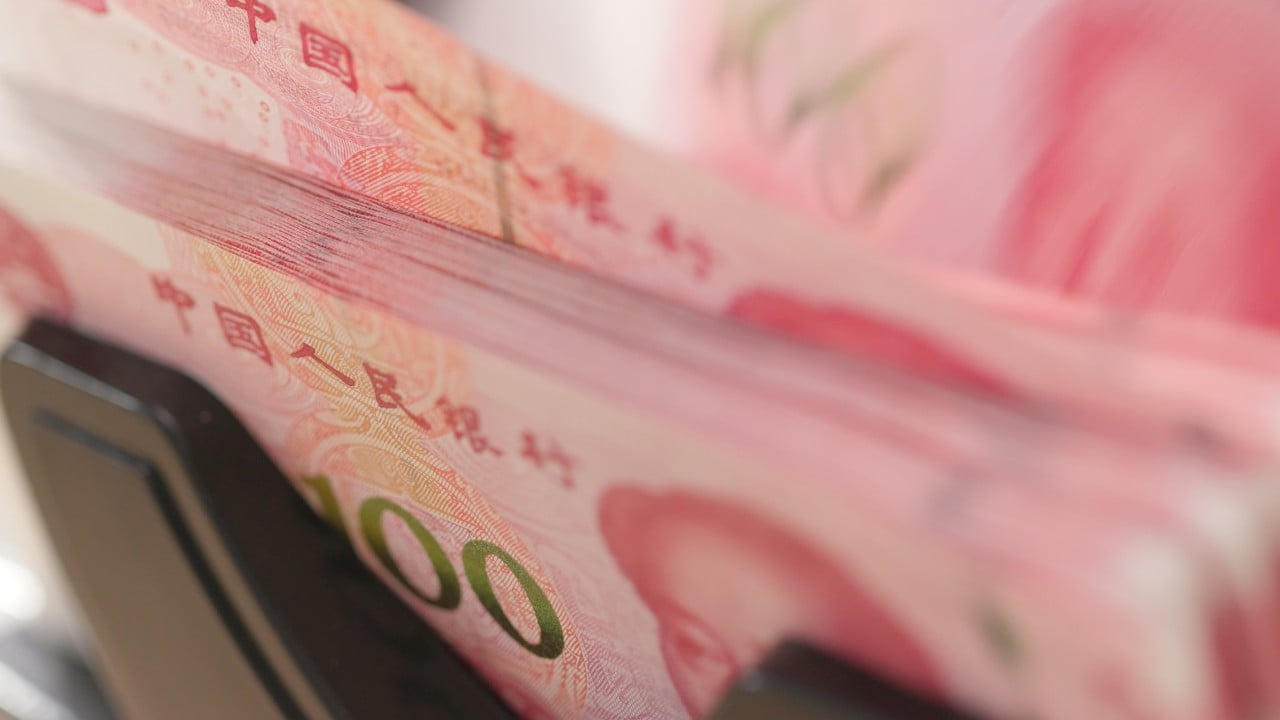
For the uninitiated, a Panda bond is a renminbi-denominated bond issued by a non-Chinese player in China’s onshore market. Kazakhstan’s sovereign wealth fund just tapped this market for 1 billion yuan. The cheering crowd says this connects the Belt and Road Initiative (BRI) with institutional capital. The reality? Kazakhstan just traded flexible, global liquidity for a niche, politically charged credit line that they can’t easily exit.
The Myth of Diversification
The "lazy consensus" in emerging market debt is that more markets equal less risk. It’s a textbook fallacy. Diversification only works when the assets aren't correlated. When you issue debt in the currency of your largest, most aggressive trading partner, you aren't diversifying risk; you are doubling down on a single point of failure.
If the Chinese economy catches a cold, Kazakhstan gets pneumonia. By denominating debt in RMB, Samruk-Kazyna has tied its repayment costs to the health of the Chinese internal market. If the yuan appreciates against the tenge—which it likely will as China manages its currency to offset Western tariffs—Kazakhstan’s debt burden balloons in real terms.
I’ve watched funds blow through billions trying to play the "cheap credit" game in specialized markets. They see a lower coupon rate and think they’ve won. They forget that the cost of debt is $Interest + Currency Risk + Political Friction$.
Why the Coupon Rate is a Lie
Promotional pieces highlight the "competitive" pricing of these bonds. Let’s look at the mechanics. China’s internal interest rate environment is currently decoupled from the Federal Reserve and the ECB. On paper, borrowing in RMB looks cheaper than borrowing in USD or EUR.
But you aren't paying back paper. You’re paying back value.
The renminbi is not a fully convertible currency. It is a managed instrument. When a sovereign entity borrows in USD, they are tapping into a deep, liquid, global pool. When they borrow in RMB, they are entering a walled garden. The "Panda" market is notorious for its lack of secondary market liquidity. Good luck trying to hedge that position when the geopolitical winds shift.
You aren't "tapping a new investor base." You are auditioning for a role as a satellite state in a regional economic bloc.
The Transparency Tax
The competitor’s narrative ignores the qualitative costs of this deal. To issue in the onshore Chinese market, you must adhere to Chinese domestic rating agencies and disclosure standards. These are not the same as the "Big Three" (S&P, Moody’s, Fitch).
By pivoting toward Chinese standards, Samruk-Kazyna is effectively signaling a move away from Western transparency requirements. This creates a "bifurcation of credit." Western investors see this move and wonder why a fund with roughly $70 billion in assets needs to crawl into the RMB market for a measly $140 million equivalent. It smells of desperation, or worse, political subservience.
The Belt and Road Debt Cycle
Let’s dismantle the "Milestone" label. A milestone implies progress toward a goal. What is the goal here? If the goal is financial independence, this is a retreat.
The history of BRI financing is littered with "milestones" that turned into millstones. From the Port of Hambantota in Sri Lanka to rail projects in Laos, the pattern is identical:
- Issue debt in a format that favors the lender's currency and legal framework.
- Tout the "strategic partnership."
- Realize the project returns don't cover the debt service.
- Negotiate an "equity swap" or a long-term lease of national infrastructure.
Kazakhstan isn't Sri Lanka, but the math doesn't change just because you have oil. By validating the Panda bond market, Samruk-Kazyna is giving China the blueprint to dominate the capital structure of every "Stan" in the region.
The Liquidity Trap
Imagine a scenario where the tenge devalues by 15% against the dollar—a frequent occurrence in commodity-dependent economies. Normally, a sovereign fund would use its USD reserves to buffer the blow. But if your debt is in RMB, and China is simultaneously tightening capital controls to prevent its own capital flight, you are stuck.
You cannot use USD to settle RMB debts with the same ease as a standard FX swap in London or New York. You are at the mercy of the People’s Bank of China (PBOC) to provide the swap lines.
This isn't a "bridge to the future." It’s a velvet-lined trap.
Stop Asking if They Can Issue, Ask Why They Must
The "People Also Ask" section of your brain is likely wondering: "Is this good for the Kazakh economy?"
The honest, brutal answer is: No.
It is good for the managers of Samruk-Kazyna who get to claim they are "innovators" in the capital markets. It is good for the Chinese banks who collect the fees and the political leverage. It is bad for the Kazakh taxpayer who now carries the risk of a currency they do not control and cannot easily hedge.
If you want to see where this leads, don't look at the press releases. Look at the balance sheets of the African nations that went all-in on RMB debt ten years ago. They aren't celebrating "milestones" anymore; they are begging for restructuring.
The Actionable Truth
If you are an investor looking at Central Asia, do not mistake this bond issue for a sign of strength. It is a sign of a narrowing of options.
True financial power is the ability to borrow from anyone, anywhere, on your own terms. Kazakhstan just agreed to borrow from one guy, in his backyard, using his rules.
Call it a "milestone" if you want to keep your PR job. If you want to keep your money, call it what it is: a surrender.
Burn the press release. Watch the currency peg. The real cost of this "cheap" money hasn't even begun to show up on the ledger.