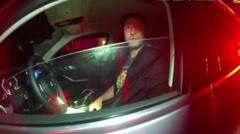
Watching a global superstar struggle to walk a straight line on a dark Hamptons road is a jarring reminder that physics and biology don't care about your Grammys. For nearly two years, Justin Timberlake's legal team fought tooth and nail to keep the Sag Harbor Police Department's bodycam footage under lock and key. They argued it would cause "irreparable harm" and subject him to "public ridicule." On March 20, 2026, those gates finally opened, and the eight-hour redacted video is exactly what you’d expect: a messy, human, and deeply uncomfortable look at a man who realized his world was shrinking in real-time.
The footage doesn't just show a traffic stop. It documents the friction between fame and the law in a way that feels raw. You don't see the polished "Prince of Pop" here. You see a 43-year-old man in a BMW smelling of alcohol, desperately trying to explain his way out of a situation that his "world tour" couldn't fix.
The World Tour Remark that Went Viral
The standout moment of the footage—the one everyone predicted would be a meme—happened almost immediately. When the officer, Michael Arkinson, asked Timberlake what he was doing in town, the singer replied, "I’m on tour. I’m on a world tour."
The officer’s response? "A what?"
"A world tour," Timberlake repeated.
"Doing what?" Arkinson asked, seemingly genuinely unaware of the celebrity standing before him.
"Um, hard to explain," Timberlake stammered. "I’m Justin Timberlake."
It’s a fascinating dynamic. In that moment, the "Justin Timberlake" brand carried zero weight. Reports later suggested the officer was so young he literally didn't recognize the former NSYNC frontman. For a man used to being the center of the universe, being just another guy in a gray BMW who ran a stop sign on Madison Street was clearly a shock to the system.
The Reality of the Field Sobriety Tests
The video captures Timberlake attempting to perform the standard battery of tests: the heel-to-toe walk and the one-leg stand. He didn't just fail; he struggled visibly. "These are, like, really hard tests," he tells the officers at one point.
Honestly, he isn't wrong—field sobriety tests are notoriously difficult even when sober—but his physical state in the footage tells a clearer story than his words did. He’s seen swaying, apologizing to the officers, and admitting his heart is racing. "I'm a little nervous," he says. This matches the original police report from June 2024, which described him as having bloodshot, glassy eyes and a "strong odor" of an alcoholic beverage on his breath.
One of the most tactical decisions Timberlake made that night was refusing the breathalyzer. You see it on the tape: the firm "no." In New York, refusing a breathalyzer is a double-edged sword. It keeps the exact Blood Alcohol Content (BAC) out of the evidence locker, but it triggers an automatic one-year license suspension. Timberlake chose the tactical "no," likely hoping a lack of data would help his lawyers later. It did. By September 2024, he walked away with a plea deal for "driving while ability impaired"—a non-criminal traffic violation.
Inside the Police Cruiser and the Holding Cell
The footage doesn't stop at the handcuffs. It follows Timberlake into the back of the police car and eventually into the station. His demeanor shifts from nervous compliance to a sort of weary disbelief. "Why are you arresting me?" he asks from the backseat. It’s a question that sounds less like a legal inquiry and more like a man bargaining with reality.
Once at the station, the realization that he wouldn't be going home that night sets in. When informed he’d be held overnight, he tells the officers, "You guys are wild, man." He even asks for the light to be left on in his cell as they lock the door. It’s these small, vulnerable details that his lawyers likely feared would "devastate" his privacy. It’s not "intimate" in a scandalous way; it’s intimate in the way that all human failure is.
Why the Release Matters in 2026
You might wonder why we're seeing this now, long after the court case settled. This wasn't a leak; it was a hard-fought win for public transparency. Multiple media outlets filed Freedom of Information Law (FOIL) requests the moment the arrest happened. The village of Sag Harbor eventually agreed to release a redacted version because the law generally leans toward public record over celebrity ego.
The footage serves as a permanent record of the "Public Service Announcement" Timberlake was ordered to give as part of his plea. At the time, he stood outside the courthouse and told the world, "Even if you’ve had one drink, don’t get behind the wheel of a car." Seeing the video of his arrest makes that statement feel less like a scripted legal requirement and more like a necessary consequence of a very public mistake.
Lessons from the Sag Harbor Stop
If you’re ever in a situation where blue lights are flashing behind you, there are a few practical takeaways from the Timberlake saga that go beyond celebrity gossip:
- Refusal has consequences: Timberlake's refusal to blow into the breathalyzer helped him avoid a criminal DWI conviction, but it cost him his license for 90 days (initially 12 months, reduced by the plea). For most people, losing a license is a job-ending event.
- The "One Drink" Myth: Timberlake claimed he had "one martini." The bodycam footage and the officer's observations suggest his "ability was impaired" regardless of the count. Laws don't care how many drinks you think you had; they care how those drinks affected your motor skills.
- Comply, don't complain: Despite his "world tour" comments, Timberlake remained largely polite. Getting aggressive with officers on camera is the fastest way to turn a traffic violation into a felony.
The next time you're out for "one drink" with friends, remember the image of a flustered pop star trying to balance on one leg in the middle of the night. It's a lot cheaper to call an Uber than it is to have eight hours of your worst night released to the global public two years later.