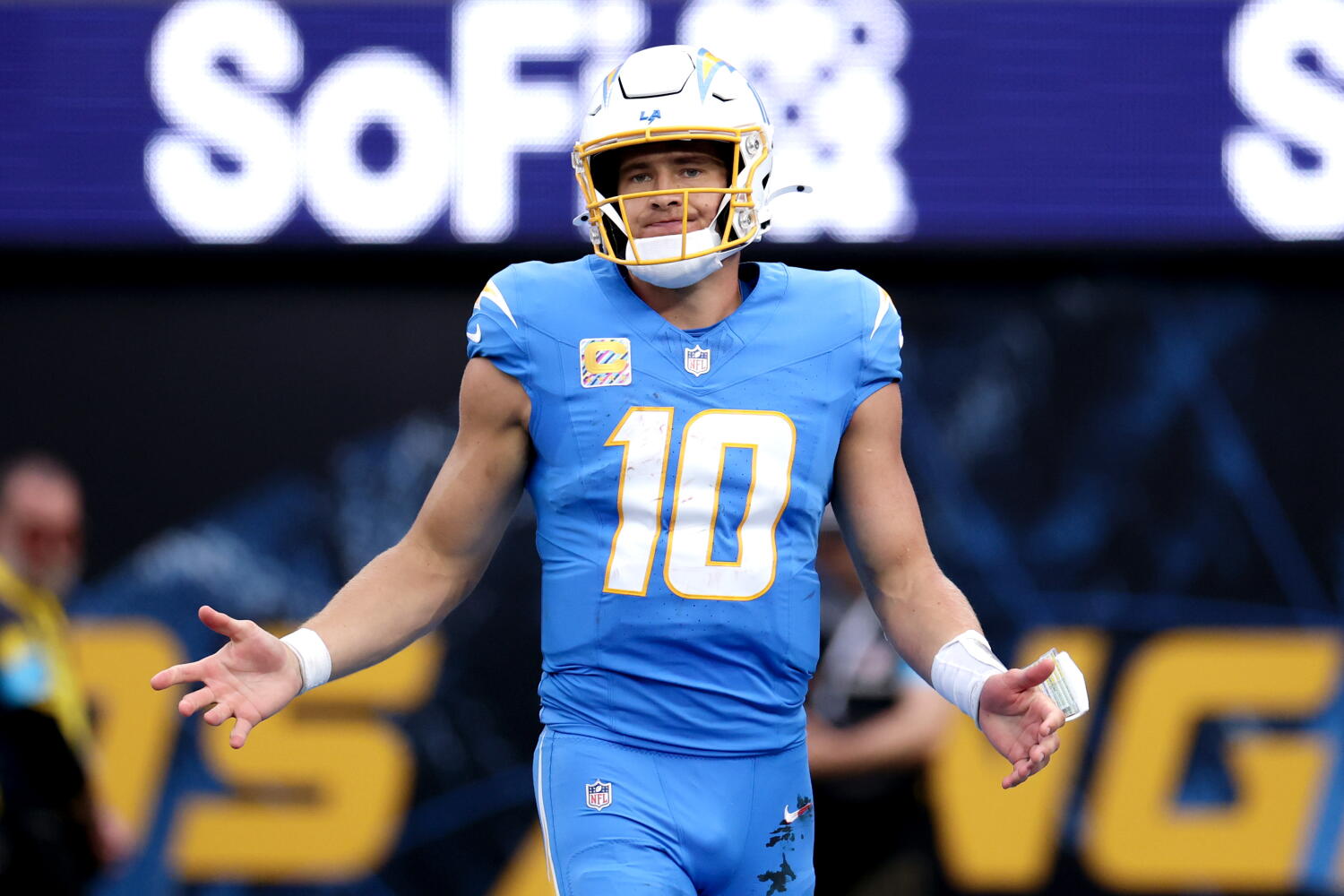
Every time the Los Angeles Chargers hit a rough patch, the exact same lazy rumor surfaces on sports talk radio. Someone floats the idea that the franchise should blow everything up and deal Justin Herbert for a haul of draft picks.
It's complete nonsense. Building on this theme, you can also read: Lamar Jackson Thumb Surgery Could End His Season According to Ravens Coach Jesse Minter.
Let's cut through the noise right away. Justin Herbert isn't going anywhere, no matter how chaotic things get in the AFC West or how many roster resets the front office navigates. Between the brutal salary cap math, the contractual protections built into his extension, and the basic reality of how hard it is to find a franchise quarterback in the NFL, trading him isn't just unlikely—it's organizational suicide.
The Salary Cap Math Makes a Deal Impossible
People love playing armchair general manager on trade machines, yet they almost always ignore the accounting rules that govern the NFL. When the Chargers signed Herbert to his massive five-year, $262.5 million extension back in 2023, they structured it with huge signing bonuses and prorated guarantees. Observers at ESPN have provided expertise on this situation.
That money doesn't just vanish if you ship a player to another zip code.
Under league rules, any remaining prorated bonus money accelerates immediately onto the trading team's salary cap as dead money. Depending on the exact timing of a hypothetical deal, Los Angeles would swallow tens of millions of dollars in dead cap space just to watch their best player throw touchdowns for someone else. You can't field a competitive roster when a massive chunk of your budget is paying a guy to wear another team's helmet.
Even a post-June 1 designation only splits that financial hangover across two league years rather than erasing it. General managers get fired for creating that kind of self-inflicted cap hell without getting a guaranteed upgrade at the most important position in sports.
No-Trade Clauses and Leverage
Money isn't the only roadblock standing in the way of a blockbuster swap. Top-tier quarterback contracts almost always include full no-trade clauses, and Herbert holds all the cards here.
Think about what happens if a player has veto power over any destination. The Chargers couldn't simply auction him off to the highest bidder with the best draft capital, like a rebuilding franchise sitting on three first-round picks. Herbert would only approve a move to a contender ready to win right now—which means any acquiring team would likely have late first-round selections anyway.
You don't trade a proven, 28-year-old franchise quarterback for picks in the late twenties. That's how teams end up wandering the quarterback wilderness for fifteen years.
What Everyone Gets Wrong About Building Around Herbert
When critics bring up a Justin Herbert trade, they usually point to the Chargers' uneven win-loss record or past playoff heartbreaks as proof that a reset is needed. That gets the cause and effect completely backward.
Look at the turbulent eras Herbert has already survived in Los Angeles. He dealt with late-game defensive collapses under Brandon Staley, constant offensive coordinator turnover during his early seasons, and severe injuries to key skill players like Keenan Allen and Mike Williams before the roster underwent major surgery under Jim Harbaugh and general manager Joe Hortiz. Through all of that organizational chaos, Herbert still put up historic passing numbers across his first four seasons, breaking records for completions and passing yards early in his career.
Blaming the quarterback for institutional instability is like blaming the engine because the tires keep blowing out.
The Harbaugh Factor Changes the Timeline
When ownership brought in Jim Harbaugh to overhaul the culture in Los Angeles, they didn't hire him to oversee a multi-year tank job. Harbaugh took the Chargers job specifically because Justin Herbert was already in the building.
Coaches with Harbaugh's pedigree don't spend their career building physical, run-heavy, trench-focused football teams only to hand the keys over to an unproven rookie. His entire blueprint relies on pairing a punishing ground game and a disciplined defense with an elite passer who can win games on third-and-long when the box is stacked. Trading Herbert would violate the single biggest reason Harbaugh returned to the NFL in the first place.
The Brutal Reality of the NFL Quarterback Market
Ask fans of the New York Jets, Chicago Bears, or Cleveland Browns how easy it is to replace a top-ten quarterback. Franchises spend decades burning top-five draft picks on prospects who flame out before their rookie deals expire.
Right now, there are maybe six or seven quarterbacks on the planet who possess Herbert's combination of size, arm strength, pre-snap processing, and durability. At six-foot-six with a rocket right arm, he can make throws into tight windows that half the starters in the league wouldn't even attempt. Even when playing through fractured rib cartilage or a broken finger on his non-throwing hand, he stayed on the field and kept the offense functional.
If you trade a guy like that, your best-case scenario is drafting someone who might—if everything breaks right—become eighty percent as good as Justin Herbert three years from now. That isn't a strategy. It's gambling with your franchise's survival.
How to Spot Fake NFL Trade Rumors Yourself
The next time a slow news week hits and a talking head floats a wild blockbuster involving a franchise quarterback, run it through three quick filters before taking it seriously:
- Check the dead cap hit on Over The Cap or Spotrac. If trading the player leaves behind more than $30 million in dead money, the rumor is dead on arrival.
- Look at the contract language. A full no-trade clause means the team has zero leverage to start a bidding war.
- Follow the coaching hires. Front offices don't hire win-now coaches and then strip away their best offensive weapon.
Ignore the clickbait graphics showing Herbert in a Raiders, Giants, or Vikings jersey. Los Angeles already solved the hardest problem in professional football, and they aren't giving the answer away.


