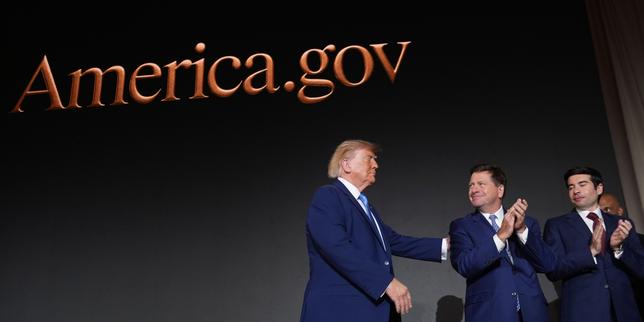
When Washington decides to grab the steering wheel of a booming technology sector, things usually get messy. But when the administration handed the keys of its artificial intelligence policy to Jay Clayton, the approach shifted dramatically.
Most people know Clayton from his years steering the Securities and Exchange Commission. Back then, he dealt with Wall Street compliance, initial coin offerings, and corporate transparency. Now, as the director of national intelligence and the White House AI czar, he sits at the absolute intersection of national security, global computing dominance, and infrastructure risk. Expanding on this theme, you can also read: Regulatory Friction and Ambient Surveillance The Economics of Wearable Capture Devices.
If you think this is just another bureaucratic reshuffling, you're missing the big picture. Clayton isn't an engineer or a tech utopian dreaming about sci-fi futures. He is a pragmatic corporate lawyer and market regulator who views technology through the cold lens of risk management, security, and national survival.
The Security and Intelligence Angle
Silicon Valley spent years treating artificial intelligence like an open-source sandbox where move-fast-and-break-things was the ultimate rule. That era is over. Experts at Engadget have also weighed in on this matter.
When Clayton stepped into the role of White House AI czar, the mandate changed from commercial innovation worship to strategic defense. Intelligence agencies don't care about your latest chatbot features. They care about supply chain vulnerabilities, foreign espionage, and weaponized models. Clayton's background running the intelligence community gives him a distinct advantage. He knows how state actors try to steal intellectual property, and he treats frontier models like critical national infrastructure.
You can see this shift in how federal agencies talk about disclosure liabilities and risk mitigation. Instead of bogging down domestic labs in endless red tape, the strategy focuses on keeping adversarial nations from leapfrogging American compute capacity.
From Wall Street to Silicon Valley
It is fascinating to watch someone transition from market oversight to technology governance. At the SEC, Clayton made a name for himself by balancing market access with investor protection. Critics sometimes called him too traditional, but supporters praised his steady hand during volatile periods.
Now, he brings that exact mindset to algorithms and neural networks. The commercial AI market feels a lot like the wild west of finance did a decade ago. Billions of dollars are sloshing into private labs, valuations are detached from traditional metrics, and everyone is hunting for the next big breakthrough. Clayton brings a regulator's skepticism to the table. He wants to know where the power comes from, who owns the underlying hardware, and what happens if the models fail under pressure.
This is why his appointment matters so much for enterprise technology. Companies building enterprise solutions can no longer afford to ignore regulatory compliance or data provenance. The rules are tightening, and they are being written by people who understand how capital markets and national security intertwine.
What This Means for the Future of Tech
If you are building products or investing in this space, you have to adapt to the new reality. The days of unregulated expansion are fading fast.
Clayton's dual focus on intelligence and artificial intelligence means federal oversight will increasingly mirror defense procurement and financial compliance. You need to look closely at your data pipelines, your hardware dependencies, and your security posture. Ignore these factors, and you will find yourself running headfirst into regulatory roadblocks.
The smartest players are already baking risk management into their core engineering loops. They aren't waiting for Washington to drop the hammer. They are aligning their roadmaps with national security priorities because they realize that in this new era, security and innovation are two sides of the same coin.
Stop viewing policy as an afterthought. It's the playing field now.
Watch CNBC's full interview Director of National Intelligence Jay Clayton
This interview provides direct context on Jay Clayton's perspective regarding the impact of the AI market and proposed federal strategies.


