Panic sells papers in Beijing, but it makes for terrible orbital mechanics. When state media pipes up about Tokyo militarizing the heavens with neural-network-equipped observation birds, the compliance departments in defense contractor boardrooms swallow the bait whole. They nod sagely, draft urgent threat assessments, and send bills to taxpayers for another generation of redundant hardware.
Ignore the noise.
Japan is not mounting an offensive crusade from the thermosphere. Tokyo’s defense planners are staring down a severe demographic cliff, a flatlining industrial base, and a neighborhood populated by rising-power revisionists who treat maritime law like a rough draft. Putting automated smart payloads into low earth orbit is not a warmongering expansion of empire. It is a desperate, brilliant survival mechanism for an island nation running out of humans to staff its radar stations.
Let us dismantle the panic.
The Lazy Consensus on Orbital Militarization
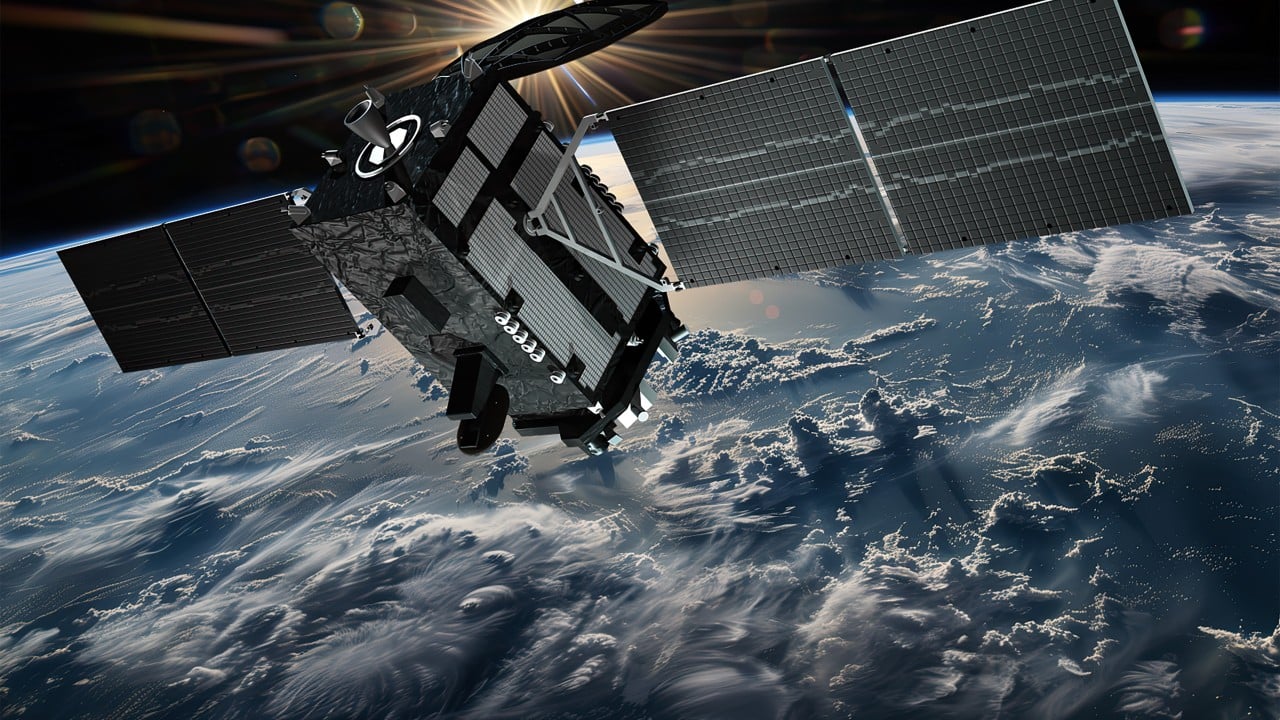
The standard narrative coming out of regional security briefings goes like this: Japan, historically constrained by constitutional pacifism, is using artificial intelligence as a loophole to build offensive military assets in space. Sensors that process imagery onboard using machine learning models are painted as autonomous targeting nodes. Micro-constellations designed to track rapid maritime movements are cast as the vanguard of a coming interstellar battle.
This view suffers from a fundamental misunderstanding of what these spacecraft actually do and why Tokyo had to build them in the first place.
I have watched defense analysts pore over telemetry data and procurement budgets for two decades. They consistently mistake defensive reaction for aggressive posture. Tokyo is not trying to dominate the solar system. They are trying to solve a very terrestrial math problem: how do you watch millions of square kilometers of maritime approaches with a shrinking workforce?
The Workforce Crisis Driving the Hardware
Look at the demographic reality on the ground. Japan’s population is aging out of existence. The Japan Self-Defense Forces face severe, chronic recruitment shortfalls. You cannot post twenty thousand young conscripts along every disputed shoal and maritime choke point because those twenty thousand young conscripts simply were not born.
When you cannot throw bodies at a problem, you throw computation at it.
Traditional earth observation required a satellite to snap a picture, beam gigabytes of raw optical data across thousands of miles down to a ground station in Ibaraki, wait hours for human analysts to squint at pixels, and then route the report up the chain of command. By the time a desk jockey in Tokyo confirms a grey-hull vessel slipping past the baseline, that vessel has already docked or fired.
Deploying processors directly onto the bus changes the timeline. When a bird spots an anomaly using onboard classification algorithms, it flags the metadata instantly. The machine does the heavy lifting of discarding empty ocean data so human operators only look at actual anomalies.
This is not an offensive strike package. It is an automated burglar alarm. If your house is surrounded by neighbors eyeing your lawn, installing motion-activated floodlights does not make you an invading army. It makes you sensible.
The Dual-Use Fallacy
Critics love to throw around the phrase dual-use technology like it is a smoking gun. Every piece of hardware that can map a typhoon can theoretically map a carrier strike group. Every antenna that tracks commercial cargo can track a destroyer.
This argument treats dual-use as a moral failing rather than a physical law of the universe. Almost everything in space is dual-use. The Global Positioning System started as a Pentagon project to guide warheads and now tells teenagers how to drive to Starbucks. Weather forecasting satellites provide critical data for agricultural planning while simultaneously helping military planners optimize missile trajectories.
Singling out Japan for putting pattern-recognition chips onto small satellites is intellectually dishonest. Every spacefaring nation does this. The United States, China, and Europe have been automating orbital data pipelines for years because the sheer volume of data makes manual processing obsolete.
When Beijing complains about Tokyo doing it, they are not worried about a surprise invasion from the stratosphere. They are annoyed that their own freedom of movement in the East China Sea is getting harder to obscure behind a wall of static.
The Reality of Japanese Aerospace Industrial Policy
To understand why these payloads look the way they do, you have to look inside the Japanese industrial ecosystem. Tokyo’s space budget is a fraction of Washington's or Beijing's. They do not have the luxury of building monolithic, multibillion-dollar spy birds that take a decade to iterate.
Japanese engineering firms have leaned hard into mass-producible micro-satellites precisely because they are cheap, redundant, and easily replaced. If a single optical bird gets blinded or knocked out of orbit by space debris, it is a rounding error on a spreadsheet, not a national security catastrophe.
This distributed architecture makes strategic sense, but it terrifies central planners who prefer neat, predictable enemy profiles. A constellation of fifty cheap, smart satellites is resilient. You cannot decapitate the network by taking out a single ground station or jamming a single downlink. It is decentralized resilience built by a nation that knows it cannot afford a single point of failure.
Stop Asking the Wrong Questions
If you are still asking whether Japan's space program violates its constitutional commitment to exclusively defense-oriented capabilities, you are fighting a ghost from the nineteen-seventies. The constitution was written before micro-processors existed, let alone autonomous orbital processing.
The real question is not whether Tokyo is breaking old rules. The real question is how long any mid-sized nation can maintain sovereign situational awareness in an era where orbital dominance belongs exclusively to massive conglomerates and autocratic superpowers.
Japan is fighting for its slice of the cosmic commons using the only tools left in its kit: smart software, miniaturized hardware, and sheer engineering discipline.
The next time someone tells you Tokyo is weaponizing the heavens, ask them how many sailors they expect Japan to recruit from a shrinking island nation to watch the water manually. When they do not have an answer, you will know they are selling tickets for a panic that never arrived.