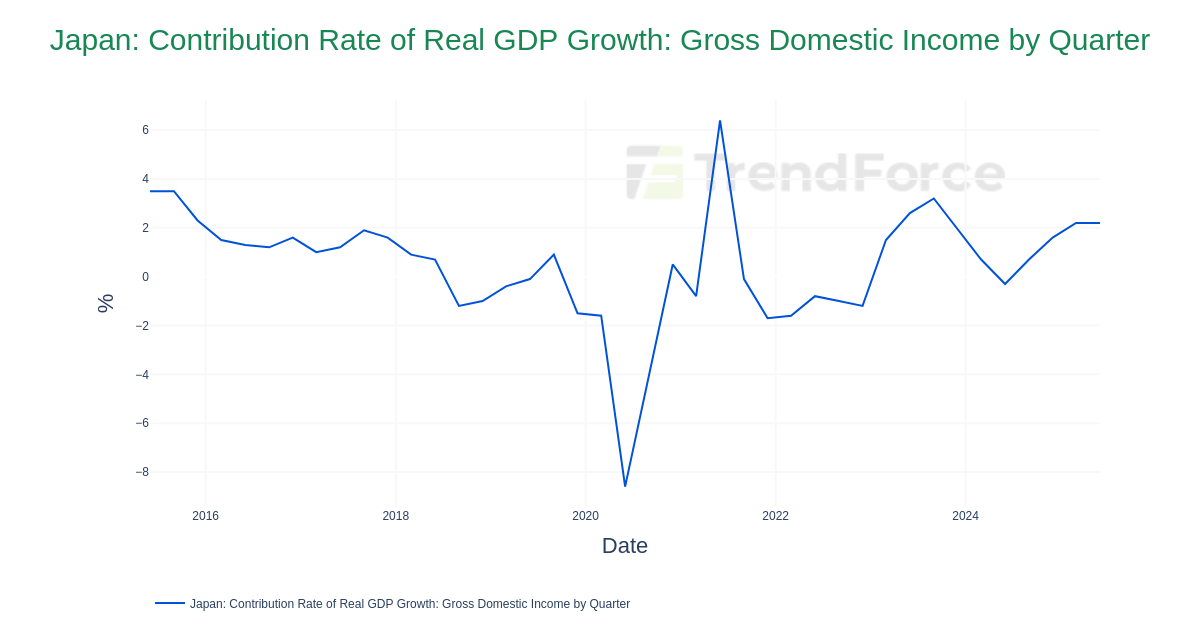
Japan expanded at an annualized rate of 1.1% in the second quarter, coming in well below consensus forecasts and exposing severe underlying weaknesses in consumer spending. Markets wanted a triumphant rebound from the inflation shocks of previous quarters. Instead, analysts found an economy sputtering against the dead weight of stagnant wage growth and stubborn price pressures that continue to outpace household earnings.
The headline figure tells only a fraction of the story. Beneath the surface of that tepid 1.1% annualized growth rate lies a domestic market where ordinary citizens are quietly cutting back on essentials. Economists tracking the quarterly data point to persistent cost-of-living increases that have finally broken consumer resilience. When nominal wages fail to match real inflation, households stop dining out, defer major purchases, and hoard cash. Gross Domestic Product calculations might capture an expansion on paper, but the composition of that growth reveals an economy moving forward on fumes rather than genuine momentum. For a different view, see: this related article.
The Consumer Spending Wall
For decades, economic policymakers in Tokyo relied on a predictable script. Prime monetary easing, weak currency valuations to boost export power, and corporate tax incentives would eventually trickle down into broader prosperity. That transmission mechanism is broken.
Real household consumption contracted or remained effectively flat during the period under review. People are paying significantly more for groceries, utilities, and daily necessities without seeing a corresponding bump in their paychecks. Small and medium enterprises, which employ the vast majority of the Japanese workforce, struggle to pass on rising supply chain costs to consumers who simply refuse to pay higher prices. Further coverage on this trend has been published by The Motley Fool.
Consider a hypothetical neighborhood bakery in downtown Osaka. The cost of imported flour and butter has climbed steadily over the past two years due to a weak yen. The owner cannot raise the price of a standard loaf of bread past a certain psychological threshold without losing customers entirely. Profit margins evaporate. The owner delays hiring part-time help and holds off on wage increases. Multiply this small business scenario across millions of enterprises nationwide, and you understand why macro indicators look anemic.
Export performance provided some cushion, but it cannot carry the entire burden alone. Foreign demand for automobiles and specialized machinery remains decent, yet global economic headwinds in major markets like China and the United States threaten to clip those wings as well. Relying on external trade to mask domestic anemia is a dangerous game.
The Currency Conundrum
At the center of this economic squeeze sits the persistent weakness of the Japanese yen. A depreciated currency used to be the ultimate weapon for Japan Inc., swelling the overseas profits of multinational giants like Toyota and Sony when converted back home.
Today, that weapon has turned inward. Japan imports the vast majority of its energy and a significant portion of its food. A historically weak currency means importing inflation on a massive scale. Every drop in the exchange rate translates directly into higher utility bills for families and higher input costs for manufacturers.
The Bank of Japan finds itself trapped in a historical bind. Governor Kazuo Ueda faces a fractured mandate. Normalizing monetary policy by raising interest rates too quickly risks triggering a rout in the government bond market and crushing heavily indebted domestic corporations. Keeping rates near zero for too long perpetuates the currency depreciation cycle that punishes ordinary consumers at the gas pump and the supermarket checkout counter.
Structural Bottlenecks And Labor Realities
Demographics cast a long shadow over every quarterly report out of Tokyo. A rapidly aging population means the pool of working-age citizens shrinks year after year.
Corporations hoard cash reserves rather than investing aggressively in domestic plant and equipment because the domestic consumer base is contracting in absolute terms. Why build a new factory for a shrinking market? Instead, capital flees overseas in search of growth in faster-moving economies across Southeast Asia and the West.
Labor shortages are acute, yet they have failed to trigger the kind of explosive wage growth that economic theory predicts. Employers rely on non-regular workers, automation, and older retirees to fill gaps without committing to long-term wage commitments that bloat fixed overhead.
The government continues to roll out stimulus packages designed to cushion the blow, but these temporary subsidies rarely address structural impediments. Handouts do not alter the trajectory of a declining labor force or fix a tax system that discourages secondary earners from entering the full-time workforce.
Investors watching Tokyo must look past the initial disappointment of a 1.1% annualized growth print and confront the structural reality. Japan is not failing overnight, but it is locked in a slow-motion struggle against arithmetic. Until real wages sustainably outpace inflation and consumer confidence recovers its footing, every expansion cycle will remain fragile, hesitant, and perpetually vulnerable to the next external shock

.full.3529161.png)
