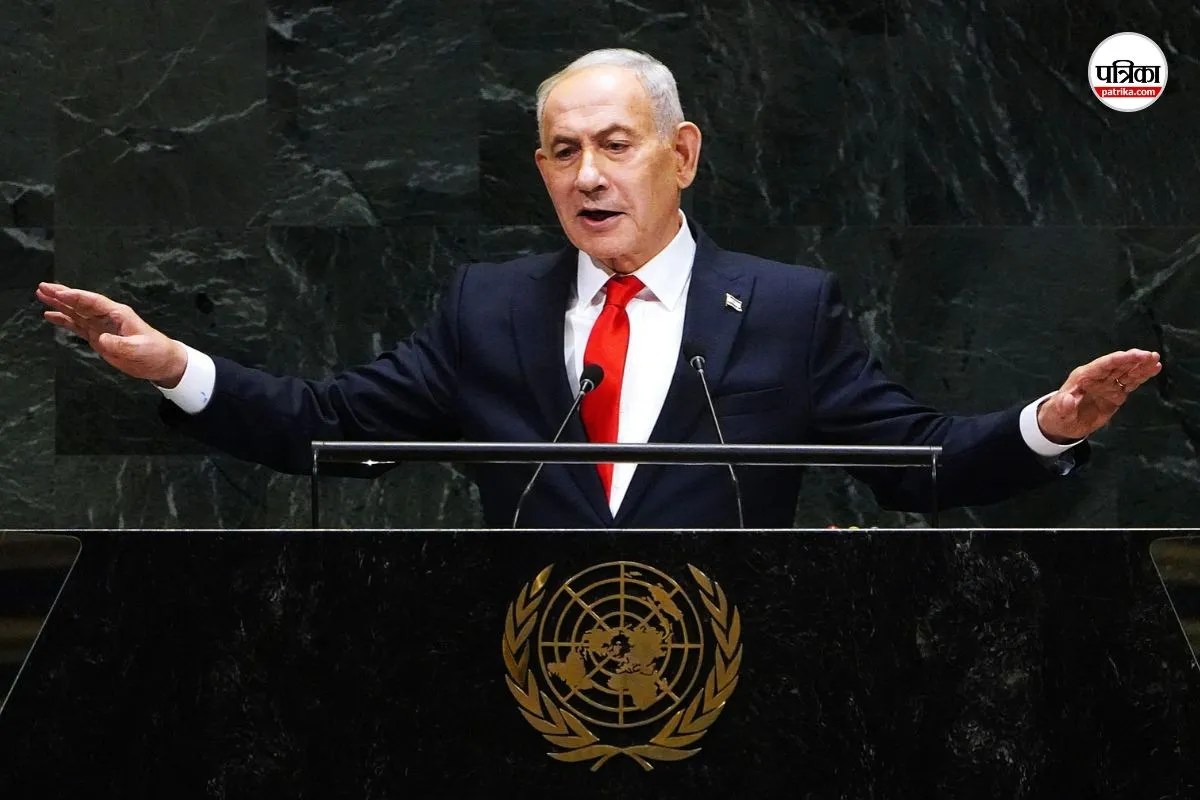
The Israeli electoral system does not reward pluralities; it rewards the precise assembly of a 61-seat bloc within a 120-seat parliament, turning fractional shifts in voter turnout into existential threats for incumbent coalitions. When Benjamin Netanyahu’s Likud party alleges that Arab-majority factions manipulated the ballot to alter the seat distribution, the claim represents a calculated political maneuver rooted in the structural vulnerabilities of Israel's proportional representation model.
To understand why a single bloc's accusation of fraud carries immediate operational weight, one must deconstruct the arithmetic of the Knesset. Israel operates under a single, nationwide electoral district using closed-list proportional representation. Every valid vote cast across the country goes into a single pool, and seats are allocated using the D'Hondt method—locally known as the Bader-Ofer rule—which slightly favors larger parties and surplus-vote agreements. Because no single party has ever won an outright majority in Israeli history, governance depends entirely on post-election coalition building.
The Structural Threshold and the Zero-Sum Seat Allocation
The central bottleneck in Israeli politics is the electoral threshold, currently set at 3.25% of the total valid votes. Under current law, a party must clear this barrier to secure a minimum of four seats in the Knesset. If a party falls short by even a fraction of a percentage point, its votes are discarded entirely from the seat-allocation formula.
This threshold creates a brutal zero-sum dynamic between competing ideological blocs:
- The Threshold Multiplier Effect: When a smaller party representing Arab citizens—such as Ra'am or the Hadash-Ta'al alliance—crosses the 3.25% line, it immediately claims four or more seats that would otherwise be distributed among the remaining qualifying parties.
- Bloc Depletion: In a deadlocked parliament where the pro-Netanyahu right-wing religious bloc and the anti-Netanyahu opposition consistently hover between 58 and 62 seats, the survival of a single Arab faction above the threshold directly strips the right-wing bloc of its path to a majority.
- Turnout Sensitivity: Because the 3.25% threshold is calculated as a percentage of total valid ballots cast, an increase in turnout among Arab-Israeli citizens raises the absolute number of votes required for any small party to survive, while simultaneously boosting the seat count of the Arab factions themselves.
Likud’s allegations of widespread irregularities in Arab-majority municipalities target this exact mathematical fulcrum. By questioning the legitimacy of ballots cast in these districts, the party is attempting to challenge the validity of the denominator used to calculate the final seat distribution.
Deconstructing the Allegations of Electoral Manipulation
In parliamentary systems with razor-thin margins, post-election rhetoric serves as an extension of the campaign itself. The accusation that Arab parties "stole votes" through rigging relies on specific operational claims regarding polling station oversight, voter identification, and ballot counting procedures.
Polling Station Mechanics and Oversight
Israel’s election infrastructure is managed by the Central Elections Committee (CEC), an independent body headed by a Supreme Court justice and composed of representatives from existing Knesset factions. At the ground level, polling stations are staffed by secretaries appointed by the CEC alongside observers representing competing political parties.
Likud’s operational argument centers on the assertion that in predominantly Arab towns and villages, right-wing parties lack sufficient local personnel to staff every polling station with dedicated observers. The hypothesis advanced by Likud strategists posits that without opposition monitors physically present inside the room during the counting phase, local election officials or partisan actors could theoretically inflate turnout numbers or misclassify spoiled ballots.
Distinguishing Verified Irregularities from Systemic Fraud
A rigorous audit of past Israeli election cycles demonstrates a sharp distinction between localized administrative errors and systemic vote rigging. Following previous elections in 2019 and 2020, the CEC and the Israel Police investigated specific complaints regarding ballot stuffing and discrepancies between the number of registered voters who signed in and the number of envelopes found in the ballot boxes.
In those documented instances, the CEC invalidated results at a handful of individual polling stations—typically fewer than a dozen out of more than 10,000 nationwide. The total number of disputed votes amounted to a few thousand, a figure statistically incapable of altering the national seat allocation by even a single mandate. The claim that systemic fraud shifted the national outcome remains an unsubstantiated political hypothesis rather than an empirical reality supported by CEC audits or judicial rulings.
The Three Strategic Functions of Fraud Narratives
When a dominant political party deploys allegations of electoral theft without presenting forensic evidence capable of overturning the results in court, the strategy is designed to achieve specific political objectives rather than legal remedies.
- Delegitimizing Potential Coalition Partners: The primary objective is to render Arab-majority parties politically toxic as coalition partners for center-right or centrist Zionist factions. If a party is successfully framed as the beneficiary of illicit ballots, any mainstream leader attempting to include that faction in a governing coalition—or even rely on its external support for a confidence-and-supply arrangement—faces severe domestic backlash.
- Consolidating the Base for Subsequent Elections: Israel’s frequent election cycles require parties to maintain continuous mobilization. Framing a narrow defeat or a parliamentary stalemate as the result of external sabotage rather than strategic miscalculation prevents voter attrition and sustains grievance-driven turnout for the next campaign.
- Pressuring the Central Elections Committee: Aggressive public challenges force the CEC to dedicate massive administrative resources to manual recounts, forensic audits of protocol sheets, and prolonged legal hearings. This delays the official certification of results, buying crucial time for backchannel negotiations aimed at peeling away individual lawmakers from rival blocs.
The Limitations of Legal Challenges in Proportional Systems
Attempting to alter Knesset arithmetic through post-election litigation faces severe structural constraints under Israeli administrative law. The barrier to overturning certified results is intentionally high to prevent perpetual political paralysis.
First, the burden of proof rests entirely on the petitioner. A party alleging fraud must produce specific, station-by-station evidence—such as signed observer protocols contradicting official tallies or verified cases of identity theft—rather than statistical anomalies or broad demographic assumptions.
Second, the proportionality of the remedy limits its political utility. Even if a court or the CEC determines that severe irregularities occurred at twenty specific polling stations, the standard remedy is the invalidation of those specific ballot boxes or the ordering of a localized re-vote. Because Knesset seats require roughly 30,000 to 40,000 votes per mandate depending on overall turnout, invalidating a few thousand votes rarely crosses the mathematical threshold needed to transfer a seat from one party to another.
Third, the Bader-Ofer surplus-vote agreements complicate legal maneuvers. Parties enter into pre-election pacts to pool their leftover votes after initial seat allocations. Altering the vote total of one party triggers a cascading recalculation across paired factions, meaning a legal challenge designed to hurt an opponent can inadvertently strip a seat from an ideological ally.
Tactical Reality and the Path Forward
The recurring deadlock in the Knesset is not a byproduct of compromised ballot boxes; it is the inevitable output of a fractured electorate operating within a hyper-proportional voting system. While allegations of rigging in Arab-majority districts serve as a potent rhetorical tool to delegitimize rival blocs and rally conservative voters, they cannot overcome the fundamental arithmetic of the 61-seat requirement.
Political actors seeking to break the stalemate must abandon post-election litigation strategies and focus on two structural variables: maximizing turnout within their own demographic strongholds to depress the relative weight of minority voting blocs, and engineering pre-election mergers among smaller ideological factions to ensure zero votes are wasted beneath the 3.25% threshold.