Maps are quiet things. They lie flat on school desks and library walls, pretending the world is settled, colored in neat blocks of blue and green, separated by borders drawn with ink that dried decades ago. But maps are ghost stories. They tell you where people agreed to stop fighting, not where the friction actually lives.
Consider a stretch of cold water in the northern Pacific, where the wind smells of salt and old iron. Here, four volcanic islands rise out of the grey sea like the spine of a sleeping leviathan. To Moscow, they are the Southern Kurils, won at the heavy, smoke-choked end of a world war that ended eighty years ago. To Tokyo, they are the Northern Territories, stolen land, an open wound on the nation's eastern edge. You might also find this connected article insightful: The Final Severance of the West Bank.
For generations, fishermen and diplomats have stared across this narrow channel. They have traded bitter notes, drafted proposals, and chased the elusive ghost of a formal peace treaty that never quite materialized. Everyone pretended that time might soften the edges, that commerce or quiet diplomacy might eventually blur the line.
They were wrong. As extensively documented in latest reports by USA Today, the results are widespread.
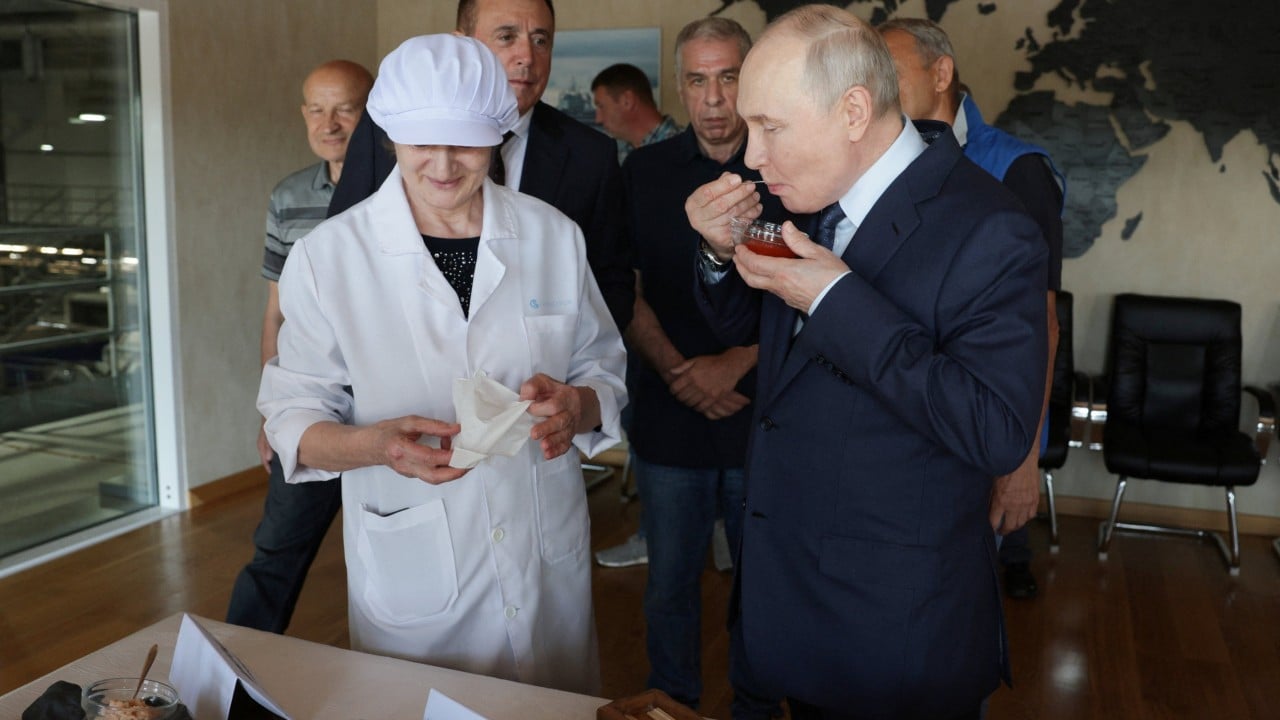
The friction flared into sharp, undeniable focus when President Vladimir Putin stepped off an aircraft onto Etorofu, the largest of the disputed islands. It was a deliberate, heavy boot-fall on disputed earth. It was a statement made in flesh and steel, signaling that Moscow views the conversation as closed, no matter how loudly Tokyo insists it has only just begun.
A political visit of that magnitude rarely travels alone. Power likes to echo itself.
Days later, the sea off those contested shores turned violent. The Russian Pacific Fleet materialized in the mist, a concentrated display of raw maritime force designed to shake the horizon. Imagine the scene from the bridge of a coastal watchtower on Hokkaido, looking out toward a horizon that suddenly belongs to someone else.
Out in the deep water, the nuclear-powered submarine Omsk let fly a salvo of heavy cruise missiles. Not far away, the guided-missile cruiser Varyag, flagship of the fleet, barked two anti-ship missiles into the overcast sky. From the rugged cliffs of the islands themselves, land-based Bastion coastal defense systems roared, hurling Oniks missiles across three hundred kilometers of open ocean to shatter designated targets with mechanical precision.
Every missile hit its mark. Every explosion sent a shockwave through the water that registered far beyond the immediate blast zone.
The message was not whispered. It was broadcast in fire and low-frequency thunder.
Tokyo reacted instantly, calling the military buildup unacceptable and lodging furious diplomatic protests. Ambassadors were summoned in both capitals. Old grievances, sharpened by modern geopolitics and Japan's firm alignment with Western sanctions over the conflict in Ukraine, snapped back into alignment. What was once a localized territorial disagreement over a forgotten chain of rocks has woven itself into the broader tapestry of global confrontation.
The water remains cold. The fog rolls over Etorofu just as it did a century ago, indifferent to the cruisers patrolling its perimeter or the diplomats pacing in carpeted halls thousands of miles away.
History does not merely repeat itself. It hardens, turning old arguments into iron, leaving the map looking more fragile than ever.