The coffee in the glass cup has gone cold. On the fourth floor of a nondescript building overlooking the grey expanse of the Seine, Thomas does not notice. His fingers hover over a spreadsheet that looks remarkably mundane, a grid of blue lines and black numbers that could belong to a wholesale cheese distributor or a regional tractor manufacturer.
It does not.
The columns represent billions. Specifically, they represent the financial weight of French defense exports, touching dizzying heights through 2025 and holding fast. Thomas is an analyst, a man who spends his days translating geopolitical anxiety into certified invoices. To him, the numbers are not abstract. They are the sound of a workshop in Bordeaux running a third consecutive shift, the smell of hot composite resin in a hangar near Toulouse, and the heavy, metallic silence of a cargo hold being sealed at an air base in the dead of night.
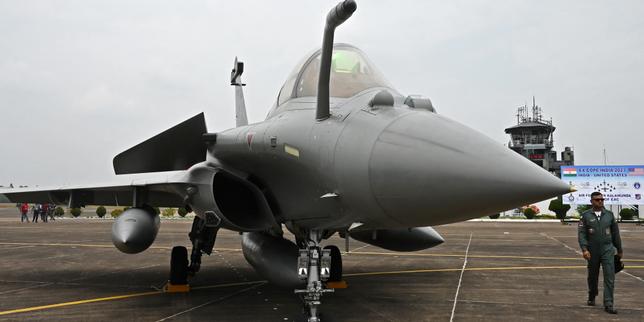
We talk about defense contracts as if they were sporting scores. We read headlines about Rafale fighter jets finding new homes across foreign deserts, or naval frigates slipping out of dry docks under the watchful gaze of state officials. We treat these multi-billion-euro deals like corporate victories in a global marketplace.
We are wrong.
Strip away the glossy brochures handed out at international defense summits and the polished press releases from ministries, and you find a much heavier reality. These sales are the physical manifestation of trust, or the lack thereof, traded on an international market where failure means ash. When a nation buys a defense system from Paris, it is not merely acquiring hardware. It is renting a strategic anchor. It is betting that the diplomatic weight of a European republic will hold firm when the horizon darkens.
Consider what happens next in a quiet drafting room in Marignane.
An engineer looks at a blueprint for a helicopter rotor blade. She knows that this piece of machinery will operate in environments that defy comfort—salt spray that eats aluminum, sandstorms that scour glass like industrial grit, and temperatures that turn metal into a hazard to touch. Every millimeter of tolerance is an argument against entropy.
She is not thinking about geopolitics. She is thinking about the pilot who will pull collective pitch while hovering over a ravine three thousand miles away.
This is the hidden human engine of the French defense industry. It is rarely glamorous. It is measured in the quiet dedication of vocational school graduates in provincial towns who spent four years learning how to weld titanium with a precision that leaves zero margin for error. For decades, this industrial ecosystem struggled against the tide of post-Cold War optimism. People wanted to believe the world was done with iron. They wanted to imagine that economic interdependence alone would keep the borders quiet.
The world had other plans.
By 2025, the illusion of permanent peace had shattered entirely, replaced by a brittle, anxious multipolarity. Across the globe, governments looked at their borders, looked at their aging arsenals, and realized they were standing naked in a cold wind. They needed gear that worked, and they needed it yesterday. They turned to France not because French weapons are ideological ornaments, but because France possesses something increasingly rare: a complete, autonomous defense industrial base. From the steel in the hull to the software guiding the seeker head, the chain does not break at a foreign border.
Yet, this surge in exports carries a profound, paradoxical weight.
Every time a major contract is signed, a cheer goes up in corporate boardrooms and regional chambers of commerce. Jobs are secured for a generation. Apprenticeships multiply. Supply chains hum with renewed urgency. But walk the factory floors, and you sense a different emotion entirely. It is a grim, pragmatic realization. No one builds a Rafale because they love the aesthetic of a delta wing. No one commissions a submarine because they have spare capital to invest. They buy these machines because the world has become a dangerous place, and the price of sovereignty has gone up.
There is a heavy irony in watching industrial output soar while international stability cracks. It feels like watching a factory that makes storm cellars work around the clock during a hurricane season that never ends. You are glad the cellar is well-built. You are glad the concrete is thick and the door seals tight. But you cannot shake the feeling that you would rather be using that concrete to build bridges instead.
Thomas closes his spreadsheet. The numbers remain on the screen, a monument to a volatile era. Outside his window, the lights of the city begin to blink against the gathering dusk, indifferent to the complex choreography of steel, diplomacy, and survival playing out across the globe. The ledgers will balance. The shipments will leave the ports. And beneath the quiet skies, the world will keep holding its breath.