The iron shutters always came down in a hurry.
When Samuel heard the familiar metallic rattle echoing down the narrow commercial lane in Nairobi’s Eastleigh neighborhood, his stomach tightened. It was mid-afternoon, the hour when the dust kicked up by passing matatus usually mingled with the smell of roasting maize and cheap diesel. Instead, a sudden hush fell over the narrow corridors where storefronts leaned so close together their tin roofs practically touched. In similar news, take a look at: When the Mountains Break.
Samuel adjusted the strap of his worn leather satchel, packed with receipts, ledgers, and the quiet anxieties of a man who had built a life one small transaction at a time. Behind him, a row of identical metal doors slammed shut with finality. Locks clicked. Padlocks snapped into place.
Across the street, a group of neighbors stood in silence, watching a trio of municipal enforcement officers walk away, leaving behind a freshly chalked red cross on a concrete pillar. That mark meant closure. That mark meant an abrupt halt to livelihoods that had sustained families for years, sometimes generations. BBC News has provided coverage on this fascinating topic in great detail.
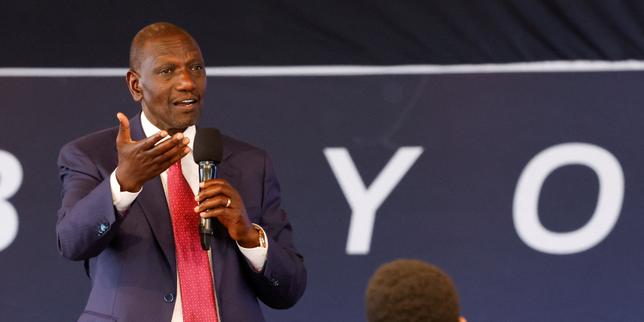
President William Ruto had spoken, and the machinery of the state was moving with ruthless speed. The directive was unambiguous: foreign nationals operating small retail shops, wholesale outlets, and kiosks must pack up and leave those spaces to Kenyan citizens. On paper, it was framed as an economic correction. A long-overdue reclamation of retail trade for the local populace. A policy designed to level a playing field that many felt had tilted heavily against domestic entrepreneurs.
Yet, policy abstractly debated in air-conditioned boardrooms looks entirely different when viewed from the dusty pavement of a back alley.
Consider what happens when an entire commercial ecosystem is disrupted overnight. Samuel is not a statistic. He is a hypothetical composite of the thousands of shopkeepers caught in the crosshairs of this mandate—foreign traders who arrived years ago with little more than ambition, renting cramped spaces, paying local taxes, hiring local youth to carry stock, and embedding themselves quietly into the daily rhythms of East African urban life.
To understand the friction here, you have to look past the political rhetoric of protectionism and examine the mechanics of survival. Nairobi is a city of hustle. It hums with an unmatched, relentless energy. Every street corner is a market; every fence is a billboard. In this hyper-competitive environment, margins are razor-thin. When rent climbs, when inflation bites, and when the cost of imported goods surges, the pressure mounts on everyone.
Local traders argued—loudly and often—that foreign competitors, particularly from neighboring nations and farther abroad, possessed supply chains and financial networks that made competing impossible. They pointed to wholesale shops dominating downtown avenues, undercutting neighborhood kiosks by pennies, yet pennies are everything when a family is deciding whether to buy milk or bread. The grievances were real. The frustration was palpable.
Governments exist to channel that frustration into action. But protectionism is a blunt instrument.
When you swing a sledgehammer at a complex web of informal credit, cross-border supply lines, and neighborhood commerce, you rarely hit only the intended target. The supply chain is a living organism. The trader from whom Samuel bought his bulk inventory relied on importers in Dubai or Guangzhou; those importers relied on shipping lines; and the local youths who unloaded the crates relied on Samuel’s daily wage to buy dinner.
By demanding the immediate vacation of small businesses, the state attempted to rewrite the social contract in real-time. The promise was simple: clear out the foreign shopkeepers, and local Kenyans will seamlessly step into their shoes, inherit their customer base, and reap the profits.
Reality proved stubbornly more complicated.
Shops do not run on intentions alone. They run on capital, supplier trust, and specialized knowledge of neighborhood tastes. Many local youth who cheered the initial announcement soon found themselves staring at locked doors not because they were suddenly ready to open competing stores, but because the capital required to stock a wholesale shop is entirely out of reach for someone struggling to pay rent. The vacant storefronts did not instantly fill with triumphant local entrepreneurs. Many simply stayed dark. The street lost its pulse.
There is a profound vulnerability in being a migrant worker anywhere in the world. You carry your life in documents that can be revoked, in permits that can expire, and in the goodwill of a host nation that can shift with the political winds. When political tides turn, the foreign trader becomes an easy focal point for deeper economic anxieties. It is easier to blame the shopkeeper down the hall for the high cost of living than it is to untangle global supply chain shocks, currency depreciation, and structural unemployment.
Samuel knew this dance well. He had seen it in other cities, other countries, where the promise of economic nationalism always sounds righteous until the baker disappears and the bread stops arriving.
As the sun began to dip behind the corrugated iron rooftops, casting long, bruised shadows across the pavement, Samuel walked back to his shuttered shop. He did not unpack his satchel. Instead, he pulled out a small notebook, flipped to a blank page, and began writing down a list of names, numbers, and debts owed. A ledger of transition.
The iron gate remained cold to the touch. In the distance, a muezzin’s call drifted over the roar of evening traffic, blending with the chatter of children playing tag between parked trucks. The city was breathing, adapting, and shedding its skin once again, indifferent to the pain of the individual cells that made up its sprawling, restless body.