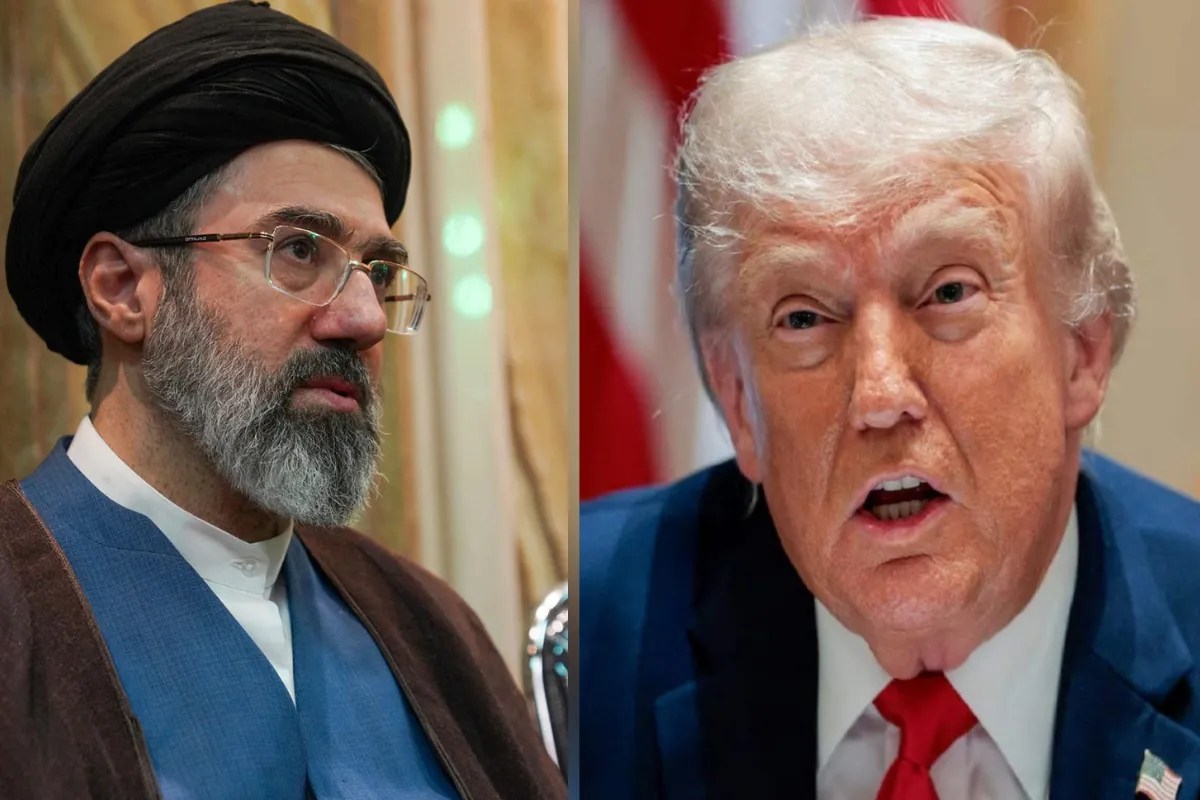
The headlines write themselves like a broken record. Tehran beats its chest, promises a crushing response with "all its might," and warns Washington that any miscalculation will trigger a region-wide apocalypse. Mainstream media outlets rush to publish breathless analyses of an impending global conflict, treating every piece of state-media theater as a legitimate declaration of military capability.
They are misreading the room.
When a regime's official posture becomes entirely performative, it is not a signal of readiness. It is a desperate attempt to mask systemic vulnerability. Iran's latest "open warnings" to the United States are not a show of strength; they are the geopolitical equivalent of a pufferfish inflating itself to avoid being stepped on. The lazy consensus among foreign policy pundits is that Iran is an aggressive, expansionist hegemon waiting to strike. The reality is far more fragile. Iran is backed into a corner, operating on a rapidly deteriorating asymmetric playbook that has lost its element of surprise.
The Myth of the Unstoppable Proxy Network
For two decades, Western analysts have obsessed over Iran’s "Axis of Resistance." We have been told that this network of proxies provides Tehran with a seamless, impenetrable shield capable of projection across multiple fronts simultaneously.
I have spent years tracking regional security dynamics and analyzing missile proliferation data. The hard truth is that the proxy strategy is hitting a wall of diminishing returns.
- The Command and Control Fracture: Proxies are useful when they provide plausible deniability. They become an existential liability when their actions pull the patron into a direct war it cannot afford. The assumption that Tehran exercises absolute, top-down control over every local commander in Iraq, Yemen, or Syria is a fantasy.
- The Deterrence Collapse: The primary objective of a proxy network is deterrence. If a strategy fails to prevent direct strikes on your own sovereign soil or your highest-ranking military commanders, the strategy has failed.
Imagine a scenario where a corporate entity relies entirely on third-party contractors to protect its core infrastructure. If those contractors keep picking fights that drain the parent company's cash reserves while failing to stop competitors from raiding the main office, that isn't a brilliant business model. It is a structural failure. Iran’s reliance on non-state actors is an admission that its conventional military—crippled by decades of sanctions—cannot match its adversaries in a straight line-of-sight engagement.
Decoupling the Rhetoric from the Ledger
Let's look at the actual numbers, because the spreadsheets do not care about supreme leader fatwas or fiery press releases.
Conventional military strength relies on economic sustainability. To understand why Iran's threats are empty, compare the defense spending of the primary actors in this theater. According to data from the Stockholm International Peace Research Institute (SIPRI), regional adversaries outspend Tehran by orders of magnitude. Combined with American forward deployment in the Gulf, the conventional imbalance is staggering.
| Country / Entity | Estimated Annual Defense Spending (Billions USD) | Primary Strategic Focus |
|---|---|---|
| United States (Regional Presence Only) | $40+ (Dedicated regional operations) | Global power projection, maritime security |
| Regional Adversaries (Combined Alliance) | $70 - $85 | High-tech air defense, precision munitions |
| Iran | $10 - $15 | Asymmetric warfare, domestic regime survival |
When your adversary spends more on air defense networks than your entire national security budget, your offensive options shrink rapidly. Iran’s conventional air force relies on patched-up, pre-1979 American aircraft and aging Russian hardware. Its navy is built around fast-attack craft designed for harassment, not control.
This brings us to the ballistic missile program—Tehran's favorite saber to rattle. While their arsenal is vast, the recent historical record shows that when these systems face modern, layered missile defense systems, the interception rates are devastatingly high. Loudly announcing a strike hours before it happens is not the behavior of a military looking to inflict maximum damage; it is a carefully calibrated choreography designed to satisfy a domestic audience without triggering an overwhelming counter-response that would end the regime.
Dismantling the Mainstream Narrative
When people search for information on Middle Eastern stability, the questions asked reveal a fundamental misunderstanding of how autocratic regimes survive.
Does Iran actually want a direct war with America?
Absolutely not. The overarching, foundational goal of the Iranian political establishment is regime survival. A direct conventional conflict with a superpower is the fastest way to guarantee the destruction of that establishment. The fiery rhetoric serves as a domestic integration mechanism. It keeps the hardline base motivated and attempts to project authority to a population weary of hyperinflation and economic mismanagement.
Can Iran completely shut down the Strait of Hormuz?
This is the ultimate bogeyman of global energy markets. Could they disrupt shipping temporarily? Yes. Could they maintain a total blockade? No. The moment global energy flows are completely choked off, Iran loses its remaining diplomatic cover from major economic powers like China, which relies heavily on Gulf oil. A permanent closure of the Strait is a red line that would trigger an immediate, international conventional intervention. Tehran knows this. They threaten the Strait precisely because they know the threat itself drives up oil prices, giving them temporary leverage without having to fire a shot.
The Danger of Believing the Hype
The contrarian approach to analyzing Iranian strategy requires admitting a dangerous counter-truth: treating Iran as an almighty, irrational actor makes Western foreign policy less effective, not more.
When Washington reacts to every piece of state-sponsored theater with massive deployment shifts or escalatory rhetoric, it validates Tehran's performance. It gives the regime the international relevance it desperately needs to maintain internal cohesion.
The downside of acknowledging Iran's weakness is that a weak, cornered actor is inherently unpredictable. As conventional options dry up and proxy networks face structural degradation, the risk of miscalculation increases. But miscalculation born of desperation is vastly different from a calculated strategy of regional dominance.
Stop reading the translated transcripts of state television addresses looking for strategic intent. Stop assuming that loud warnings equate to operational capability. The next time a headline screams about a definitive, total warning from Tehran, look at the currency valuation of the rial, look at the maintenance backlogs of their conventional forces, and look at the interception data of modern defense systems.
The theater is loud because the reality is quiet. The regime is shouting because it cannot afford to fight.