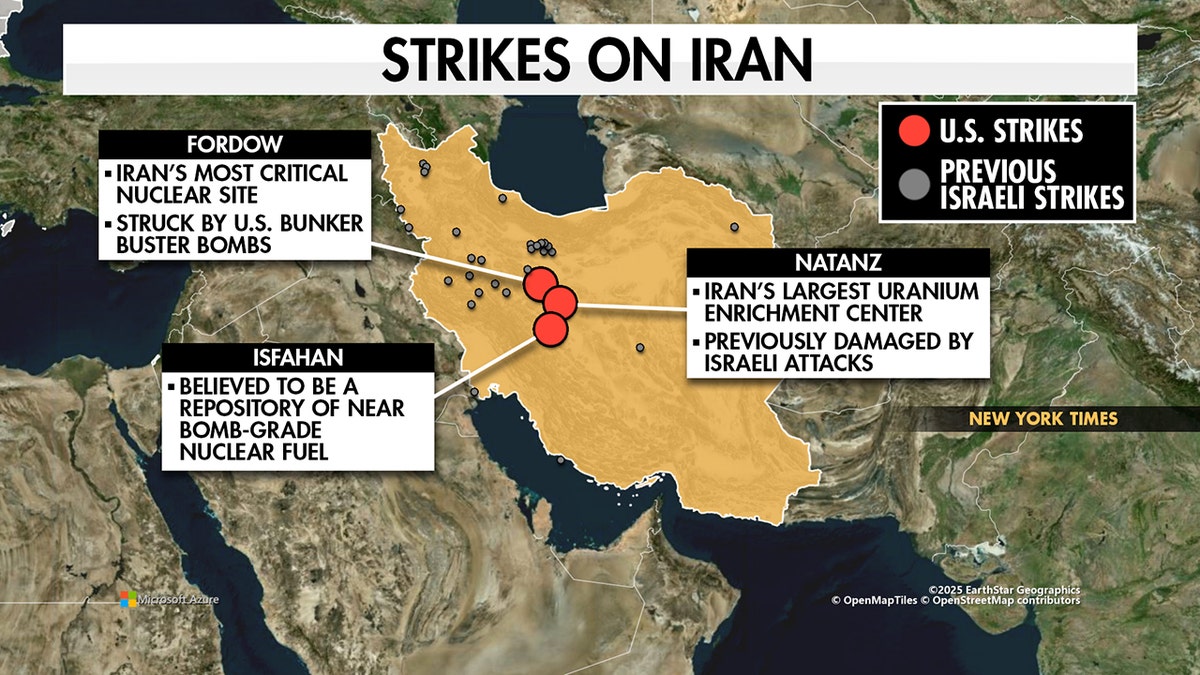
You’d think that two months of targeted airstrikes and a full-scale military campaign would be enough to cripple a nuclear program. But according to the latest U.S. intelligence assessments, Tehran hasn't blinked. Despite the heavy ordnance dropped by the U.S. and Israel since February, the "breakout time"—the window Iran needs to produce a nuclear weapon—hasn't moved an inch. It's still sitting at roughly nine months to a year, exactly where it was before the latest round of fighting began.
This isn't just a minor intelligence update. It’s a reality check for anyone who thought military force alone could solve the Iranian nuclear puzzle. Even with a truce currently in place, the core of Iran’s nuclear capability remains largely untouched. The missiles hit the factories, but the knowledge and the fuel are tucked away where no bunker-buster can reach them.
The Strategy of Deep Burial
The reason for this lack of progress is pretty simple. Iran spent the last two decades preparing for this exact scenario. They didn’t just build factories; they carved them into mountains. While U.S. and Israeli strikes have focused heavily on conventional military targets and military-industrial bases, the nuclear infrastructure is a different beast entirely.
Reports indicate that while Israel managed to hit a uranium-processing facility in late March, the most critical assets—the stockpile of highly enriched uranium (HEU)—are buried under hundreds of feet of rock in tunnel complexes like those at Isfahan. U.S. intelligence suggests that even though we’ve seen entrances sealed and tunnels collapsed by strikes, the material inside stays safe.
- Isfahan Tunnel Complex: Believed to house over 400kg of 60% enriched uranium.
- "Pickaxe Mountain" (South of Natanz): A new, deep-depth facility designed to be impervious to standard aerial bombardment.
- Saghand Uranium Mine: Satellite imagery shows diggers are still working there, completely unbothered by the regional chaos.
We're looking at a "differential reconstruction" doctrine. Iran is letting the surface-level damage happen while doubling down on the stuff that actually matters for a bomb. They’re basically playing a high-stakes game of keep-away, and so far, they're winning.
Why the Current Truce Changes Nothing
The April 7 truce might have stopped the bombs from falling, but it hasn't stopped the centrifuges. One of the biggest mistakes analysts make is assuming that a pause in kinetic warfare equals a pause in nuclear progression. It doesn't.
Iran's latest counterproposal to the U.S. is a masterclass in stalling. They want to talk about ending the war and lifting the naval blockade in the "first phase," while pushing any actual nuclear concessions to a hypothetical "second phase." They’re offering to discuss options for pausing enrichment, but they aren't making any firm commitments.
Meanwhile, the global energy crisis is breathing down Washington's neck. With Iran choking off nearly 20% of the world's oil supply through the Strait of Hormuz, the U.S. has significantly less leverage than you'd think. We're in a position where we need the oil to flow more than Iran needs to stop enriching uranium.
The Intelligence Gap and the HEU Stockpile
If you want to understand why the timeline hasn't shifted, you have to look at what wasn't hit. To actually move the needle on Iran's breakout capability, you have to do one of two things: destroy the centrifuges or remove the fuel.
We’ve done some damage to the centrifuges, sure. But the HEU stockpile—the 60% enriched uranium that can be quickly bumped up to 90% weapons-grade—is still there. Some experts, including former senior U.S. intelligence analysts, are now whispering about "dangerous operations" that would be required to actually fix this. We're talking about ground raids. Sending soldiers into those Isfahan tunnels to physically retrieve or destroy the material.
It’s a terrifying prospect. A ground raid inside Iran would turn a localized conflict into a global firestorm. But without it, the intelligence community is essentially admitting that air power has reached its limit.
Hard Truths About the Breakout Clock
- Pre-War Estimate (June 2025): 3 to 6 months.
- Post-June Strikes: 9 months to 1 year.
- Current Assessment (May 2026): Still 9 months to 1 year.
The fact that the clock hasn't moved since last summer tells us that Iran has successfully "hardened" its program. They’ve reached a point where they can absorb the damage we’re willing to deal without losing their ultimate leverage.
What This Means for the Peace Talks
President Trump and Secretary of Defense Pete Hegseth are publicly pushing for a deal that ensures Iran never gets the bomb. But the leverage just isn't there right now. Iran knows that the U.S. is "not satisfied" with their proposals, but they also know we’re hesitant to escalate further while the global economy is reeling from $150-a-barrel oil.
If you’re following this, don't look at the flashy headlines about "successful strikes" on military bases. Those are side shows. Watch the International Atomic Energy Agency (IAEA) reports and the satellite imagery of the mountain sites.
The next few weeks of negotiations will be telling. If the U.S. doesn't secure a deal that involves the physical removal of that HEU stockpile, the "breakout" threat will remain a permanent fixture of the Middle Eastern landscape. The reality is that Tehran has built a program that can survive a war, and that’s a reality the West isn't quite ready to accept.
If you want to stay ahead of this, keep an eye on two specific things. First, look for any movement regarding "ground operations"—if that talk becomes mainstream, we’re in a new, much darker phase. Second, watch the Strait of Hormuz traffic. The moment those tankers start moving freely again, you’ll know a deal (likely a lopsided one) has been struck behind closed doors.