The rain in the UK has a specific way of falling. It does not merely drop from the sky; it hangs in the air, a stubborn, gray mist that coats the wool of your coat and settles deep behind your collarbones. In certain cities, under those slate-colored skies, winter brings an automatic defense mechanism. People pull their scarves up high. They tuck their chins down into their collars. And for the past few years, millions have pulled on simple, pleated rectangles of blue or white fabric across their noses and mouths.
Until yesterday.
Imagine walking down a familiar high street in that familiar damp chill, your breath pluming in front of you, only to realize that the fabric barrier you have instinctively worn for protection, for anonymity, or simply out of habit, has suddenly crossed the boundary from health precaution to legal infraction.
That is the reality hitting the streets following the implementation of a strict new face mask ban within a major urban center. On paper, it sounds like an administrative footnote. A policy adjustment. A municipal code tightened in the name of public order, identification protocols, and security. But laws do not live on paper. They live in the friction between a police officer’s hand and a citizen’s shoulder. They live in the quickened pulse of a commuter trying to figure out if their health vulnerability now makes them an outlaw.
Let us step back for a moment and look at the anatomy of how a city changes overnight.
Consider Sarah. She is thirty-four, works in accounts administration, and lives with a compromised immune system that turns a common winter cold into a three-week respiratory ordeal. For her, the blue surgical mask was never a political statement or a cultural signifier. It was a shield. It was the ticket that allowed her to step onto a crowded morning bus without running a mental risk-assessment on every cough she heard.
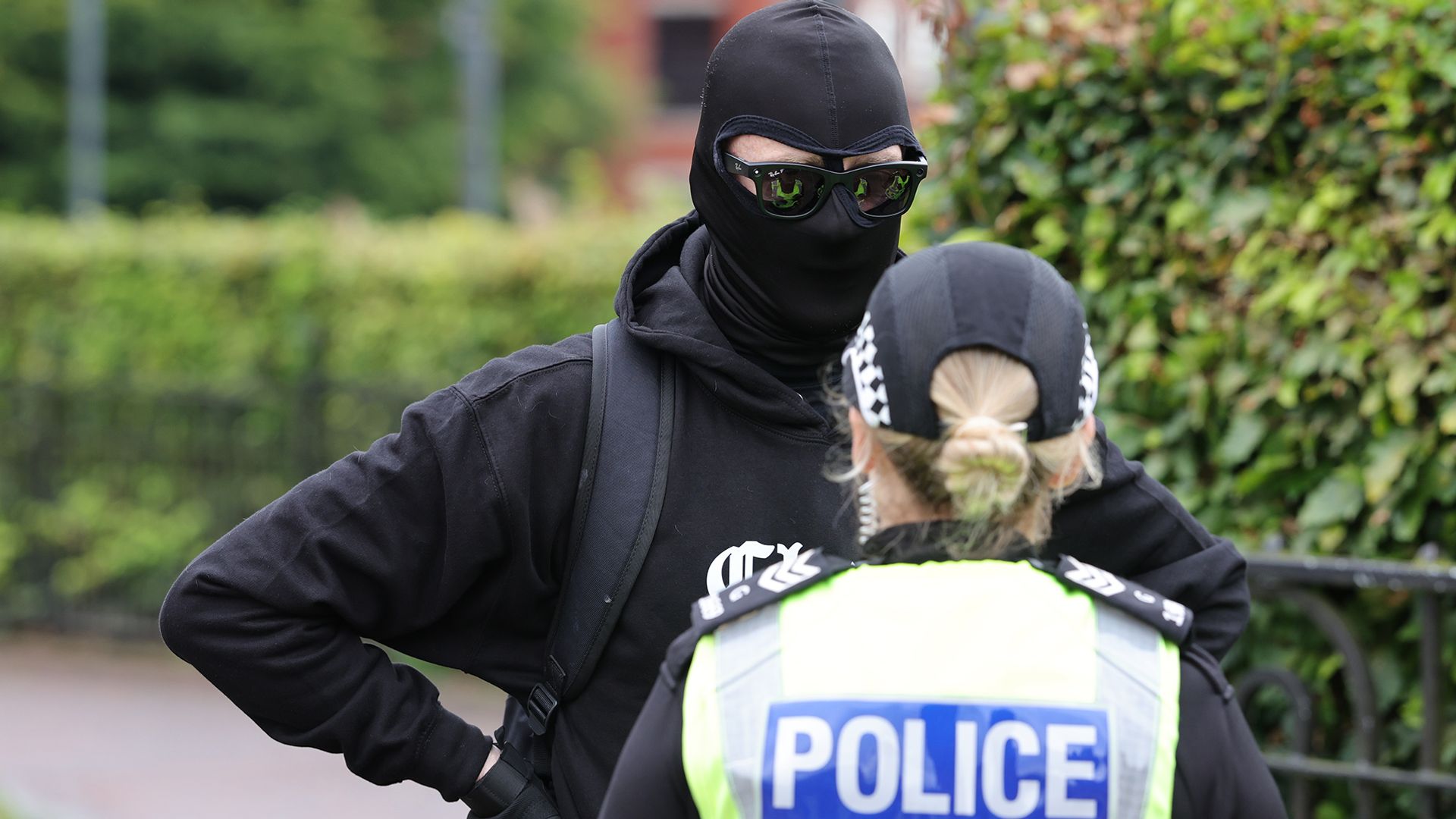
When the local authority announces a blanket ban on face coverings in designated public zones—enacted ostensibly to crack down on anonymous agitators, shoplifters, and public disorder—they are targeting a specific kind of threat. They envision the hooded figure slipping through a crowd, identity obscured, accountability erased.
They do not picture Sarah.
And that is the core tragedy of blanket municipal legislation. It operates at a macro level, wielding a broadsword where a scalpel is required. When a city administration decrees that faces must be uncovered in transit hubs, shopping centers, and municipal squares to deter crime, the burden of proof shifts instantly onto the innocent.
The policy argument for such bans rests on a foundational tenet of modern policing: visibility breeds accountability. Proponents argue that a face is a public contract. When you walk among your fellow citizens, you offer your identity to the collective. You agree to be seen. In environments plagued by retail theft, aggressive protests, or gang-related anonymity, the argument goes, removing the mask restores a baseline of social transparency.
Security cameras need clean angles. Store owners need to recognize returning trespassers. Police officers need to match faces to descriptions without hesitation.
These are not trivial concerns. Retail theft has strained urban economies, and public safety is the bedrock upon which all other freedoms rest. A government has a duty to protect its merchants and maintain order on its pavements.
Yet, logic divorced from empathy collapses under the weight of human reality.
When you criminalize or heavily restrict facial coverings without robust, deeply nuanced exemptions for health, culture, or personal safety, you create an immediate psychological chasm. You tell vulnerable populations that their comfort, their health, and their peace of mind are secondary to the administrative convenience of law enforcement.
Walk down the high street now, and the atmosphere has shifted. The air feels thinner, more exposed. People are glancing sideways. Every encounter at a ticket barrier or a convenience store checkout now carries a micro-dose of tension. Is this the officer who enforces the letter of the law, or the one who exercises discretion? Is that shopkeeper staring because of the item in your hand, or because of the cloth across your nose?
Uncertainty is an exhausting companion.
Historically, societies have wrestled repeatedly with the tension between security and bodily autonomy. We have debated the boundaries of public surveillance, stop-and-search powers, and curfews. But the face is deeply personal. It is our primary instrument of human connection. To regulate what can and cannot cover it is to enter a sensitive psychological space.
When the mandate was reversed a few years ago—when masks went from being legally required to socially optional—it felt like an exhale. People could choose. Freedom of choice meant that if you were scared, you masked; if you were tired of it, you went bare-faced. It was messy, imperfect, and occasionally contentious, but it respected individual agency.
A ban strips that agency away entirely. It replaces one form of compulsion with its exact opposite.
We must ask ourselves: what kind of safety are we actually buying?
If a ban prevents a handful of opportunistic criminals from hiding their features, but simultaneously drives elderly, chronically ill, or anxious citizens out of public spaces entirely—forcing them back into isolation—have we created a safer city, or merely a more exclusionary one?
Cities are not spreadsheets. They are living, breathing ecosystems made of millions of conflicting needs, fragile bodies, stubborn habits, and legitimate fears. When legislation ignores the texture of daily life, it fractures the social trust it aims to protect.
The rain continues to fall on the pavements of the city. Commuters rush by, their breath fogging the cold air. Some faces are bare, hardened against the wind. Others wear lingering traces of defiance or caution. The law is in effect. The signs are posted. But the argument over who owns the public space, and what a citizen has the right to put on their own skin, has only just begun.
The next time you walk out into that gray mist, pay attention to the people passing you by. Look into their eyes. Because for now, eyes are all we have left to read.