The recent surge in NATO fighter jet scrambles to intercept Russian military aircraft over the Baltic Sea is not a series of isolated pilot errors or navigational mishaps. It is a deliberate, calculated campaign of atmospheric attrition. While headlines often treat these "Alpha Scrambles" as routine posturing, the reality on the ground—and in the cockpit—reveals a high-stakes chess match designed to test response times, exhaust airframe lifespans, and map the electronic signatures of Western defense networks. This is not the Cold War of the 1970s. It is a modern, digitized version of brinkmanship where the primary weapon is not the missile, but the data harvested during the encounter.
The Mechanics of a Baltic Intercept
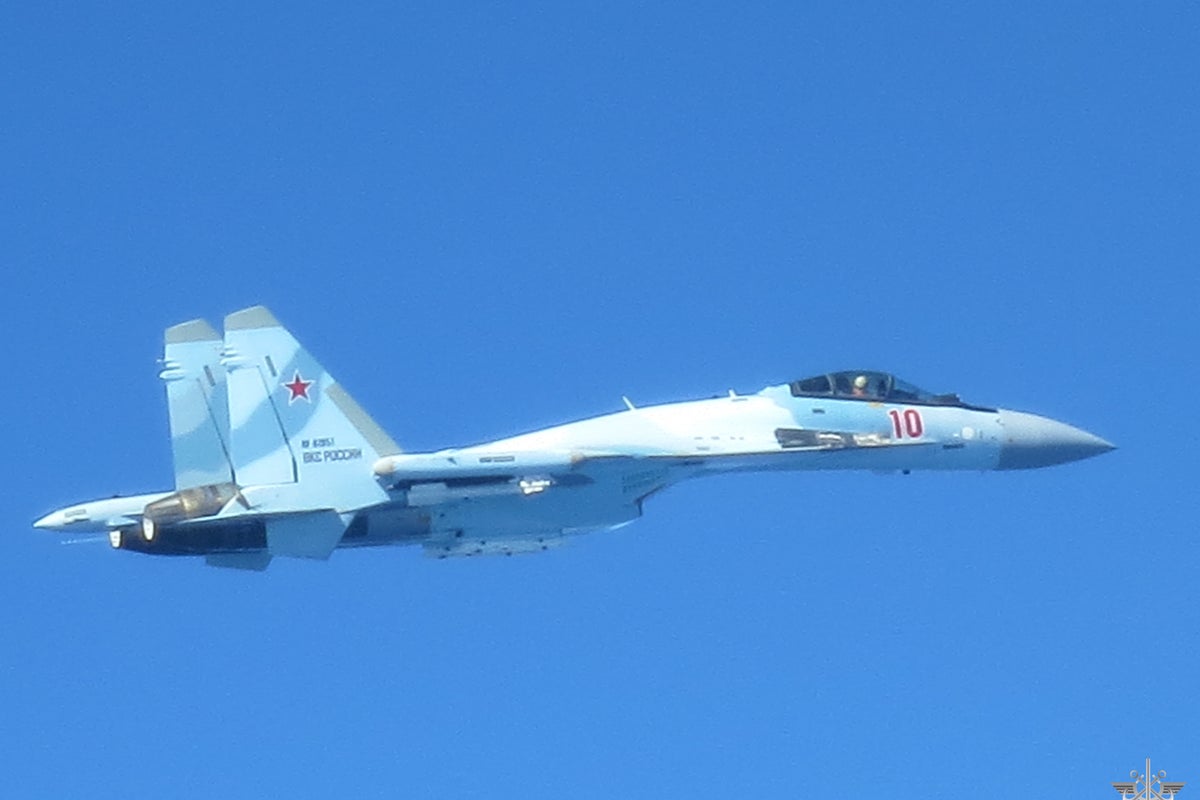
When a Russian Il-20 Coot-A or a pair of Su-27 Flankers departs from Kaliningrad or the Russian mainland without a flight plan or a functioning transponder, they enter the Baltic Flight Information Region. They are "dark." Within minutes, the Combined Air Operations Centre in Uedem, Germany, triggers a scramble.
The pilots—often from rotating NATO detachments in Estonia, Latvia, or Lithuania—have roughly fifteen minutes to get their Typhoons or F-16s off the runway. This isn't just about showing the flag. The goal is visual identification and "shadowing."
The Russians are looking for something specific. They want to see how long it takes for a specific NATO base to react under different weather conditions or during shift changes. They are measuring the proficiency of the ground controllers and the agility of the intercepting pilots. By forcing NATO to burn through flight hours and fuel on aging airframes, Russia engages in a slow-motion war of logistics. Every hour a German Eurofighter spends chasing a Russian intelligence-gatherer is an hour of maintenance debt that the Luftwaffe must eventually pay.
Electronic Intelligence and the Silent Harvest
The most dangerous part of these encounters isn't a mid-air collision, though the risk remains high due to aggressive maneuvering. The real prize is the electromagnetic spectrum.
Russian aircraft like the Il-20 are flying laboratories. They are packed with sensors designed to "paint" NATO radar installations. When a NATO jet approaches, it uses its own radar to track the intruder. The Russian aircraft records these pulses. Over months of intercepts, they build a comprehensive library of the frequencies, pulse repetition intervals, and hopping patterns used by Western systems.
Mapping the Shield
If a conflict ever turns "hot," this data allows Russian electronic warfare units to develop precise jamming profiles. They aren't just intercepting jets; they are dismantling the "invisibility" of NATO’s digital defense net.
- Signal Collection: Recording the radar signatures of the F-35 or Eurofighter.
- Response Calibration: Testing which NATO members react most aggressively.
- Psychological Pressure: Keeping European air forces in a state of permanent, low-level fatigue.
This is a game of diminishing returns for the West. NATO must respond to every incursion because failing to do so creates a vacuum that Russia will immediately fill. Yet, responding every time provides Russia with the very data it needs to defeat those defenses. It is a strategic paradox with no easy exit.
The Kaliningrad Factor
You cannot understand the Baltic tensions without looking at Kaliningrad. This Russian exclave, sandwiched between Poland and Lithuania, is the most militarized square mile in Europe. It serves as a permanent "A2/AD" (Anti-Access/Area Denial) bubble.
The flights between Kaliningrad and mainland Russia are the primary friction points. Russia claims these are routine transit flights. NATO views them as probes. The narrow corridor of international airspace over the Baltic Sea leaves zero margin for error. A pilot banking a few degrees too wide can technically violate the sovereign airspace of a NATO member, triggering a diplomatic crisis.
The Russian Federation uses this geography to its advantage. By flying along the edge of Swedish or Estonian airspace, they force the respective air forces into a reactive posture. This isn't just about military might; it’s about sovereignty. If a nation cannot or will not defend its borders from a "dark" aircraft, it effectively loses control over its own territory.
The Human Cost of Constant Readiness
The pilots tasked with these intercepts face a unique kind of stress. Unlike combat missions where the rules of engagement are clear, these intercepts require a bizarre blend of aggression and restraint. You must fly close enough to read the serial numbers on a Russian wingtip, but not so close that a sudden gust of wind causes a catastrophe.
Fatigue as a Weapon
Standard deployment cycles for NATO Baltic Air Policing missions are grueling. Personnel are often away from home for months, stationed at austere bases like Ämari in Estonia. The frequency of scrambles has increased significantly since 2022. When pilots are scrambled three times in a single night, their decision-making capabilities degrade.
Russia knows this. They are practicing a form of "sleep deprivation" on an organizational scale. By keeping the tempo high, they increase the probability of a NATO mistake. A single stray flare, a misunderstood radio transmission, or a technical glitch during an intercept could be used by the Kremlin as a pretext for escalation.
The Technological Gap and the Future of the Intercept
As we move toward 2030, the nature of these encounters will change. We are seeing the introduction of uncrewed aerial vehicles (UAVs) into the mix. Russia has begun experimenting with drone swarms to clutter radar screens, making it harder for NATO controllers to identify which "blip" is a manned bomber and which is a decoy.
NATO’s response has been the deployment of fifth-generation fighters like the F-35. These aircraft offer superior sensor suites, allowing them to track Russian planes from much further away. However, using a $100 million stealth jet to shadow a 50-year-old Russian turboprop is the definition of asymmetric inefficiency. It is like using a surgical laser to swat a fly.
The Problem of De-confliction Lines
There are "hotlines" between military commands to prevent accidental war. However, these lines are only as effective as the people on either end. In recent years, communication has cooled. Russia has frequently ignored de-confliction protocols, leading to "unprofessional" intercepts where Russian jets cross directly in front of the nose of NATO aircraft, using their jet wash to buffet the smaller planes.
This behavior is a signal. It tells NATO that Russia does not recognize the established "rules of the road" in the Baltic. It is an assertion of dominance in a space that is legally international but geographically contested.
Tactical Reality vs. Political Narrative
In Brussels and Washington, these intercepts are framed as proofs of NATO’s resolve. The footage of a gray F-16 flying alongside a Russian Tu-160 Blackjack is a powerful PR tool. It suggests a world that is monitored and controlled.
But the tactical reality is far more chaotic. Every intercept is a gamble. The Baltic Sea is a small, crowded bathtub. With commercial airliners crisscrossing the same corridors, the presence of dark military jets is a legitimate threat to civil aviation. In 2014, a Russian intelligence plane nearly collided with a SAS passenger jet departing from Copenhagen. The risk hasn't decreased; the traffic has simply become more congested.
We are witnessing the slow normalization of high-risk behavior. What was once considered an "unusual event" ten years ago is now Tuesday afternoon. This normalization is the most dangerous development of all. When the extraordinary becomes routine, the guardrails of safety are naturally lowered.
The West continues to rely on a reactive model. We wait for the "dark" flight, we scramble, we photograph, we return. This cycle serves Russia’s long-term goals of intelligence gathering and fiscal exhaustion. To break this pattern, NATO would need to change the cost-benefit analysis for the Kremlin, perhaps through more aggressive electronic counter-measures or by shifting the burden of intercepts to cheaper, long-endurance autonomous systems.
Until that shift occurs, the Baltic skies will remain a theater of the absurd, where elite pilots engage in a high-speed game of "I'm not touching you" while the world's most sophisticated sensors record every move. The tension is the point. The exhaustion is the strategy.
The next time a headline mentions a scramble over the Baltic, don't look at the jets. Look at the data they leave behind.