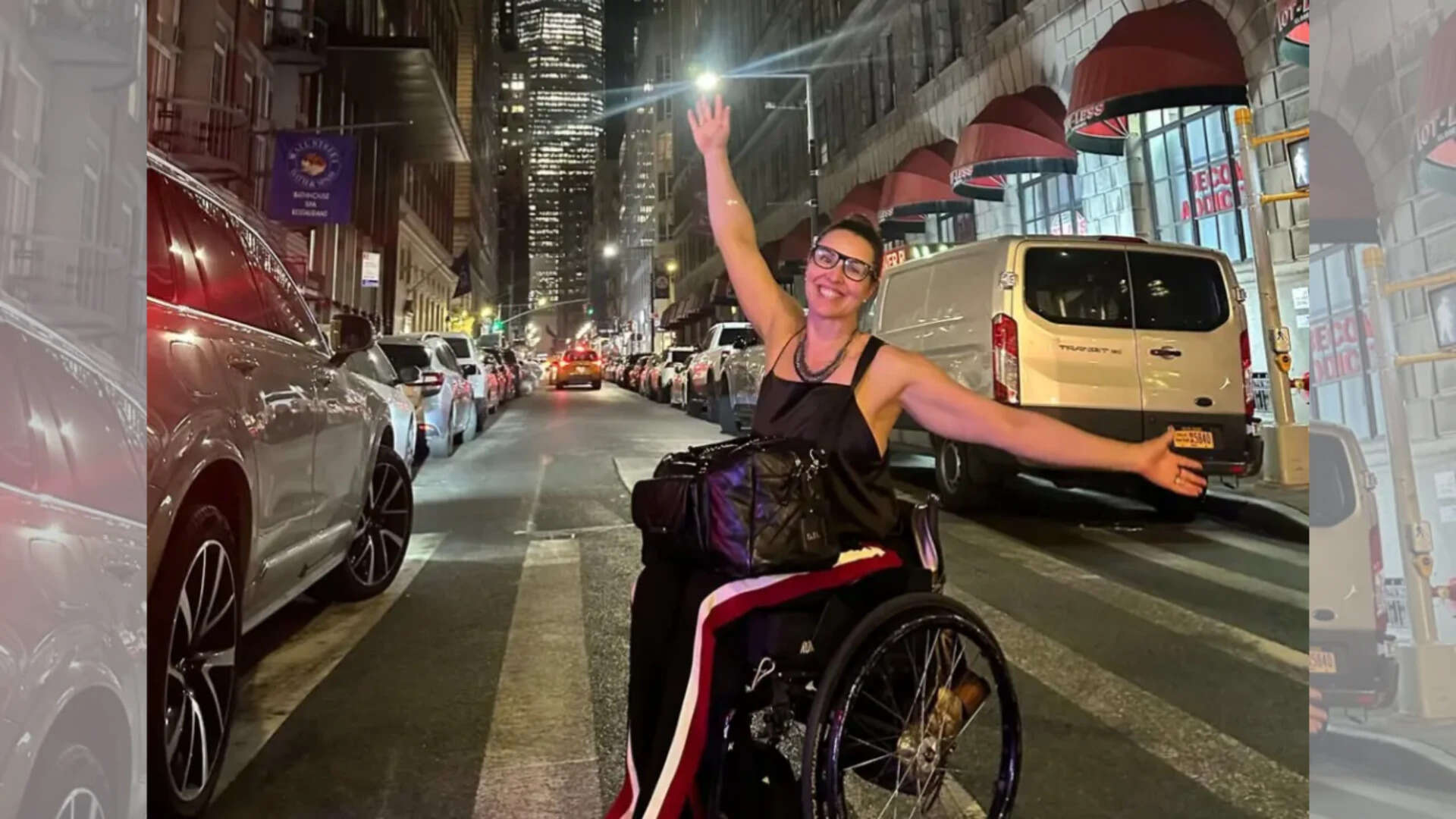
A commercial airliner at cruising altitude is one of the most legally complex spaces on earth. For a few hours, the laws of sovereign nations blur into a strict hierarchy managed entirely by corporate policy and the absolute authority of the flight captain. This reality collided with public outrage at John F. Kennedy International Airport when Samanta Bullock, a high-profile disability rights advocate and former Paralympic athlete, was barred from boarding a transatlantic British Airways flight to London.
The justification given to her by gate staff was explicit. Because she was traveling alone as a wheelchair user, the airline claimed the cabin crew could not safely assist her to the lavatory or ensure her evacuation during an emergency. To avoid being stranded, she was transferred to an American Airlines flight, where she faced similar, highly invasive interrogation regarding her bodily autonomy.
The incident highlights a systemic, quiet crisis in global aviation. Airlines are increasingly utilizing obscure fine print in their conditions of carriage to deny independent travel to disabled passengers, effectively imposing an unwritten financial penalty that forces these travelers to purchase a second ticket for a companion just to occupy a seat.
The Fine Print Loophole
To understand how a passenger with a confirmed ticket, pristine documentation, and decades of independent travel experience can be turned away at the gate, one must look at the structural contradictions between federal aviation law and internal corporate liability policy.
Under the United States Air Carrier Access Act (ACAA), which governs all flights departing from or arriving in the U.S., airlines are legally required to provide onboard assistance. This explicit mandate requires flight crews to assist passengers with mobility impairments to and from the aircraft lavatory using a specialized, narrow aisle chair. The federal regulation leaves little room for interpretation. Once on board, a passenger has a legal right to that basic standard of accessibility.
However, international carriers maintain a separate tier of authority tucked inside their legal terms of service. Section 20c of British Airways’ conditions of carriage states that the airline may require a passenger to travel with an attendant if it is essential for safety, or if the person is deemed unable to assist in their own evacuation.
By framing basic biological functions and catastrophic emergency procedures as immediate safety liabilities, gate agents are empowered to override federal non-discrimination laws on the spot. This shifts the entire financial and logistical burden of accessibility onto the consumer. If an independent traveler is told they must fly with an attendant, they are suddenly forced to absorb the cost of a second international ticket, extra accommodation, and travel expenses. It is an arbitrary tax on independence.
The Friction Between Safety and Service
Airlines frequently defend these gate denials by citing the physical limitations of flight attendants and the design parameters of modern wide-body cabins. Flight crews are trained as safety professionals, not medical caretakers. Their union contracts and occupational safety guidelines explicitly state that crew members are not required to perform heavy lifting, heavy transfers, or provide personal care inside the restroom stall.
When a passenger requires a transfer from their passenger seat to the onboard aisle chair, the mechanics of that movement fall into a legal gray zone.
+-------------------------------------------------------------+
|               THE TRANSIT ACCESSIBILITY GAP                 |
+-------------------------------------------------------------+
|                                                             |
|  [ AIRPORT TERMINAL ]                                       |
|  Governed by ADA / Ground handlers manage transfers.        |
|               │                                             |
|               ▼                                             |
|  [ THE AIRCRAFT THRESHOLD ]                                 |
|  ACAA applies. High-stakes liability transition.             |
|               │                                             |
|               ▼                                             |
|  [ INSIDE THE CABIN ]                                       |
|  Aisle chair usage is mandated by federal law, but          |
|  corporate safety policies forbid crew from lifting.        |
|                                                             |
+-------------------------------------------------------------+
If a ground handling crew mismanages a pre-boarding transfer, or if a gate agent misjudges a passenger's physical capability, the airline faces conflicting risks. They must balance a potential Department of Transportation citation for discrimination against a potential workplace injury lawsuit from an undertrained flight attendant. Too often, the easiest path for the airline is to issue a denial at the gate, safe in the knowledge that individual consumer complaints rarely impact quarterly profit margins.
The Systemic Breakdown of Ground Handling
The true breakdown of accessibility in commercial aviation rarely begins in the corporate boardroom; it happens through sub-contracted ground operations. Over the last twenty years, major airlines have steadily outsourced their ground handling, baggage loading, and passenger assistance services to third-party logistics firms. These firms operate on razor-thin margins, experiencing high employee turnover and minimal training standards.
When a disabled traveler marks the "wheelchair assistance required" box during a online booking, that data passes through a labyrinth of disjointed software systems before reaching the airport. The worker tasked with meeting that passenger at the jet bridge is frequently underpaid, overwhelmed, and completely unaware of the specific physical needs of the traveler they are assisting.
This operational fragmentation transforms an ordinary flight into a high-stakes gamble for disabled people. The issue extends far beyond gate denials. Thousands of custom, highly configured motorized wheelchairs are structurally mangled or completely destroyed in cargo holds every year because baggage handlers treat these vital mobility devices as standard luggage. When an airline breaks a wheelchair, they are not just damaging property. They are effectively fracturing a person's mobility and independence.
The Failure of Current Regulatory Enforcement
The ongoing mistreatment of independent disabled travelers persists because the existing regulatory framework lacks teeth. While the Department of Transportation has the authority to issue financial penalties to airlines that violate the Air Carrier Access Act, these fines are viewed by major carriers as a minor cost of doing business.
Furthermore, individual passengers cannot directly sue an airline for civil rights violations under the ACAA in federal court. The law lacks a private right of action. If a traveler is humiliated, stranded, or forced to soil themselves on an eleven-hour flight due to a lack of an aisle chair, their only formal recourse is to file an administrative complaint with the government. Weeks or months later, the airline might receive a bureaucratic warning, while the passenger receives a generic template apology and a travel voucher.
True parity in the skies will remain impossible until structural changes are forced upon the industry. This requires ending the outsourcing of ground handling to untrained third parties, redesigning aircraft cabins to allow passengers to remain in their personal wheelchairs during flight, and passing federal legislation that grants disabled travelers the explicit right to hold airlines legally accountable in a court of law. Until then, commercial aviation will continue to treat basic human mobility as an operational inconvenience.