Anil Kumar stands in a field in Uttar Pradesh, crumbling a clod of dry earth between his fingers. To him, the soil isn't just dirt; it is a balance sheet. It is his daughter’s wedding fund and his son’s school fees. For decades, the ritual has remained the same: water, seed, and the white, crystalline pellets of urea that act as the adrenaline shot for India’s tired earth. But lately, Anil has been looking toward the horizon with a sense of dread he can't quite name. He doesn't know where the Strait of Hormuz is. He has never heard of a "chokehold." Yet, the geopolitical chess match currently unfolding in a narrow strip of blue water thousands of miles away is deciding whether his family eats or starves next year.
Most of us think of the Middle East and immediately think of oil. We think of the price at the pump, the cost of a plane ticket, or the heating bill. But there is a deeper, more visceral dependency that rarely makes the front pages. It is the story of nitrogen. Specifically, the story of how India’s food security is tethered to a volatile maritime corridor that could snap at any moment.
The Fragile Geometry of the Strait
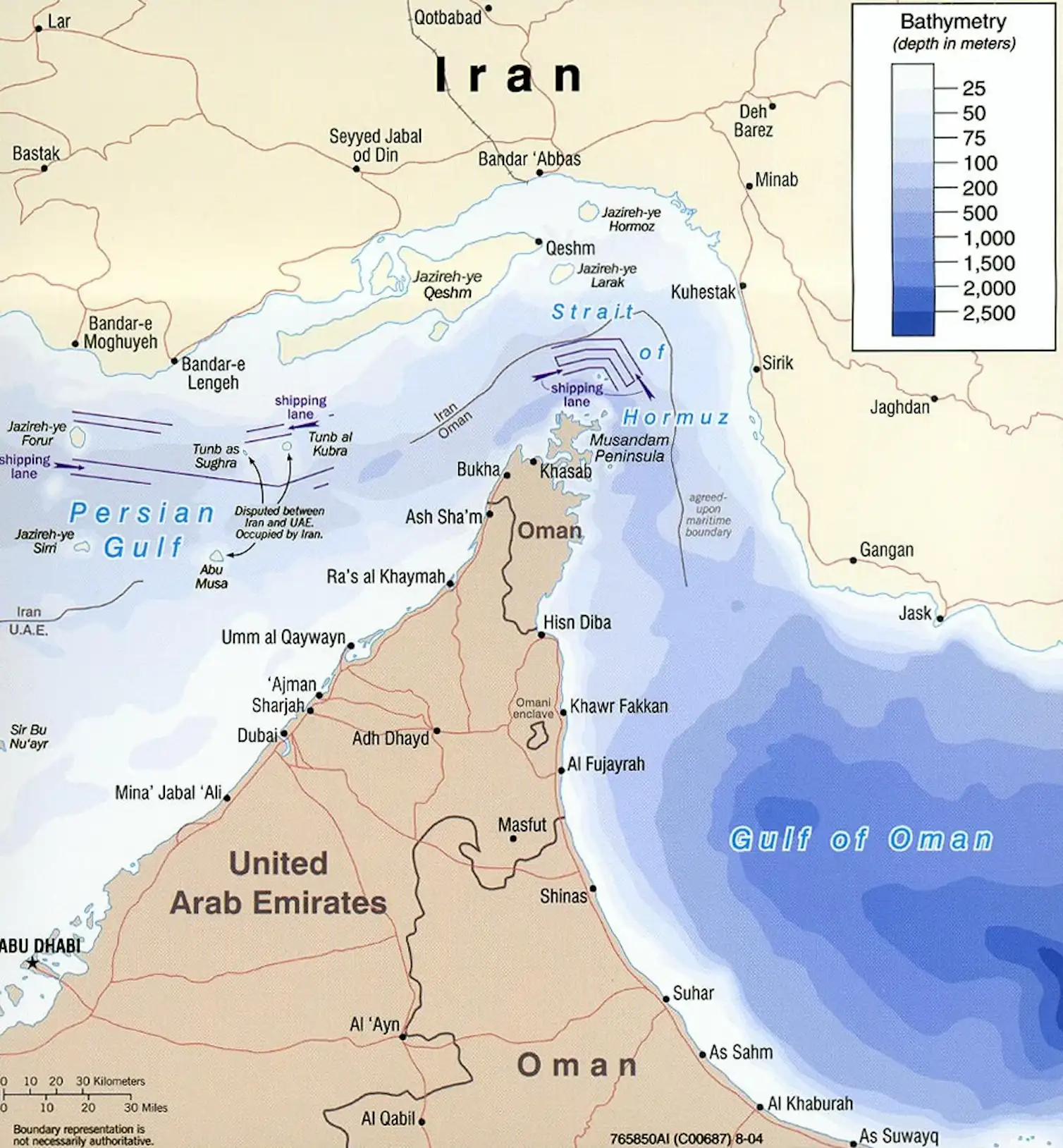
The Strait of Hormuz is a geographical fluke. At its narrowest point, it is only 21 miles wide. Through this needle’s eye passes one-fifth of the world’s total oil consumption. That is the fact we know. The fact we ignore is that it also serves as the primary artery for the natural gas required to manufacture fertilizer. India is the world’s second-largest consumer of fertilizer and the top importer of urea.
When tensions flare between Iran and the West, or when tankers are seized in the Gulf, the conversation usually centers on energy security. But you cannot eat oil. You can, however, go hungry without gas. Natural gas is the feedstock for ammonia, which is the soul of urea. India’s domestic production, while massive, cannot keep pace with the hunger of its billion-plus population. This creates a bridge of ships stretching from the ports of Oman, Qatar, and the UAE straight to the Indian coastline.
If that bridge breaks, the chemistry of the Indian farm fails.
The Ghost of 1943
To understand why this matters, we have to look back. My grandfather used to speak of the Great Bengal Famine not as a historical event, but as a ghost that never quite left the room. He described the silence of a village when there is no grain. It wasn't just a lack of rain; it was a failure of the systems that move life from one place to another.
Today, we operate under the illusion that we have conquered famine through technology. The Green Revolution gave us high-yield seeds, but those seeds are addicts. They have a high metabolic demand for nitrogen. Without it, they wither. India currently imports nearly 30% of its urea requirements. A significant portion of these imports, along with the raw gas used in domestic factories, must navigate the Persian Gulf.
Imagine a hypothetical scenario: A skirmish in the Strait leads to a weeks-long blockade. Insurance premiums for shipping vessels skyrocket overnight. Tankers carrying Liquefied Natural Gas (LNG) are diverted or docked. In New Delhi, the government scrambles to find alternatives, but there are no quick fixes for geography. In the village, the price of a bag of urea doubles, then triples. Anil Kumar looks at his field and realizes he can only afford to fertilize half of it. The yield drops. The price of wheat in the city climbs. The ghost my grandfather saw starts to stir again.
The Fertilizer Red Flag
The Iranian "chokehold" isn't just about military might; it's about the power to disrupt the very foundation of a neighbor's stability. While India has maintained a delicate diplomatic dance with Tehran, the volatility of the region remains a constant variable that no amount of diplomacy can fully neutralize.
Consider the sheer scale of the dependency. India consumes roughly 35 million tonnes of urea annually. Even a 10% disruption in the supply chain doesn't just result in a 10% loss of crop—it creates a psychological panic that can wreck an economy. We saw a shadow of this during the early days of the Russia-Ukraine conflict. Prices surged, and the Indian government had to shell out a record fertilizer subsidy of over 2 trillion rupees to shield farmers from the shock.
But subsidies are just paper. They don't create molecules. If the ships stop moving through Hormuz, no amount of government spending can manifest the ammonia needed to keep the soil productive.
A Tale of Two Gauges
There is a disconnect between the marble floors of global summits and the cracked earth of the Punjab. In one room, men in suits discuss "strategic autonomy" and "diversification of supply chains." In the other, a farmer checks the weather on a cracked smartphone and wonders why the local cooperative is out of stock.
The real danger of the Hormuz vulnerability is that it is silent. An oil spike is felt instantly. A fertilizer shortage is a slow-motion disaster. It takes months for the lack of nutrients in the soil to manifest as a thin harvest, and months more for that harvest to translate into empty shelves and rising inflation. By the time the "Red Flag" is waving, the damage is already done.
We often talk about the "energy transition" as a shift to solar and wind. But we haven't found a "green" way to feed four billion people without the Haber-Bosch process—the industrial method of turning gas into bread. We are still a civilization built on nitrogen, and that nitrogen is trapped behind a gate that Iran partially controls.
The Strategy of the Desperate
What does a nation do when its stomach is held hostage by a 21-mile-wide strip of water? India has begun investing in "multi-alignment." It is building plants in countries like Oman to move the production closer to the source of the gas. It is exploring "Nano Urea," a liquid alternative that promises to reduce the need for bulk imports.
Yet, these are long-term plays for a short-term world. The immediate reality is that the Indian plate is still served by the Persian Gulf. If you sit down to a meal tonight, the rice or the roti in front of you is, in a very literal sense, a processed form of Middle Eastern natural gas.
This isn't just a business problem or a news cycle. It is a biological reality. We have built a global food system that ignores the friction of distance and the heat of ancient rivalries. We treat the Strait of Hormuz as a line on a map, when it is actually a vital organ in the body of our nation.
Anil Kumar doesn't need to see the warships or the diplomatic cables. He feels the tension in the cost of his inputs and the uncertainty of his output. He is the one living at the end of a very long, very thin thread. And as the geopolitical winds pick up, that thread is fraying.
The sun sets over the field in Uttar Pradesh, casting long, dark shadows across the furrows. The earth is waiting for its next dose of nitrogen, oblivious to the fact that its lifeblood is currently sitting in the hold of a ship, idling in a narrow sea, waiting for permission to pass.