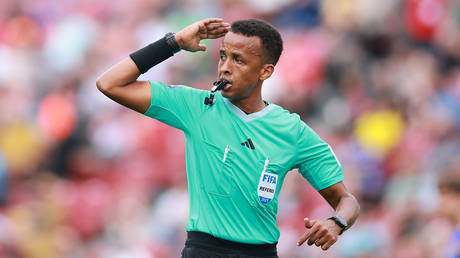
Omar Abdulkadir Artan spent years commanding control over chaotic football pitches, but he could not overcome the rigid, unyielding bureaucracy of a Miami airport terminal. The award-winning Somali referee, named Africa’s referee of the year in 2025, arrived at Miami International Airport on a flight from Istanbul, carrying valid documents and a diplomatic passport meant to secure his entry. He left on a return flight to Turkey, his lifelong dream of officiating at the FIFA World Cup shattered by a Border Patrol desk.
The decision by U.S. Customs and Border Protection to turn Artan away due to unspecified "vetting concerns" reveals a deeper structural failure. It exposes the fragile illusion that global sporting spectacles can transcend national politics, showing how easily federal immigration policies can dismantle multi-billion-dollar tournaments. Meanwhile, you can read other stories here: The Myth of New York Knicks Maturity and Why Their Veteran Pose is a Playoff Trap.
The Collision of Sport and Geopolitics
FIFA operates on the assumption that its premier tournament belongs to the world. The 2026 expansion to 48 teams across Canada, Mexico, and the United States was pitched as a grand celebration of global unity. Yet, the moment a host country asserts its domestic immigration laws, that carefully curated facade collapses.
Artan was among 52 elite referees chosen to oversee the tournament. His exclusion is not a minor logistical hiccup. It is an administrative execution of a strict travel ban. Under the current U.S. administration’s executive orders, Somalia faces near-total entry restrictions alongside dozens of other nations. To understand the complete picture, we recommend the recent analysis by Sky Sports.
While the White House Task Force on the World Cup promised exemptions for athletes, coaches, and vital tournament staff, those exemptions are not absolute guarantees. Frontline immigration officers retain immense discretionary power. They evaluate every traveler on a case-by-case basis using real-time national security databases. If the system flags an individual, a diplomatic passport or an official FIFA invitation means absolutely nothing.
The Discretionary Power of the Border
The Somali Football Federation and government representatives have expressed outrage, claiming Artan’s exclusion undermines the spirit of fair play. Somali sports ministry advisor Ciise Aden Abshir argued that the decision harms the entire football community.
Despite the public outcry, federal agencies remain unmoving. Andrew Giuliani, leading the White House Task Force on the World Cup, publicly supported the decision, noting that while specifics could not be discussed, Customs and Border Protection made the right call.
This highlights the core mechanism of border enforcement.
- Vetting Protocols: Immigration authorities utilize vast law enforcement networks that flag anomalies, inconsistencies, or regional security concerns.
- The Travel Ban Factor: Nationals from restricted countries face heightened scrutiny, where any minor administrative discrepancy can trigger an immediate denial of entry.
- Host Sovereignty: FIFA operates under an explicit agreement that the host nation retains final authority over who crosses its borders.
When these three factors intersect, sport loses. FIFA’s official stance has been a quiet retreat behind protocol. The governing body confirmed that Artan will miss the entire tournament, stating bluntly that they do not interfere with host country immigration processes.
A Dangerous Precedent for Multi Nation Bids
The deportation of Africa's top referee exposes a major vulnerability in the future of international sports broadcasting and hosting. When FIFA awards tournament hosting rights, it extracts promises of smooth transit, tax exemptions, and specialized visas. But those promises are frequently written on shifting sand.
+------------------------------------+------------------------------------+
| FIFA's Global Strategy             | National Sovereignty Reality       |
+------------------------------------+------------------------------------+
| Expanded 48-team inclusive field   | Tightened domestic border controls |
| Specialized World Cup exemptions   | Broad discretionary agent vetoes   |
| Dispersed multi-country venues     | Fragmented immigration policies    |
+------------------------------------+------------------------------------+
The friction in Miami is a warning sign. If a top-tier match official can be turned back at the gates without warning, teams, support staff, and thousands of international fans face the same unpredictable risk. Reports of the Senegal national team undergoing intensive runway searches upon landing suggest that Artan’s situation is not an isolated incident, but rather part of a systemic, aggressive approach to tournament security.
The modern sports landscape demands massive, multi-nation bids to spread the astronomical financial burden of hosting. But as long as national security policies override international sporting agreements, the integrity of these tournaments will remain compromised.
International football federations must now confront a difficult truth. You cannot host a truly global tournament when the host nation reserves the right to bar the global community from entering.