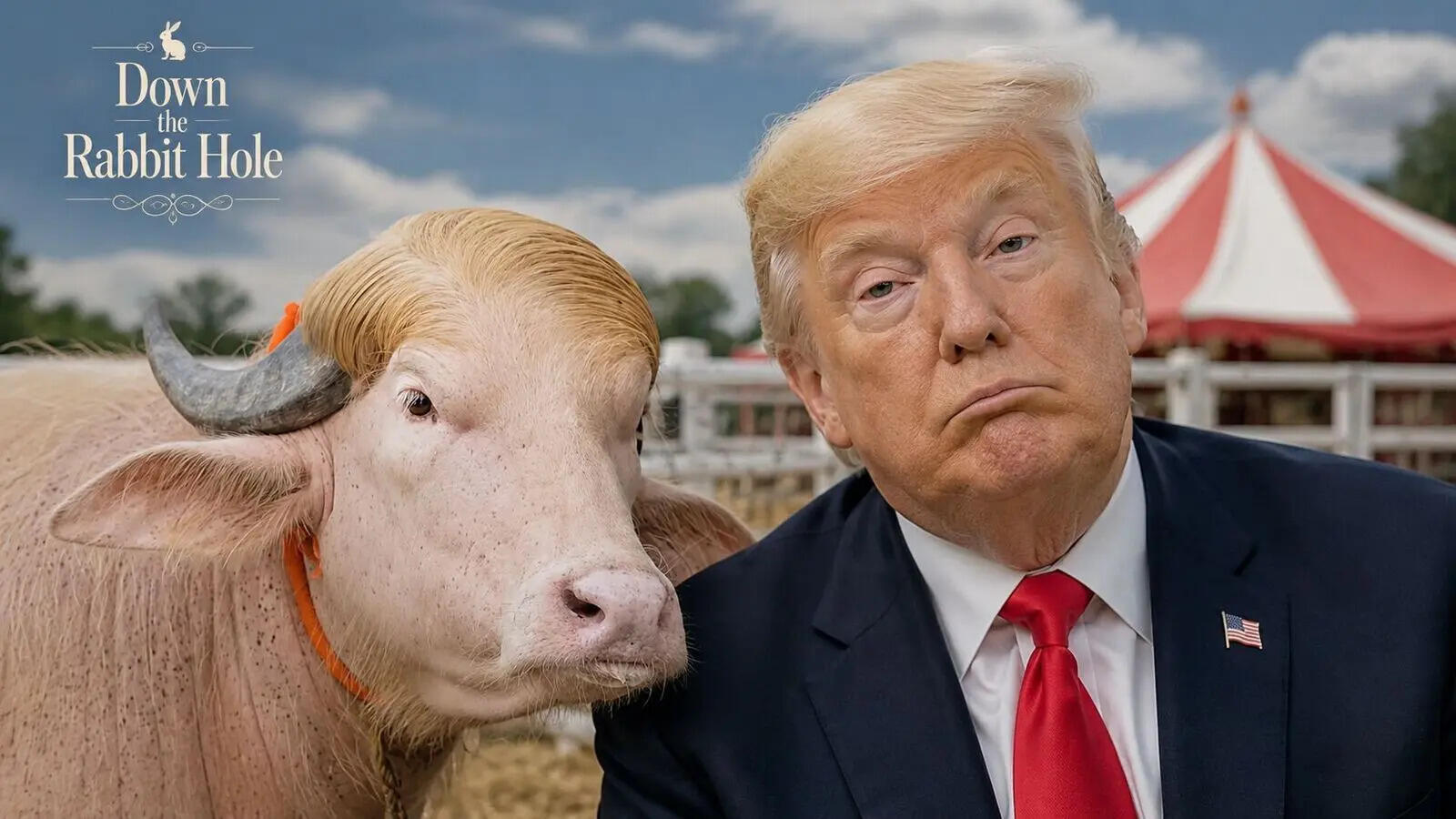
A 700-kilogram albino buffalo with a sweeping blond hair tuft just cheated death in Bangladesh.
The beast, aptly named Donald Trump by its breeder's younger brother, was purchased for ritual slaughter ahead of Eid al-Adha. In a country where over 12 million animals are prepared for the knife during this festival, your odds of survival as a prime livestock specimen are zero.
Then the internet took over.
Videos of the animal went viral across TikTok and Facebook. Thousands of onlookers flooded a livestock farm in Narayanganj near the capital city of Dhaka just to take a selfie with the calm bull and its presidential hairstyle. The crowd grew so huge that the government got nervous about security.
In a last-minute plot twist, Bangladesh Home Minister Salahuddin Ahmed issued a directive to halt the sacrifice. The buyer got a full refund, police escorted the animal away, and Donald Trump the buffalo is now moving into a permanent VIP enclosure at the national zoo in Dhaka.
It sounds like a bizarre internet joke, but the incident highlights a deep history of how humans handle ritual animal sacrifices. Sometimes, a bizarre quirk of biology or a burst of public obsession changes the rules entirely.
The Rules of Ritual Sacrifice and the Exceptions That Break Them
Most people assume ritual sacrifice is a rigid, ancient system with zero room for negotiation. That's a misconception. Historically, the relationship between humans, sacred animals, and state authorities has always been dynamic.
In Islamic tradition governing Eid al-Adha, the rules for choosing a sacrificial animal are precise. Livestock must be healthy, free of blindness or missing limbs, and shared among family and the poor. Albino animals aren't forbidden, but they are exceptionally rare in South Asia, where native water buffaloes are overwhelmingly dark gray or black.
When Ziauddin Mridha raised this particular animal, the unique blond fringe made it an instant anomaly. It wasn't the religious text that altered the animal's fate, but state intervention driven by modern viral culture. The Ministry of Livestock stepped in, noting the animal is young, genetically rare, and better suited for public preservation than a dinner table.
This isn't the first time an animal escaped ritual execution because of human sentimentality or political theater. Consider these historical precedents:
- The Presidential Turkey Pardon: Every November, the US President formally spares a turkey. While wrapped in modern media fluff, the tradition dates back to Abraham Lincoln unofficially sparing a turkey named Jack after his son pleaded for its life.
- The Sacred Bulls of Egypt: Ancient Egyptians routinely sacrificed cattle to Apis, the bull deity. But the specific bull chosen as the living incarnation of the god was pampered, fed the finest grains, and allowed to die of natural old age before receiving a pharaonic burial.
- The Athenian Bouphonia: During this ancient Greek festival, an ox was sacrificed, but the ritual required a bizarre legal loophole. The priests would flee, and a formal trial was held where the knife itself was found guilty of murder and thrown into the sea, shifting the blame away from the community.
Why We Pick Favorites in the Animal Kingdom
Let's be honest about what happened in Dhaka. If that buffalo had been a standard dark gray color, it would have been butchered. The only thing that stood between that animal and a butcher's knife was a specific genetic mutation that humans found hilarious.
Psychologists call this the anthropomorphic bias. We project human traits, names, and political figures onto animals, which instantly elevates their status in our minds. Once an animal gets a name like Donald Trump and a recognizable personality, it stops being livestock. It becomes a character.
The buyer who originally shelled out a massive sum for the 700-kilogram bull found themselves at the center of a logistical nightmare. When a crowd turns an animal into a national treasure, sacrificing it becomes a public relations disaster. The government used security concerns as the official reason, but the underlying truth is clear. Public affection changed the status of the creature from property to public asset.
What Happens Next for the Viral Buffalo
The Dhaka National Zoo curator, Atiqur Rahman, confirmed they have already prepared a dedicated shed for the albino buffalo. Before the animal goes on public display, it faces a standard two-week quarantine to ensure it didn't pick up any diseases from the massive crowds visiting the Narayanganj farm.
If you are tracking how internet culture reshapes old traditions, this event is a gold-standard case study. Memes don't just stay on your screen anymore. They change government policy, alter ancient religious logistics, and occasionally buy a giant blond buffalo a lifetime supply of free hay in a guarded sanctuary.
If you want to track how public interest shifts government decisions on wildlife and livestock preservation, keep an eye on local state media channels like Channel 24 in Bangladesh for updates on the national zoo's new resident.