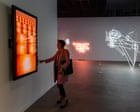
The transformation of the Durham Light Infantry Museum into The Light represents a significant case study in institutional asset recovery. When a public entity shuttered for a decade—following intense community opposition—is re-engineered into a contemporary art venue, the transition demands analysis beyond the aesthetic. This £17 million redevelopment illustrates a deliberate shift in the allocation of regional cultural capital, moving from static military preservation toward the consumption of international contemporary art.
The Asset Transformation Framework
The project follows a classic model of facility repurposing. By maintaining a dual-focus structure—one floor dedicated to the historical legacy of the Durham Light Infantry and the other to contemporary art—the institution attempts to hedge against the alienation of its original demographic while attracting a new, globally-oriented audience.
- Structural Reconfiguration: The transition involved a total gutting of the 1960s facility. This is an capital-intensive approach compared to adaptive reuse. The strategy here prioritizes flexibility over preservation, creating 500 square meters of high-specification exhibition space suitable for the demanding environmental and security requirements of internationally touring contemporary work.
- Economic Diversification: By integrating high-value intellectual property—works by Tracey Emin, Steve McQueen, and Olafur Eliasson—the gallery signals an intent to enter the international cultural circuit. This shifts the revenue model from local heritage tourism, which often suffers from low repeat-visit elasticity, to a temporary exhibition model that benefits from the "eventization" of art.
- The Inclusion Mandate: The focus on diversifying the provenance of artists (prioritizing female and global majority representation) serves a dual purpose. It satisfies modern ESG-aligned funding criteria and differentiates the institution from the historically homogeneous curation often found in regional British museums.
The Dynamics of Cultural Centralization
The critique that Britain suffers from "London-centrism" is a quantifiable operational reality. Creative industries, curators, and high-net-worth audiences have historically clustered in the capital, creating a brain drain in the North-East.
The Light functions as a counter-strategy. The appointment of an artistic director with experience at the Tate and Southbank Centre is a calculated play to import "Tate-level" operational standards. The goal is to correct the market inefficiency of regional cultural stagnation. If the venue succeeds in maintaining a consistent program of international importance, it lowers the cost for regional audiences to access high-tier art, effectively subsidizing the local creative economy through proximity.
Tactical Limitations and Risk Factors
Strategy is defined as much by what is excluded as what is included. Several risks persist:
- Revenue Elasticity: The shift to a £10 entry fee for primary exhibitions creates a barrier to entry that did not exist in the same way under the previous, heritage-focused model. The gallery must prove that its content offers a sufficiently high utility to justify this price point in a region sensitive to cost-of-living pressures.
- The "Heritage-Art" Collision: The institution faces the persistent friction of being both a site of local memory and a site of global consumption. The danger is that the military history floor becomes a secondary "add-on," while the art floor struggles to establish a unique local identity that differentiates it from similar galleries in Gateshead or Middlesbrough.
- Political Volatility: In a county where local governance shifted significantly in 2024, the institution's reliance on council funding introduces a risk of budget austerity. The gallery’s future depends on its ability to demonstrate tangible regional economic output—such as increased foot traffic or local business stimulation—rather than merely serving as an aesthetic vanity project.
The Final Strategic Play
The long-term viability of The Light hinges on its ability to transition from a single-event "opening" cycle to a sustainable operational machine. The immediate priority is the management of the exhibition Victory Over the Sun, which runs until January 2027.
To achieve permanence, the institution must leverage its temporary success to secure multi-year institutional partnerships that decouple its budget from local political cycles. It must also utilize its 500-square-meter contemporary space to host professional development or community-integrated residencies that embed the gallery in the local social fabric. A gallery that acts merely as a conduit for international traveling shows is a tenant; a gallery that generates local intellectual property is an anchor institution. The path to institutional permanence lies in proving that local identity and international art are not mutually exclusive, but interdependent engines of growth.