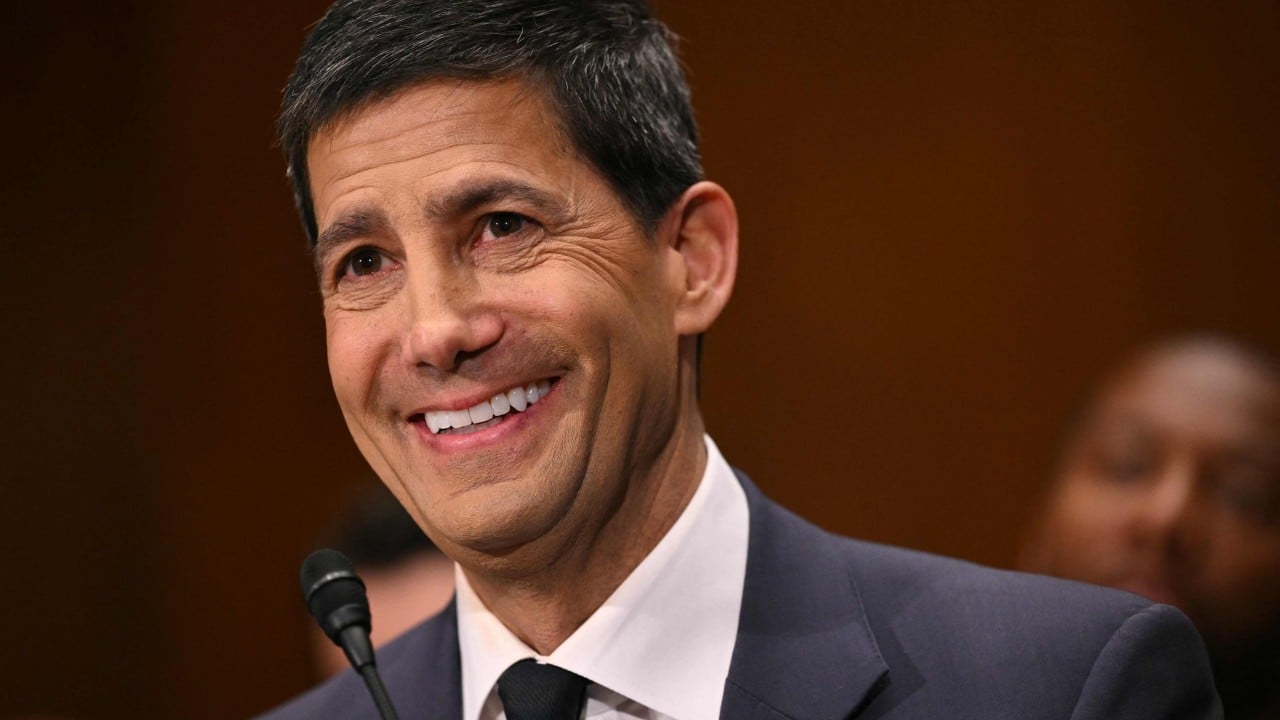
The appointment of Kevin Warsh as Chair of the Federal Reserve marks a fundamental shift from the "technocratic insulation" model of central banking toward an "integrated executive" framework. This transition moves beyond simple political pressure; it represents a structural realignment where the Fed’s dual mandate of price stability and maximum employment is subsumed by a broader executive branch agenda focused on deregulation and fiscal-monetary coordination. To analyze the impact of this shift, one must evaluate the three specific vectors of institutional friction: the erosion of the consensus-driven FOMC model, the weaponization of the Fed’s regulatory perimeter, and the redefinition of the "neutral rate" in an era of fiscal dominance.
The Tripartite Friction Framework
The stability of the U.S. financial system relies on the perceived independence of the Federal Reserve. This independence is not a legal absolute but a functional equilibrium maintained through three distinct pillars.
- Operational Autonomy: The ability to set the federal funds rate without direct interference from the Treasury or the White House.
- Regulatory Discretion: The power to supervise the largest financial institutions and set capital requirements (e.g., Basel III Endgame) based on systemic risk rather than industrial policy.
- Communication Integrity: The expectation that "Fed speak" reflects internal data analysis rather than external political signaling.
The Warsh chairmanship introduces immediate stress to these pillars. Warsh has historically advocated for a more "market-sensitive" Fed, which, in the context of an administration seeking to lower interest rates to facilitate debt-financed growth, creates a logical bottleneck. If the Fed prioritizes market signals—which are often influenced by executive rhetoric—over lagging economic data like the Personal Consumption Expenditures (PCE) index, the feedback loop between the White House and the Eccles Building tightens. This tightening reduces the time horizon for monetary policy, shifting focus from long-term inflation expectations to short-term liquidity cycles.
The Cost Function of Fiscal-Monetary Coordination
A central bank chair aligned with the executive branch's fiscal goals changes the math of the "Term Premia." Investors demand a premium for holding long-term debt when they suspect that the central bank will tolerate higher inflation to keep government borrowing costs low.
The mechanism of "Fiscal Dominance" occurs when the scale of government debt becomes so large that the central bank is forced to keep interest rates lower than the Taylor Rule would suggest simply to prevent a sovereign debt crisis or a systemic banking failure. Under Warsh, the probability of this outcome increases. The strategic intent is to use the Fed as a tailwind for supply-side deregulation. However, the risk is a de-anchoring of inflation expectations. If the market perceives the Fed is no longer a "lender of last resort" but a "buyer of first resort" for Treasury volatility, the resulting spike in the term premium could negate any gains from lower nominal rates.
Structural Changes to the FOMC Decision Matrix
The Federal Open Market Committee (FOMC) operates on a consensus model designed to dilute the power of the Chair. However, a Chair backed by an aggressive executive branch can bypass this consensus through several levers:
- Agenda Control: The Chair decides which research topics the Board of Governors prioritizes, effectively "starving" hawkish viewpoints of analytical support.
- Public Signaling: By aligning public statements with Treasury objectives, the Chair can "front-run" the committee, making it difficult for regional presidents to dissent without appearing to sabotage the national economy.
- Regulatory Trade-offs: Warsh’s history suggests a preference for lighter-touch regulation. He may trade hawkish monetary policy for Dovish regulatory policy, or vice versa, to maintain a coalition within the Board.
The Regulatory Perimeter as a Political Instrument
The most significant, yet frequently overlooked, shift under a Warsh-led Fed involves the central bank's role as a supervisor. The Trump administration has expressed clear intent to roll back capital requirements and environmental, social, and governance (ESG) considerations in banking.
The Fed’s "Stress Test" (CCAR) and the "Global Systemically Important Bank" (G-SIB) surcharges are the primary tools of financial stability. A Warsh chairmanship likely signals an era of "Regulatory Recalibration." This is not merely removing red tape; it is a fundamental reassessment of the risk-weighting of assets. By lowering the cost of capital for domestic banks, the Fed can stimulate credit expansion even if the federal funds rate remains elevated. This creates a "Dual-Track Policy" where monetary policy stays nominally restrictive to combat inflation, while regulatory policy becomes hyper-expansive to fuel growth.
The Credibility Gap and the Dollar's Hegemony
The U.S. Dollar’s status as the world’s reserve currency is predicated on the belief that the Fed will defend the currency's value regardless of the U.S. Treasury’s needs. If the Fed is perceived as an arm of the executive branch, foreign central banks face a new incentive structure.
The "Triffin Dilemma" suggests that a reserve currency issuer must run deficits to provide global liquidity, but those deficits eventually undermine the currency's value. A politically synchronized Fed accelerates this timeline. When the Fed loses its "veto power" over fiscal excess, the only remaining mechanism for balancing the economy is the currency market. This leads to increased volatility in the DXY (Dollar Index) and potentially forces a move toward a more fragmented global financial system where "neutral" assets like gold or multi-polar currency baskets gain prominence.
Quantitative Divergence: Data vs. Narrative
To understand the specific risk of the Warsh appointment, one must examine the divergence between the "dot plot" and the "political plot." Traditionally, the Fed uses the "Output Gap"—the difference between the economy’s actual output and its maximum potential—to determine rate moves.
The Warsh framework posits that the "Potential Output" of the U.S. economy is currently underestimated due to regulatory friction. Therefore, he may argue for a "higher neutral rate" ($R^*$) that allows for faster growth without triggering the traditional Phillips Curve response (where low unemployment causes high inflation). This is an educated hypothesis, but it lacks historical precedent in a high-debt environment. If this hypothesis is wrong, the Fed will be "behind the curve," necessitating a much more painful contractionary period later to regain control of the price level.
The Mechanism of Executive Overreach
The "Trump Assault" mentioned in broader media is often characterized as "tweets and rhetoric." To a strategist, the real assault is the potential for "re-designating" Fed officials or filling the Board of Governors with "loyalty-tested" economists.
- Vacancies and Appointments: The Chair is only one vote. The real transformation occurs when the administration fills the remaining seats with individuals who subscribe to the "Integrated Executive" theory of central banking.
- The Shadow Chair: The threat of appointing a "Shadow Chair"—someone the President announces as the successor long before the current Chair’s term ends—can effectively lame-duck the sitting Chair, forcing them to comply with executive wishes to maintain any semblance of institutional relevance.
Strategic Realignment of Market Expectations
Market participants must now price in a "Political Risk Premium" for U.S. Treasury securities. The standard playbook of "Don’t Fight the Fed" becomes "Don’t Fight the White House, via the Fed." This necessitates a shift in portfolio construction.
- Inflation Break-evens: Expect a persistent upward bias in 10-year inflation expectations as the market discounts the Fed’s willingness to "pre-emptively" cut rates.
- Volatility Surfaces: Interest rate volatility (as measured by the MOVE index) will likely decouple from equity volatility (VIX). Even if the stock market remains buoyant due to deregulation, the bond market will remain in a state of high-frictional stress as it attempts to find the "true" price of money absent an independent arbiter.
The appointment of Warsh is a signal that the era of the "independent technocrat" is ending, replaced by the "strategic partner." This is not an accidental shift but a deliberate choice to re-allocate the power of the Fed from the banking elite to the executive branch. The primary risk is not that the Fed will fail to act, but that it will act too late, or for the wrong reasons, as it tries to serve two masters: the data and the donor-base.
Strategic Playbook for the Warsh Era
Asset managers and corporate treasurers should move away from the assumption that the Fed will "bail out" the market during a downturn with traditional Quantitative Easing (QE). Instead, expect "Targeted Liquidity Provision"—a system where credit is directed toward specific sectors favored by the administration’s industrial policy while keeping broader rates high to maintain the appearance of inflation fighting.
Positioning must shift toward assets that benefit from "Nominal GDP Growth" rather than "Real GDP Growth." In a regime of fiscal dominance and politicalized monetary policy, the Fed’s success will be measured by its ability to keep the government solvent, not by its ability to keep the CPI at 2%. The final strategic play is to hedge against a "Policy Error of Omission"—where the Fed, under political pressure, fails to raise rates when the data demands it, leading to a structural shift in the long-term inflation regime. This is the end of the "Great Moderation" and the beginning of the "Great Alignment."