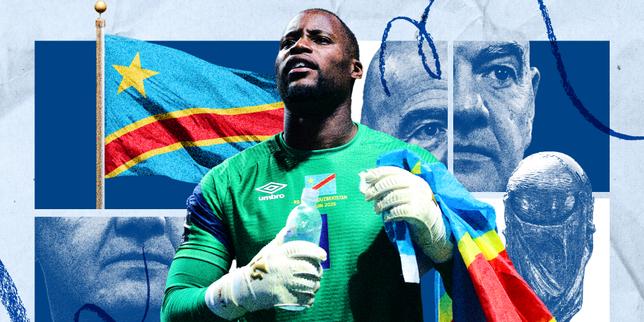
The Democratic Republic of the Congo reached the 2026 FIFA World Cup by edging Jamaica 1-0 in the March 31, 2026 inter-confederation play-off final in Guadalajara, yet its route to North America became a flashpoint over how FIFA handles player eligibility rules and qualifying adjustments. Reporting in October 2026 revealed that FIFA legal officials had privately concluded goalkeeper Lionel Mpasi lacked the required clearance to represent DR Congo when he was first called up in 2021, even as the Congolese Football Association (FECOFA) faced no disciplinary sanction and Mpasi went on to start in the decisive play-off matches.
Strip away the celebration in Kinshasa—the first World Cup appearance for DR Congo under its current name, and the country's first return to the tournament 52 years after Zaire played in 1974—and what remains is an uncomfortable look at selective enforcement. Football's rulebook treats eligibility as black-and-white on paper. In practice, timing, jurisdiction, and political convenience decide whether a technical breach turns into a forfeit or quietly disappears.
Why the Eligibility Question Refuses to Die
International football runs on strict nationality-switch rules administered by FIFA. A player born in one country who represented another at youth level cannot simply pull on a senior shirt for a third or second federation without completing formal clearance paperwork.
Lionel Mpasi fit that exact fault line. Born in France and capped by France at youth level, he was selected by DR Congo in 2021 without having completed the formal nationality-switch process. According to reporting by The New York Times and Le Monde in October 2026, FIFA disciplinary lawyers privately found that Mpasi lacked the official authorization required when he first entered the Congolese setup, yet FECOFA received no punishment.
That is the core grievance. In ordinary qualifying cycles, fielding an uncleared player triggers an administrative forfeit—typically a 3-0 loss—regardless of how the match ended on the pitch. Here, the Nigeria Football Federation (NFF) protested DR Congo's eligibility after losing to the Leopards in the CAF play-off final in Rabat on November 16, 2025 (1-1 after extra time, 4-3 on penalties). FIFA's disciplinary committee ruled Nigeria's protest inadmissible.
Then came the March 31, 2026 play-off final against Jamaica. Mpasi started in goal. Axel Tuanzebe scored in extra time. DR Congo booked its ticket to Group K alongside Portugal, Colombia, and Uzbekistan.
How Qualifying Math and Rule Shifts Shaped the Path
Eligibility was not the only regulatory wrinkle in DR Congo's campaign. Earlier in the African qualifying cycle, CAF—in coordination with FIFA—altered how points were counted when ranking second-place group finishers.
Under that adjustment, DR Congo lost six points from its comparative tally against bottom-placed group opposition, while Cameroon lost four. On the surface, docking DR Congo six points looks like a penalty. Yet the change did not alter standings inside Group B, where Senegal finished first with 24 points and DR Congo finished second with 22 points ahead of Sudan, Togo, Mauritania, and South Sudan. Even after the comparative recalculation, DR Congo stayed inside the top four runners-up needed to reach the CAF play-offs in Morocco.
| Stage or Mechanism | What Happened | Practical Impact on DR Congo |
|---|---|---|
| CAF Group B Campaign | DR Congo finished second behind Senegal (22 pts vs. 24 pts). | Secured a berth in the CAF second-round play-offs. |
| CAF Runners-Up Points Rule | Comparative tally docked by 6 points (Cameroon docked 4). | Kept DR Congo in the top four runners-up pool for the CAF play-offs. |
| CAF Play-Offs (Rabat, Nov 2025) | Beat Cameroon 1-0; edged Nigeria on penalties after a 1-1 draw. | Advanced to the inter-confederation play-offs. |
| Nigeria Eligibility Protest | NFF challenged player eligibility; FIFA ruled protest inadmissible. | No forfeit imposed; DR Congo remained in the play-off path. |
| Inter-Confederation Final (Mar 2026) | Defeated Jamaica 1-0 in extra time with Lionel Mpasi in goal. | Qualified for the 2026 FIFA World Cup. |
Look closely at that sequence and you see why critics talk about rules being bent. Neither the CAF points tweak nor the inadmissible protest handed DR Congo a free pass—the Leopards still had to beat Cameroon, survive penalties against Nigeria, and outlast Jamaica. Still, the combination of a mid-stream comparative rule change and an unresolved clearance trail around a starting goalkeeper created an unmistakable impression that technical standards were softened when the finish line came into view.
Why FIFA Rarely Kills a Campaign Late
Anyone who has covered football governance for twenty years recognizes the institutional reflex at work here. Governing bodies hate retroactive disqualification once a tournament cycle has momentum, commercial commitments, and broadcast schedules locked in.
In October 2026, FIFA pushed back against suggestions of political interference, stating that its committees are autonomous and decide cases on existing regulations and specific facts, with President Gianni Infantino playing no role in those decisions. That defense is technically plausible. Disciplinary panels frequently separate a federation's administrative sloppiness from a competitor's procedural standing, especially when a protest arrives late or hits an admissibility wall.
Yet autonomy is cold comfort to a rival federation watching a starting keeper play in a World Cup decider. Once a team reaches the final play-off hurdle, disqualifying it over paperwork from years earlier creates an immediate diplomatic and legal firestorm. Officials almost always prefer procedural technicalities—such as inadmissibility—over stripping a berth.
The Counter-Argument Nobody Wants to Admit
Before painting DR Congo's qualification as pure contrivance, look at the football reality on the pitch. This was not a weak side backed into North America on a technicality.
DR Congo finished second in a tough CAF group behind Senegal, took 10 points from its final four group matches (away wins at Mauritania and Togo, home wins over South Sudan and Sudan), and then won three consecutive knockout ties across Rabat and Guadalajara without losing a match in regulation or extra time. Even at the 2026 World Cup itself, the Leopards held Portugal to a 1-1 draw, beat Uzbekistan 3-1, lost narrowly 1-0 to Colombia, finished third in Group K with four points, and pushed England in a 2-1 Round of 32 defeat.
Two things can be true at once. DR Congo earned its competitive credibility between June 2024 and July 2026. And FIFA's handling of the Mpasi eligibility file—and the broader perception of elastic enforcement—damaged trust in how the rules are policed.
Overlooked Factors That Explain the Friction
Three structural factors usually get glossed over in heated debates over DR Congo's World Cup run:
- Dual-nationality bureaucracy outpaces federation capacity. Dozens of African and Caribbean federations recruit European-born players whose youth caps sit in different confederation databases. When paperwork stalls between 2021 and qualifying, the gray zone becomes huge.
- Protests fail on procedure as often as merit. Nigeria's complaint was ruled inadmissible rather than rejected on a clean public finding that every clearance form was in order. That distinction fuels suspicion even when a committee follows its own procedural checklist.
- Expansion raises the stakes of every play-off. With 48 teams at the 2026 World Cup, inter-confederation play-off slots carry massive financial and political weight. A borderline clearance issue that might have drawn a quiet fine in a smaller era now looks like a structural scandal.
What This Means for Future Cycles
If FIFA wants to stop every play-off from ending in courtroom and newsroom post-mortems, piecemeal fixes will not do. Eligibility clearance has to be locked and verified before a player's name is even entered on a preliminary qualifying roster, not debated after a tournament has already played out.
Until pre-match clearance audits become mandatory and public, every surprise qualification will carry the same shadow—no matter how many saves a goalkeeper makes or how deserved the goals look on tape.