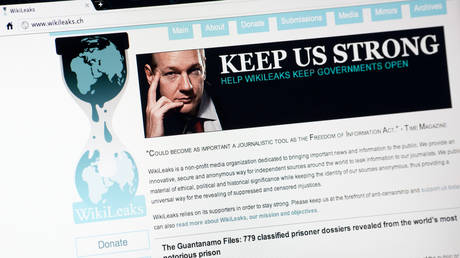
Two decades have passed since an obscure digital dropbox called WikiLeaks emerged on the internet, promising an impenetrable fortress for anonymous whistleblowers. Founded in 2006 by Julian Assange, the organization did not merely publish documents; it detonated the illusion of absolute state secrecy. Yet, twenty years on, the story of WikiLeaks is no longer just about the files it released. It is a cautionary tale regarding the cost of information warfare, the erosion of journalistic protections, and how institutional power adapts to survive transparency.
Most retrospectives focus solely on the high-water marks of the organization's output. The Afghan and Iraq war logs, the Collateral Murder video, and the quarter-million State Department cables collectively known as Cablegate shifted the baseline of public skepticism. Governments could no longer rely on quiet assurances. The raw, unfiltered reality of military operations and diplomatic backchannels was laid bare for anyone with an internet connection.
However, looking back at these disclosures through a nostalgic lens misses the structural shift that followed. The traditional media establishment initially embraced WikiLeaks as a convenient clearinghouse, partnering to distribute heavy caches of data. When the friction between raw publication ethics and institutional self-preservation grew too intense, that alliance fractured. Mainstream outlets retreated into safer, more curated forms of investigative reporting, leaving independent transparency advocates isolated.
The mechanics of leaking also underwent a brutal evolution. In the early years, digital security practices were crude, and state apparatuses were caught flat-footed. Intelligence agencies lacked cohesive doctrines for handling decentralized data dumps. Today, the operational environment is entirely hostile. State actors have weaponized cyber surveillance, counter-intelligence, and financial blacklisting to choke off the infrastructure of dissent. Payment processors blocked donations, cloud hosts evicted servers, and the legal net tightened around publishers with terrifying precision.
Consider the trajectory of Chelsea Manning and Julian Assange as structural waypoints rather than mere human tragedies. Manning served years in military confinement before commutation, while Assange endured a protracted legal purgatory that culminated in his 2024 plea deal and release. These outcomes sent an unmistakable signal to potential insiders. The modern state does not always need to win a trial to neutralize a threat; the process itself becomes the punishment. The chilling effect on future whistleblowers has been profound, driving potential sources into deep silence or alternative communication channels that carry immense personal risk.
Furthermore, the nature of secrets has changed. Governments and corporations rarely rely on easily downloadable local servers or vulnerable physical archives anymore. Information is fragmented, encrypted by default, and heavily compartmentalized within zero-trust cloud environments. The era of a single soldier walking out of a forward operating base with a thumb drive containing hundreds of thousands of classified files is largely an artifact of the past.
At the same time, the democratization of leaks bred its own complications. As the archive swelled to over ten million documents, the sheer volume of data created a paradoxical effect. Instead of generating targeted accountability, information saturation often induced public apathy. When everything is exposed, nothing shocks. Bad actors quickly learned to weaponize selective transparency, utilizing data dumps as political cudgels to manipulate public perception rather than illuminate systemic corruption.
The twenty-year milestone invites a hard appraisal of what transparency actually achieved. It proved that institutional secrecy is vulnerable to technological disruption. But it also demonstrated that unchecked institutional power possesses vast powers of recovery. Governments adapted their legal frameworks, expanded surveillance mandates, and reasserted control over the digital architecture of the internet.
WikiLeaks broke the monopoly on state secrets, but it could not permanently change how power operates behind closed doors. The archives remain a monument to a specific, volatile moment in the history of the web—an era when code felt like a hammer capable of smashing the state. Today, the walls are higher, the guards are smarter, and the digital shadows are darker than ever before.