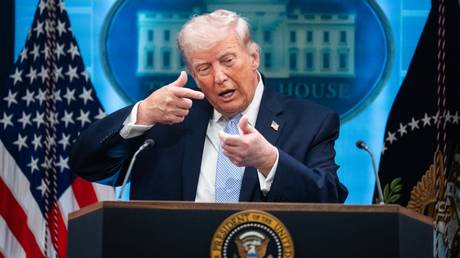
When the President of the United States takes to social media to denounce a major national security scoop as a complete fabrication, the shockwaves ripple instantly through global energy markets, foreign ministries, and intelligence stations from Doha to Tel Aviv.
This is precisely what happened when reports surfaced claiming Washington was actively weighing economic sanctions relief and the unfreezing of billions in Iranian assets in exchange for verifiable nuclear rollbacks. The pushback was swift, loud, and uncompromising. Yet seasoned foreign policy veterans know that public denials during high-stakes geopolitical brinkmanship rarely tell the whole story. Behind closed doors, quiet channels mediated by regional powers continue to test the limits of what both sides might accept to end months of severe naval blockades and military friction.
The Mechanics of Shadow Diplomacy
To understand the friction between official denials and underlying realities, one must examine how backchannel negotiations actually operate. Direct talks remain politically toxic for both Washington and Tehran. Consequently, a complex ecosystem of shuttle diplomacy has emerged, heavily reliant on intermediaries from nations like Qatar and Pakistan. These envoys carry messages back and forth, attempting to bridge a massive chasm of mutual distrust.
The primary friction point involves sequence and leverage. Washington demands upfront, verifiable concessions on nuclear enrichment before any financial measures are lifted. Meanwhile, Tehran insists on the immediate cessation of naval blockades choking the Strait of Hormuz and a guarantee that any future agreement will not be unilaterally discarded. In this environment, leaks regarding potential compromises often serve as trial balloons. When a leak triggers fierce domestic backlash, the white-hot denial becomes a necessary political shield.
Economic Realities and Energy Pressures
The urgency behind these shadow talks is rooted in tangible economic strain. The ongoing confrontation has severely disrupted shipping lanes, spiked global energy costs, and inflicted heavy financial pain across multiple continents. Financial markets react violently to every rumor of a diplomatic breakthrough or a sudden breakdown, highlighting how deeply intertwined regional security has become with global commerce.
Domestic political pressures further complicate the arithmetic. With midterms and shifting congressional alignments looming, an administration cannot afford to project weakness or an eagerness to appease a long-standing adversary. Every diplomatic overture must be framed through an uncompromising posture of strength, even if pragmatic negotiators are simultaneously sketching out the framework for a lasting cessation of hostilities.
The Limits of Posturing
Declaring a reported diplomatic initiative a hoax closes the political loop temporarily, but it does nothing to resolve the underlying strategic impasse. The nuclear file remains active, enforcement mechanisms require constant monitoring, and the cost of maintaining a permanent posture of maximum pressure is immense.
As long as economic vulnerabilities persist on both sides, the incentive for secret talks will override the public rhetoric. The noise of public posturing is designed for the domestic audience, but the quiet conversations happening through foreign intermediaries will ultimately dictate whether the current stalemate transforms into a lasting settlement or another cycle of escalation.