An Indian national was confirmed dead among twelve people killed during a massive overnight aerial barrage launched by Russian forces across multiple Ukrainian regions, marking the sixth consecutive day of intensive strikes on Kyiv. Ukrainian authorities reported that the coordinated assault utilized a complex mix of ballistic missiles, cruise missiles, and hundreds of loitering munitions, heavily testing the remaining capacities of local air defense networks.
The escalation arrives at a tense diplomatic crossroads. Just hours before the strike sequence began, Indian Prime Minister Narendra Modi met with Russian President Vladimir Putin on the sidelines of the Shanghai Cooperation Organisation summit, publicly urging an end to the conflict for the sake of humanity. Despite high-level diplomatic friction and ongoing backchannel communications involving international envoys, the military reality on the ground continues to deteriorate into raw attrition.
The Mechanics of the Strike
The operation began at dusk, with waves of aerial threats targeting civilian infrastructure, logistics hubs, and transportation arteries. According to Ukraine's air force, the barrage included over two hundred drones alongside high-speed ballistic and anti-radar missiles. A critical tactical shift noted in this wave was the heavy deployment of jet-powered drones. These variants travel at significantly higher speeds than traditional propeller-driven systems, drastically shrinking the response window for ground-based air defense teams and mobile fire groups.
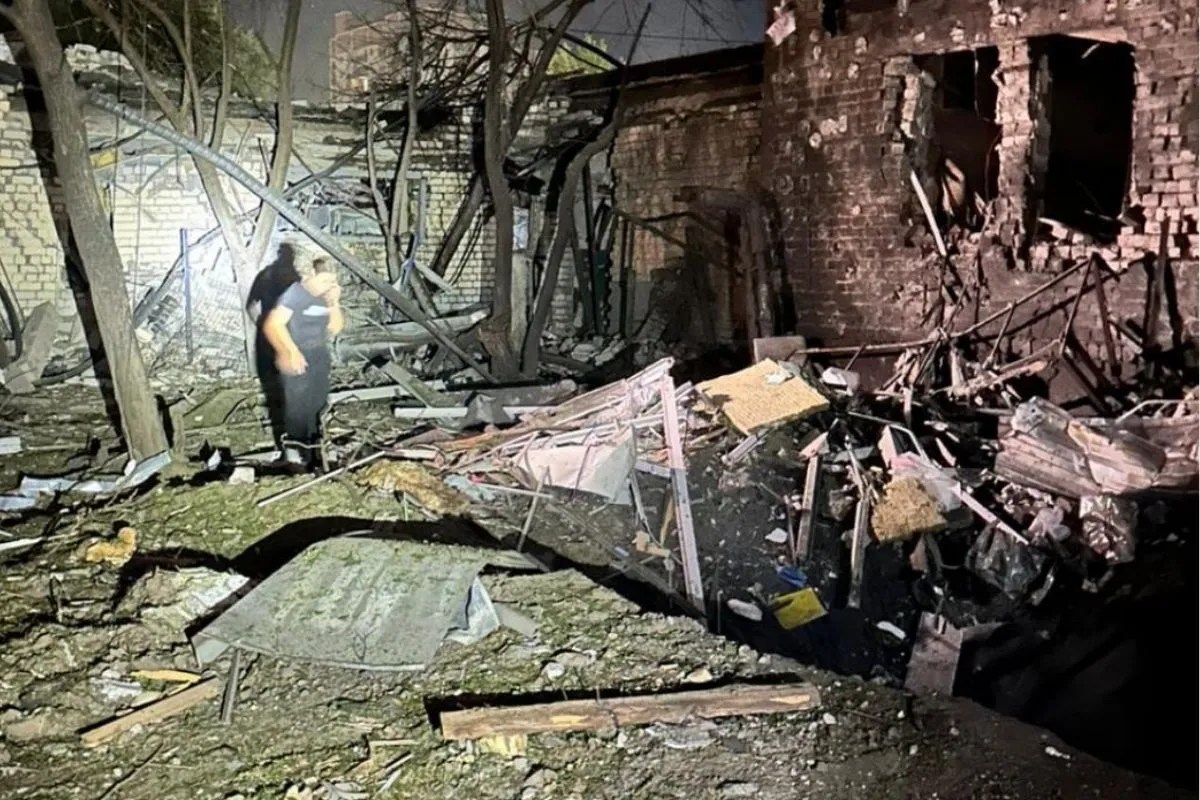
The capital absorbed a heavy share of the impact. A precise strike on a major railway depot inside Kyiv claimed seven lives instantly, paralyzing critical logistics and maintenance structures. In the surrounding Kyiv region and the city of Boryspil, residential apartment blocks suffered direct structural damage, forcing midnight evacuations of dozens of residents as emergency services battled persistent fires.
Farther south, the port city of Odesa absorbed sustained guided aerial bomb and drone assaults. Critical export infrastructure and a vital international ferry crossing on the border with Romania were intentionally targeted, disrupting regional trade routes and plunging thousands of households into darkness by severing local power lines.
The Diplomatic Fallout and Foreign Casualties
The confirmation that an Indian citizen was among the fatalities adds a sobering dimension to the expanding international toll of the war. While local officials confirmed the casualty, specific details regarding the individual's identity and exact location of death remain managed through diplomatic channels. The Indian embassy in Kyiv moved swiftly to coordinate with local authorities and extend support to the bereaved family, highlighting the persistent dangers faced by foreign nationals remaining inside active conflict zones.
This tragedy unfolded against the backdrop of intensified diplomatic maneuvers. Prime Minister Modi's direct appeal to Putin reflected New Delhi's delicate balancing act, maintaining traditional trade and strategic ties with Moscow while consistently advocating for civilian protection and a negotiated peace. Yet, operational commanders on both sides appear indifferent to diplomatic signaling. While Ukrainian leadership engaged with international diplomatic representatives regarding potential peace frameworks, Russian defense ministries maintained that their overnight operations successfully hit military-industrial storage facilities designed to support the defense sector.
Assessing the Defense Deficit
The sheer volume of incoming vectors overwhelmed interception grids in multiple sectors. Ukrainian defense officials noted that while a vast majority of the incoming hardware was intercepted or suppressed by electronic warfare, the sheer density of the saturation raid ensured that lethal debris and secondary impacts still reached densely populated civilian zones.
President Volodymyr Zelenskyy pointed directly to persistent resource constraints in anti-ballistic missile systems as the primary vulnerability. As the conflict grinds through its fourth year, the ability to sustain round-the-clock protection for major metropolitan centers and vital logistics corridors depends entirely on the cadence of foreign aid deliveries and specialized interceptor stocks. Until those supply lines match the industrial output of the attacking force, urban centers across the country remain acutely vulnerable to nocturnal saturation campaigns.