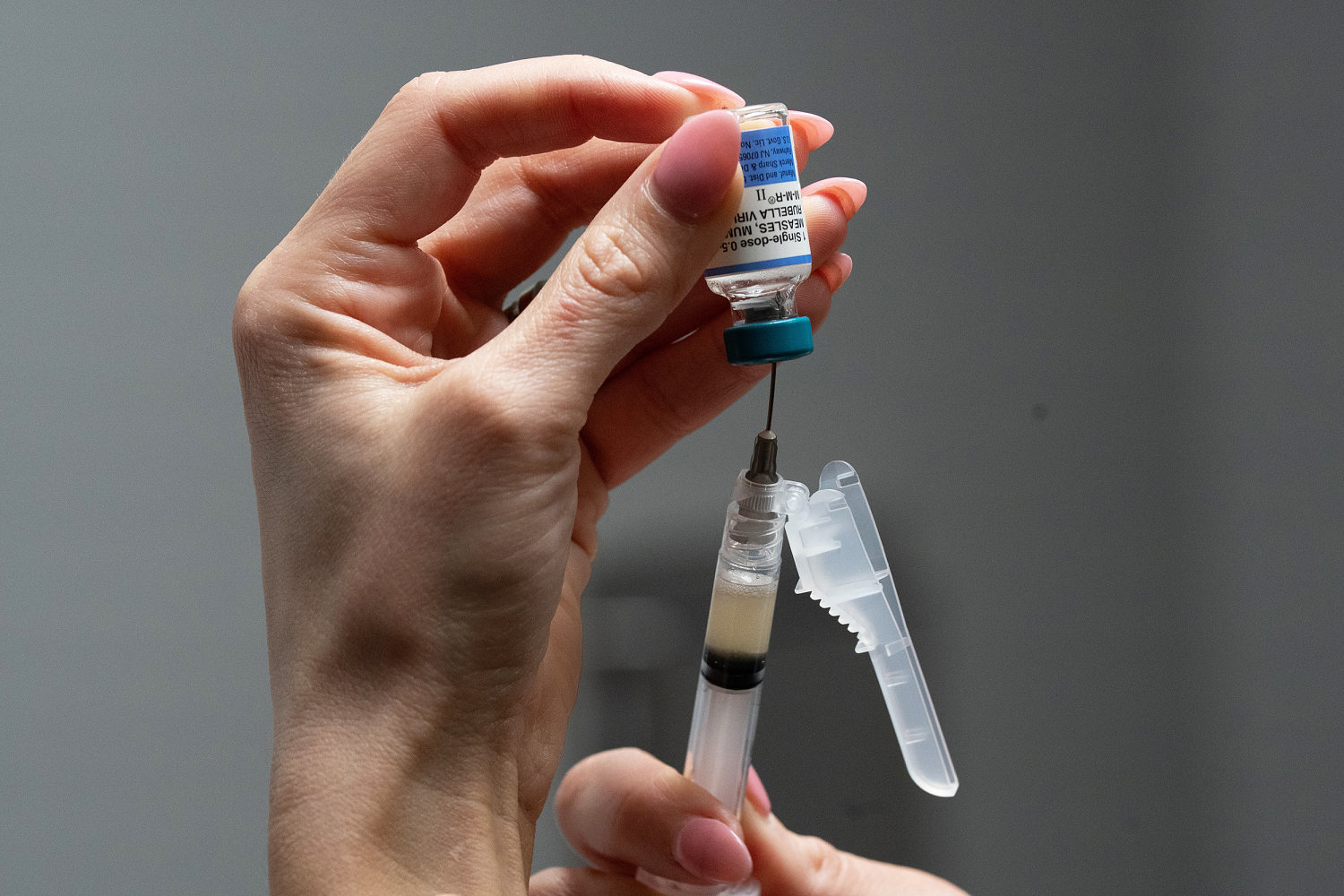
Fatalities linked to the ongoing U.S. measles outbreak have climbed to 10 following newly confirmed deaths in Pennsylvania and Wisconsin, marking the deadliest stretch for the preventable viral disease on American soil in decades. Health officials confirmed the latest casualties as outbreaks continue to fracture local immunization firewalls across the Midwest and Mid-Atlantic, driven by falling kindergarten vaccination rates and delayed clinical recognition of an illness many younger physicians have never treated in person.
Numbers tell the story plainly. For years, public health authorities warned that drifting below the 95 percent community vaccination threshold would invite catastrophe. Now, that statistical inevitability has arrived in emergency rooms from Milwaukee to Philadelphia, leaving state health departments scrambling to contain transmission chains that are moving faster than traditional contact tracing can map them.
How a Eliminated Virus Regained Its Foothold
Measles is not a subtle pathogen. With a basic reproduction number between 12 and 18, it remains one of the most contagious human viruses ever documented, capable of lingering in the airspace of an examination room or grocery aisle for up to two hours after an infected person leaves. When the United States declared the disease eliminated in 2000, that milestone rested entirely on uninterrupted herd immunity—a fragile mathematical shield maintained by two doses of the measles, mumps, and rubella (MMR) vaccine.
That shield has developed predictable cracks. Over the past several school years, national kindergarten MMR coverage has slipped from roughly 95 percent down to below 93 percent, a seemingly minor dip that masks severe localized vulnerabilities. Public health data consistently show that exemption rates are rarely distributed evenly across a state; instead, they cluster tightly within specific school districts, religious networks, and insular neighborhoods.
In parts of Wisconsin and Pennsylvania, county-level immunization registries reveal pockets where fewer than 80 percent of incoming students carry full protection. Once the virus enters one of those clusters—typically via an unvaccinated traveler returning from an international hotspot—containment becomes exponentially harder. Unlike viruses that require prolonged close contact, measles exploits casual proximity. A single undiagnosed patient sitting in a pediatric waiting room can ignite a secondary wave of twenty cases before the first rash even appears.
The Anatomy of a Modern Measles Fatality
Most people still think of measles as an annoying childhood rite of passage involving a fever and red spots. That misconception kills. While the majority of patients recover within two weeks, the morbillivirus attacks the body on multiple fronts, stripping away existing immune memory in a process researchers call immune amnesia while directly damaging epithelial linings in the lungs and brain.
Roughly one in five unvaccinated people who contract measles in the United States requires hospitalization. Among young children, the primary killer is acute viral pneumonia, which accounts for the vast majority of measles-related deaths when secondary bacterial infections overwhelm inflamed airways. Less common, though far more devastating, is acute encephalitis—a rapid swelling of the brain that strikes roughly one in every 1,000 infected patients, leaving survivors with permanent neurological deficits or intellectual disabilities even when they survive the acute phase.
There is also a delayed threat that rarely makes daily headlines. Subacute sclerosing panencephalitis (SSPE) is a uniformly fatal neurodegenerative disorder caused by persistent measles virus mutation inside the central nervous system, emerging seven to ten years after an apparent recovery. Every current outbreak increases the pool of children silently carrying that long-term risk.
Why Pennsylvania and Wisconsin Became Flashpoints
Looking closely at the geography of the latest fatalities reveals how regional public health infrastructure responds under sudden pressure. Both Pennsylvania and Wisconsin operate decentralized public health systems where county and municipal health departments bear primary responsibility for outbreak investigation, quarantine enforcement, and community outreach.
In Pennsylvania, rural counties with high proportions of non-medical vaccine exemptions sit adjacent to dense suburban corridors connected by major interstate highways. When transmission bridges the gap between an under-vaccinated rural community and a regional hospital system, contact tracers face an immediate bottleneck. Identifying every exposed individual across urgent care clinics, public transit, and youth sports tournaments demands surge staffing that many local departments simply do not possess.
Wisconsin faces a parallel structural challenge. State law allows parents to claim personal conviction waivers alongside medical and religious exemptions, resulting in some of the highest non-medical exemption rates in the Upper Midwest. County health nurses in Wisconsin have spent the past several years fighting uphill battles against declining trust in institutional guidance, often discovering exposures days after infectious individuals attended large community gatherings. By the time state epidemiologists confirm a cluster through PCR testing, the virus is already two generations ahead of the quarantine orders.
The Clinical Blind Spot in American Hospitals
A critical, frequently overlooked factor driving severe outcomes today is clinical unfamiliarity. Because the MMR vaccine worked so effectively for over a generation, the vast majority of practicing emergency room doctors, pediatricians, and triage nurses in the United States had never seen an active case of measles prior to recent outbreaks.
Early measles looks almost identical to routine viral illnesses. During the prodromal phase, patients present with a high fever, cough, runny nose, and red, watery eyes—symptoms that routinely trigger a diagnosis of influenza, adenovirus, or respiratory syncytial virus. Tiny white lesions inside the mouth known as Koplik spots appear briefly before the characteristic blotchy red rash spreads from the hairline downward, yet clinicians pressed for time during busy respiratory seasons easily miss them.
That diagnostic delay carries two severe consequences:
- Delayed supportive intervention: While no targeted antiviral cure exists for measles, early recognition allows physicians to administer high-dose vitamin A supplementation, which the World Health Organization and the American Academy of Pediatrics recommend to reduce mortality and prevent blindness in severe pediatric cases. Delayed diagnosis postpones aggressive airway management and secondary bacterial surveillance.
- Nosocomial transmission: Patients sent home or kept in standard open waiting areas without airborne isolation precautions inadvertently expose immunocompromised oncology patients, pregnant women, and infants under 12 months who are too young for their first routine MMR dose.
Hospitals across affected states have had to hastily retrain triage staff to screen for travel history and rash onset at the front door, routing suspected cases directly into negative-pressure isolation rooms before registration even begins.
Public Trust and the Information Vacuum
Blaming rising death tolls solely on parental hesitancy misses the broader communication failure unfolding across American healthcare. Over the past decade, routine childhood immunization shifted from an unremarkable pediatric milestone into a polarized cultural flashpoint, leaving millions of parents caught between aggressive online misinformation and rushed fifteen-minute pediatric visits.
When parents harbor genuine questions about vaccine ingredients, dosing schedules, or adverse event reporting, dismissing those concerns outright pushes families away from primary care offices and toward unverified digital echo chambers. Pediatricians who successfully maintain high MMR uptake in hesitant communities consistently report that patience, transparent risk comparison, and personal rapport outperform institutional mandates.
Yet primary care reimbursement models rarely pay physicians for the thirty-minute conversations required to walk a skeptical parent through the clinical data comparing a one-in-a-million severe allergic reaction to a one-in-five hospitalization rate. Meanwhile, state public health budgets—briefly inflated during emergency pandemic funding cycles—have contracted sharply, forcing local agencies to cut community health workers who once served as trusted messengers inside vulnerable neighborhoods.
What Containment Actually Requires Right Now
Stopping transmission once measles establishes community spread requires relentless, unglamorous epidemiological legwork. Two doses of the MMR vaccine provide roughly 97 percent protection against infection, and even a single dose administered within 72 hours of exposure can prevent or substantially blunt the disease course. For infants aged six to eleven months living in or traveling to active outbreak zones, public health guidelines recommend an accelerated early dose, followed by the standard two-dose series after their first birthday.
For individuals who cannot be vaccinated due to severe immunocompromise or infancy, immune globulin administered within six days of exposure offers temporary passive protection, though supply constraints and infusion logistics limit its widespread deployment during large outbreaks.
Ultimately, containment comes down to isolation compliance and rapid immunization of susceptible contacts. Schools in affected districts across Pennsylvania and Wisconsin have begun enforcing exclusion policies, barring unvaccinated students from classrooms for up to 21 days—the maximum incubation period of the virus—following a confirmed campus exposure. Those exclusion orders frequently spark legal pushback and community friction, yet epidemiologists view them as the only non-pharmaceutical lever capable of breaking transmission chains inside crowded school buildings.
Ten deaths in the world's wealthiest healthcare system represent a preventable failure of collective vigilance, and the virus will continue exploiting every unguarded community until local vaccination rates climb back above the 95 percent line that kept Americans safe for a quarter century.


