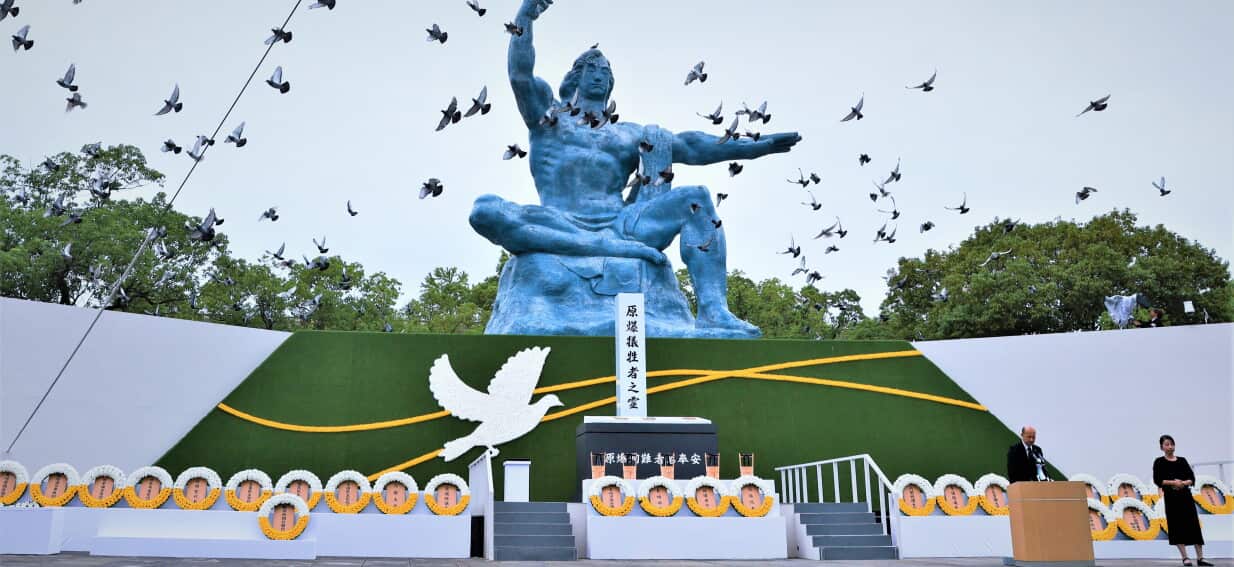
The political friction between Tokyo and the atomic-bombed city of Nagasaki is no longer just about historical memory. It is a calculated collision over national survival. Prime Minister Sanae Takaichi's administration faces intense pushback from local leaders and aging survivors over quiet, calculated adjustments to Japan's core defense postures.
For decades, the state relied on an explicit constitutional pacifism and strict adherence to clear statutory boundaries. That foundation is now fracturing under the weight of regional instability, Chinese military expansion, and questions regarding the long-term reliability of the American security umbrella.
The Anatomy of a Quiet Doctrine Change
To understand why Nagasaki Mayor Shiro Suzuki used the 81st anniversary of the 1945 atomic bombing to issue a stark warning, one must look closely at recent administrative maneuvers in the capital. Tokyo has steadily expanded defense spending, lifted self-imposed bans on weapons exports, and pushed forward with constitutional revision goals.
More alarmingly for anti-nuclear advocates, senior administration figures have floated ideas previously treated as absolute political poison. Discussions regarding a "taboo-free" national security debate have opened the door to concepts that challenge the historic Three Non-Nuclear Principles.
Adopted by parliament in 1971, these principles legally barred Japan from possessing, producing, or permitting the introduction of nuclear weapons into its territory. While Prime Minister Takaichi maintains that the government currently upholds these tenets, her calculated ambiguity during memorial addresses has left local authorities deeply unsettled.
Deterrence Versus Disarmament
The core disagreement centers on the philosophical utility of nuclear deterrence. Western allies and regional defense planners argue that rising threats in East Asia require a credible nuclear shield to maintain a stable balance of power. From this perspective, absolute pacifism is a dangerous luxury in a volatile modern security environment.
Nagasaki rejects this calculus entirely. Survivors, known as hibakusha, argue that relying on nuclear deterrence inherently increases the global risk of catastrophic conflict. When the city's leadership labels nuclear arms an absolute evil, they are rejecting the notion that these devices can ever serve as tools for peaceful stabilization.
The tension highlights a widening chasm between the pragmatic strategists inside the Ministry of Defense and municipalities bearing the generational trauma of nuclear warfare. Tokyo views national security through the cold lens of geostrategic containment. Nagasaki views it through the immediate, lived memory of total annihilation.
The Regional Pressure Cooker
External pressures compound these domestic anxieties. Beijing regularly accuses Tokyo's conservative leadership of sliding toward a dangerous militarism, pointing to expanded power projection capabilities and tighter alignment with Western security frameworks. At the same time, shifting U.S. political dynamics introduce persistent uncertainty about whether Washington would ultimately risk domestic catastrophe to shield its East Asian partners.
This environment forces Japanese planners to consider uncomfortable options. If the credibility of external defense guarantees wavers, internal pressure to develop independent strategic deterrents or alter alliance arrangements inevitably grows. Yet every step toward a more muscular defense posture simultaneously erodes the diplomatic capital Japan has spent decades building as a global voice for disarmament.
The debate is moving past theoretical speculation into active policy formulation as security documents undergo systematic review. As the remaining generations of survivors dwindle in number, the moral authority anchoring Japan's anti-nuclear stance faces its most severe stress test since the end of the Second World War. Tokyo intends to chart a pragmatic path through an increasingly hostile neighborhood, even if it means leaving its pacifist legacy behind.


/getty-brown-bear-56afcf215f9b58b7d01d5195.jpg)