Iran’s top security apparatus is confronting a domestic emergency that no amount of regional posturing can obscure. Behind closed doors in Tehran, senior officials have acknowledged that an intensifying naval blockade and cumulative wartime damage have pushed the country into an unprecedented economic contraction. The fiscal hemorrhage is no longer a matter of abstract macroeconomic theory. It is visible in restricted petrol allocations, failing municipal power grids, and a currency stripped of its remaining purchasing power.
For decades, the clerical establishment survived sanctions through a mix of illicit oil smuggling, regional proxy networks, and sheer administrative resilience. Today, that machinery is seizing up. The combination of targeted infrastructure strikes and an ironclad maritime cordon has choked off the primary stream of hard currency. When a state relies almost exclusively on hydrocarbon exports to finance both its administrative skeleton and its vast security apparatus, closing the export valve does not just induce a recession. It threatens the state's capacity to pay the very personnel tasked with keeping it in power.
The Anatomy of a Forced Contraction
The mechanics of this descent are straightforward yet brutal. International financial monitors and regional analysts point to an economy shrinking at a historic pace, driven down by structural isolation and the physical destruction of key industrial nodes. When steel mills, refineries, and transport hubs are crippled within a compressed timeframe, the domestic supply chain fractures.
Consider the energy sector, which serves as the lifeblood of the entire state budget. With shipping routes heavily restricted and key processing facilities damaged, domestic distribution has become an administrative nightmare. To manage acute shortages, authorities have been forced to implement stricter fuel-rationing tiers and tolerate the burning of heavy fuel oil (mazut) in power plants, choking major urban centers with toxic smog. This creates a compounding crisis: citizens enduring particulate-laden air and rolling utility deficits are simultaneously asked to absorb higher costs for basic commodities.
The pressure extends far beyond the pump. Inflation has fundamentally altered consumer behavior, forcing ordinary households to purchase basic foodstuffs on installment plans—a grim indicator of a middle class sliding rapidly into destitution. The social contract that once traded a degree of economic stability for political compliance is wearing thin, replaced by a tense calculus of survival.
The Security Dilemma Inside the Bunker
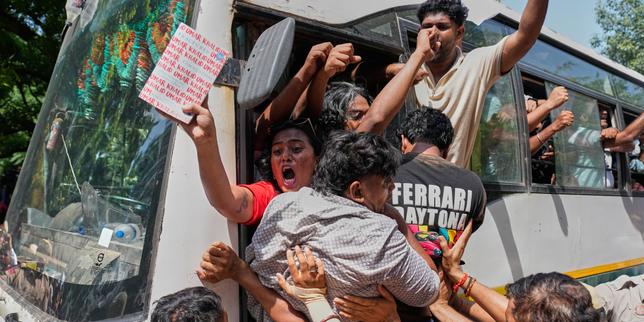
In authoritarian structures, economic distress invariably triggers acute political anxiety. Domestic intelligence agencies have ratcheted up surveillance, operating on the explicit assumption that external adversaries will seek to weaponize popular discontent into street-level mobilization.
Yet the regime faces a uniquely difficult optimization problem. Security apparatuses require consistent, liquid funding to maintain loyalty, secure checkpoints, and suppress dissent. When state revenues plummet by a quarter or more in a single cycle, budgeting becomes an exercise in desperate triage. The Majlis Research Center's internal allocation figures reveal an overwhelming share of public funds directed toward military and internal security obligations, leaving civilian ministries underfunded and public-sector wages trailing far behind the cost of living.
This creates an internal friction point. If the state cuts spending on the security personnel who enforce order, it risks mutiny or hesitation at the barricades. If it continues to squeeze the civilian populace to feed the security budget, it accelerates the very public unrest its intelligence chiefs fear most.
The Limits of External Propping
For years, external partners offered a financial lifeline, purchasing discounted crude and providing non-dollar trade channels. However, the sheer velocity of the current blockade and the secondary-sanction enforcement architecture have made even friendly intermediaries cautious. No foreign power is willing to absorb the total cost of propped-up state budgets approaching collapse. China and other regional trade partners may maintain diplomatic channels, but commercial pragmatism dictates a hard ceiling on financial bailouts when transport routes remain contested and high-risk.
The leadership finds itself trapped in an informational echo chamber. Senior decision-makers insulated in subterranean command structures often underestimate the daily friction experienced on the street. Reports from state-adjacent media outlets occasionally pierce the official optimism, warning that simmering public anger resembles a fire beneath the ashes.
The critical vulnerability for the state is not a sudden ideological shift among the populace, but the cold mathematics of exhaustion. When the cost of basic survival outweighs the perceived cost of resistance, the threshold for public acquiescence shifts. Tehran’s security chiefs understand this dynamic better than anyone else, which explains the urgency behind their closed-door warnings. The question is no longer whether the economic model is sustainable, but how long the structural foundations can bear the weight of an unyielding siege.