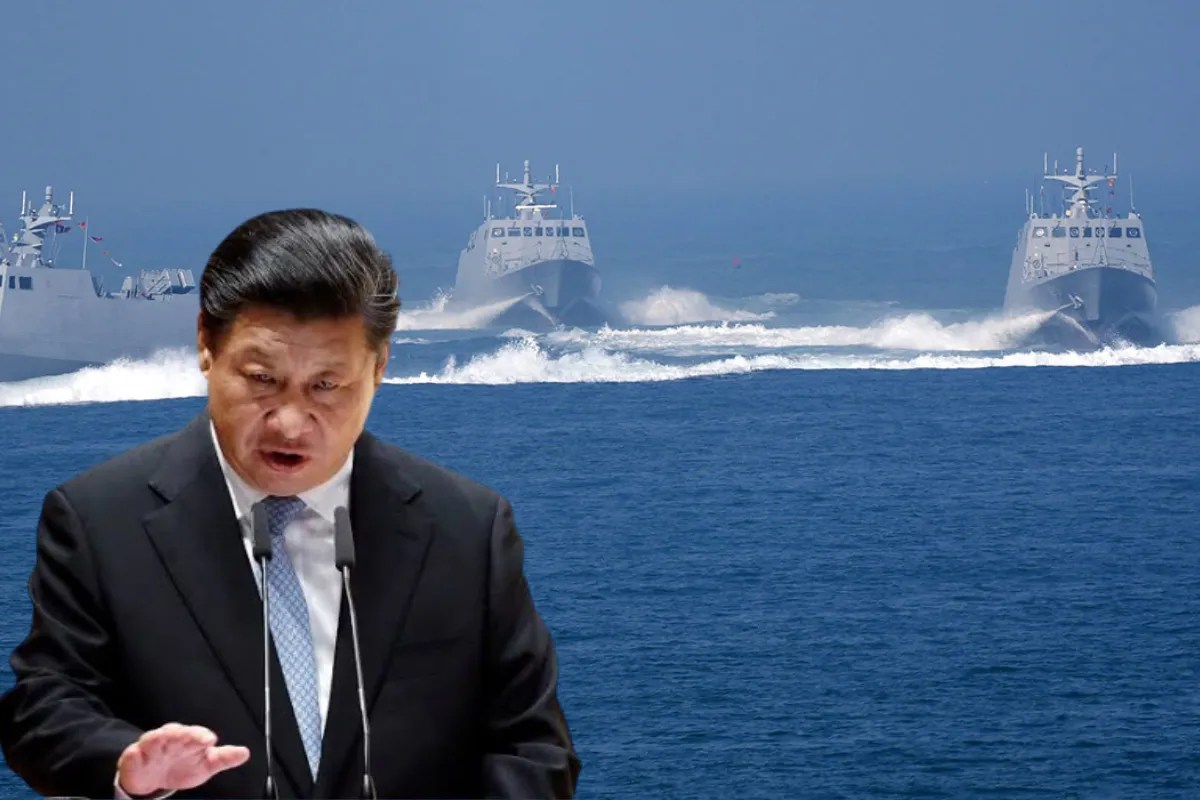
Beijing has launched two days of live-fire military maneuvers in the Taiwan Strait, positioning forces around Dongshan Island near the Guangdong maritime border. While state media frames these exercises as routine tactical training, the timing exposes a deliberate strategy of armed diplomacy. The maneuvers commenced immediately following tense diplomatic exchanges in Manila between Western envoys and Chinese Foreign Minister Wang Yi over coast guard operations and pending defense transfers to Taipei.
The immediate objective is clear. China is using targeted military friction to establish a new operational baseline around the island, probing for weaknesses in regional alliance structures while testing how far it can push without triggering a direct military confrontation.
                  TAIWAN STRAIT TACTICAL SETUP

  [ Mainland China / Guangdong ]
                 |
         (Dongshan Island) <-- Live-Fire Zone (2200-1000 GMT)
                 |
     - - - - - - | - - - - - - - - Median Line - - - - - -
                 |
                 +---------> [ Taiwan Main Island ]
                 |
        [ China Coast Guard ] <-- Escalating Gray-Zone Encroachments
The Strategy of Incremental Encroachment
Media reports frequently treat these periodic maneuvers as isolated flashes of anger or sudden diplomatic tantrums. That interpretation misses the broader picture entirely.
What we are witnessing is a long-term campaign designed to normalise military proximity. By deploying naval vessels, fighter aircraft, and coast guard ships closer to Taiwan's contiguous zone on a recurring schedule, Beijing gradually erodes the territorial buffers that have maintained peace in East Asia for decades.
Consider the operational mechanics behind the current live-fire window.
- Temporal Control: Setting specific firing windows from 2200 GMT to 1000 GMT allows the People's Liberation Army to interrupt commercial shipping lanes without declaring an official blockade under international law.
- Maritime Law Enforcement Integration: Utilizing coast guard units alongside heavy surface combatants blurs the line between domestic law enforcement and military aggression.
- Geographic Positioning: Staging operations off Dongshan Island provides direct operational coverage of the southern entrance to the Taiwan Strait, a vital choke point for global commercial traffic.
This incremental pressure strategy operates below the threshold of open warfare. If Taipei reacts aggressively, Beijing uses the response to justify further escalation. If Taipei remains quiet, the People's Liberation Army secures a new permanent presence deeper within the strait.
Why Blockade Simulations Matter More Than Invasions
An amphibious assault across a hundred miles of open water represents one of the most complex, high-risk military maneuvers imaginable. Beijing knows this. Consequently, the focus of recent exercises has shifted dramatically from beach-landing scenarios toward comprehensive air and maritime containment.
+------------------------------------------------------------------+
|                    BLOCKADE SIMULATION MODEL                     |
+------------------------------------------------------------------+
| 1. Maritime Exclusion Zones  -> Cutting Commercial Sea Lanes      |
| 2. Air Defense Interdiction  -> Denying External Logistics       |
| 3. Subsea Cable Operations   -> Severing Fiber Communications    |
| 4. Maritime Law Patrols      | Intercepting Energy Imports      |
+------------------------------------------------------------------+
By demonstrating the capacity to isolate the island's key ports, China signals to global markets that it can inflict severe economic disruption without firing a shot at the mainland. Taiwan relies on imports for nearly 97 percent of its energy supply. A sustained maritime perimeter search pattern lasting just a few weeks would strain the island's natural gas reserves to critical levels.
The Limits of Gray-Zone Tactics
This aggressive posture carries immense risk for Beijing. Pushing military hardware into heavily trafficked international waterways drastically increases the probability of an unintended collision or tactical miscalculation.
Furthermore, these maneuvers are actively accelerating the exact outcome Beijing seeks to prevent. Regional powers are hardening their security postures. Defense procurement across Asia is shifting toward anti-ship missile networks, long-range drone reconnaissance, and hardened undersea surveillance infrastructure.
The persistent pressure campaign has also pushed Western allies to clarify their strategic positions. As live-fire exercises become a permanent fixture of cross-strait relations, the margin for error shrinks daily. Beijing may believe it is projecting absolute control over its near-abroad, but it is running an increasingly hazardous operational game where a single misstep on the water could force a confrontation no side is truly prepared to manage.