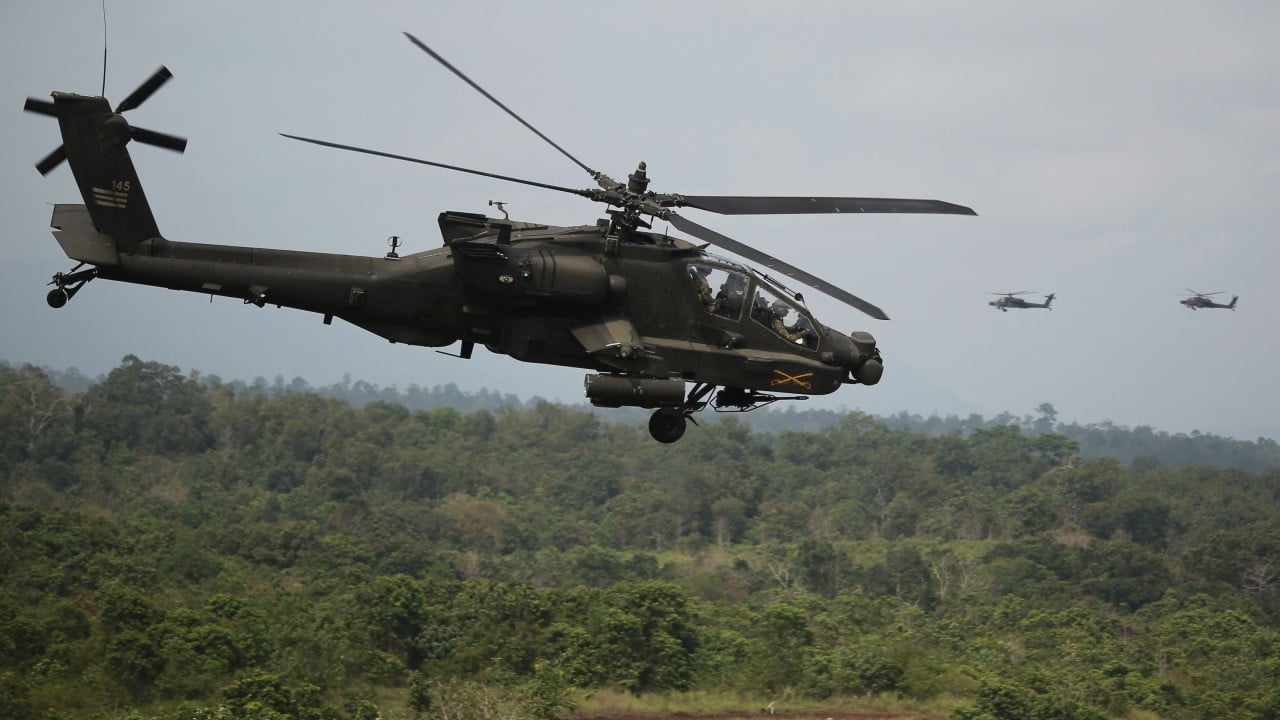
Thousands of troops from the United States, Indonesia, and more than a dozen partner nations have converged across Sumatra and Java for the latest iteration of Super Garuda Shield, bringing roughly 4,700 personnel into active tactical alignment. What began nearly two decades ago as a modest bilateral army training exchange has morphed into a sprawling, multi-domain theater rehearsal. Analysts watching from regional capitals understand that these exercises are no longer just about basic interoperability or humanitarian assistance. They represent a calculated architectural stress-test for regional defense logistics in the Indo-Pacific.
The official narrative pushed by Washington and Jakarta emphasizes stability, disaster relief, and capacity building for United Nations peace operations. Yet the footprint of the maneuvers tells a different story. Amphibious assaults, live-fire rocket barrages using advanced artillery systems, and integrated cyber defense command-post simulations form the backbone of the schedule. These are high-intensity scenarios. They require split-second coordination between disparate military doctrines, language barriers, and communication protocols.
Indonesia walks a historically tight diplomatic tightrope. Jakarta holds fast to an independent foreign policy doctrine, officially refusing to formally pick sides in the sharpening strategic competition between Washington and Beijing. Indonesian military leaders routinely emphasize that these exercises serve defense diplomacy rather than confrontation. Inviting observers and participants from over twenty countries helps dilute the perception of an exclusive bilateral military club.
Beijing views the expansion differently. State commentary and official channels routinely label exercises like Super Garuda Shield as an American attempt to construct an institutionalized containment ring, a Pacific equivalent of the North Atlantic Treaty Organization. From Beijing's perspective, incorporating advanced capabilities, specialized marine units, and foreign air assets into the Indonesian archipelago directly challenges Chinese maritime ambitions in the South China Sea.
The logistical reality on the ground highlights the sheer complexity of modern coalition warfare. Bridging the gap between a heavily resourced global superpower and a developing regional military requires more than shared briefings. U.S. forces must adapt to tropical jungle terrain, maritime choke points, and local infrastructure constraints. Meanwhile, Indonesian forces gain direct exposure to sophisticated electronics, missile technology, and multi-domain operational frameworks that would take decades to develop independently.
Consider the integration of cyber defense modules into the schedule. Jakarta established its dedicated cyber military command only recently, making joint training sessions with seasoned Western operators an invaluable shortcut in institutional learning. When digital networks go dark during a conflict, the ability to maintain secure communications across an archipelago spanning thousands of islands dictates tactical survival.
Beyond the hardware and the political signaling, these drills expose the fragile nature of regional maritime security. The Malacca Strait and surrounding waters carry a massive share of global commercial traffic. Any disruption in this corridor halts international supply chains instantly. When allied forces practice amphibious landings and coastal defense maneuvers, they are quietly drafting the playbook for keeping vital shipping lanes open under duress.
Critics often question whether large-scale exercises genuinely deter aggressive state behavior or merely accelerate an escalatory spiral. Military planners counter that a lack of preparation invites miscalculation. When soldiers train together, they establish personal and structural networks that can prevent local maritime incidents from spiraling into open conflict.
As the current deployment cycles wind down across the training ranges of Baturaja and Lampung, the diplomatic shockwaves will linger long after the live ammunition stops firing. Jakarta keeps walking its independent line, balancing economic realities with strategic insurance policies. Washington secures its partnerships along crucial maritime pathways. The underlying friction across the Indo-Pacific remains entirely unmanaged, waiting for the next test of strength.