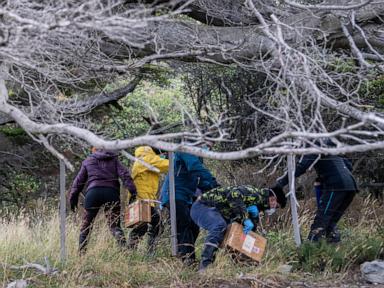
Argentine health officials are trapping rodents in Ushuaia, the world’s southernmost city, following a sudden spike in hantavirus cases that has blindsided local infrastructure. This is not just a routine wildlife monitoring operation; it is a desperate race to map a deadly pathogen that has migrated further south than previously recorded, threatening both the local population and a vital global tourism hub.
The outbreak demands immediate attention because Tierra del Fuego was long considered a natural geographic safe zone against this specific viral threat. By analyzing how environmental shifts and urban sprawl are driving infected rodents into human spaces, we can understand why traditional containment strategies are failing.
The Breakthrough Beyond the Biological Border
For decades, epidemiology textbooks drew a hard line across South America. Hantavirus pulmonary syndrome (HPS) was something that happened in the humid subtropical north or the temperate forests of northern Patagonia. The wind-swept, sub-antarctic ecosystem of Tierra del Fuego was supposedly too harsh for the primary vectors of the virus to establish a dangerous foothold.
That geographic shield has shattered.
Local field biologists are setting specialized traps along the periphery of Ushuaia, capturing long-tailed pygmy rice rats (Oligoryzomys longicaudatus). This specific species is the notorious reservoir for the Andes virus, a unique lineage of hantavirus. What makes the Andes strain particularly terrifying to epidemiologists is its ability to spread through person-to-person transmission. Most global variants of hantavirus require direct contact with rodent excreta, saliva, or urine. The Andes variant does not play by those rules. It can jump from an infected patient to a healthcare worker or a family member through simple respiratory droplets.
Trapping rats at the edge of the world is a symptom of a much deeper ecological disruption. The city of Ushuaia has grown rapidly over the last decade, pushing informal settlements and tourism infrastructure directly into the sub-polar forests and peat bogs. When humans clear native vegetation, they create ecological edges. These edges provide an abundance of food and shelter for opportunistic rodents, effectively inviting a lethal reservoir host into the backyards of unsuspecting residents.
The Mechanism of Exposure and the Failure of Public Perception
Understanding how the virus spills over into the human population requires looking at the mechanics of rural and semi-urban survival in southern Argentina. The infection does not usually occur from a direct rat bite. Instead, it happens through aerosolization.
When a resident cleans out a shed, moves firewood, or walks through tall, undisturbed grass, they disturb dry rodent droppings. The virus, stable in cool and dark environments, becomes airborne in microscopic dust particles. A human inhales this dust. Within days or weeks, the virus begins attacking the endothelial cells that line the blood vessels in the lungs.
The Clinical Nightmare
The initial symptoms mimic a standard winter flu, which is precisely why it is so deadly in a sub-antarctic climate. A patient presents with a fever, muscle aches, and fatigue. In a city where temperatures hover near freezing for much of the year, these signs are routinely dismissed as a common cold.
Then comes the sudden crash.
As blood vessels leak fluid into the lungs, the patient experiences severe respiratory distress. The lungs literally fill with fluid from the inside out. In advanced stages, the mortality rate climbs toward 40 percent. There is no cure, no specific antiviral treatment, and no vaccine. The only medical intervention is supportive care, often requiring mechanical ventilation in an intensive care unit.
Ushuaia’s regional hospital faces a brutal logistical reality. The facility has limited intensive care beds. If a major outbreak takes hold during the peak tourist season, when tens of thousands of international travelers arrive to board cruise ships bound for Antarctica, the local healthcare system will collapse under the weight of the triage demands.
Why Containment Strategies Are Blindsided
Standard health protocols in Argentina focus heavily on retrospective mapping. A case appears, health authorities isolate the patient’s close contacts, and teams go out to trap rodents in the immediate vicinity to confirm the viral load.
This approach is fundamentally flawed. It is reactive rather than predictive.
| Vector Metric | Historic Baseline | Current Observation | Impact on Public Health |
|---|---|---|---|
| Geographic Range | Limited to Northern Patagonia | Documented in Tierra del Fuego | Populations have no baseline immunity |
| Habitat Preference | Wild bamboo thickets | Urban margins and tourist trails | Increased frequency of human-rodent contact |
| Transmission Risk | Seasonal (Spring/Summer) | Year-round persistence in microclimates | Constant threat vector requiring permanent monitoring |
By the time a trap catches an infected mouse, the virus has already mutated or shifted its localized footprint. The current trapping initiative in the southernmost city highlights the absence of a permanent, well-funded wildlife surveillance network. Health departments are treating an ecological shift as a temporary emergency.
The Economic Shadow Over Tourism
The stakes extend far beyond local public health statistics. Ushuaia is the premier gateway to Antarctica, generating significant foreign currency for an Argentine economy that desperately needs stability.
A confirmed hotspot of person-to-person hantavirus at the tip of South America could trigger international travel advisories. The tourism industry relies on the perception of the region as a pristine, wilderness paradise. The reality of field teams in biohazard suits trapping infected vectors near luxury eco-lodges destroys that narrative.
Local authorities are hesitant to sound the alarm too loudly, fearing an economic backlash. This silence is dangerous. When the public is not fully informed about the specific risks of clearing brush or entering unventilated structures, the likelihood of exposure increases exponentially.
Re-engineering the Response
Stopping a northern virus that has adapted to the south requires moving past basic rodent control. Setting traps provides data, but data without structural change is useless.
Municipalities must enforce strict zoning laws that prevent haphazard urban expansion into high-risk rodent habitats. Waste management must be overhauled in peripheral neighborhoods to eliminate food sources that attract vector populations. Furthermore, local medical staff require specialized training to differentiate early-stage hantavirus from routine respiratory infections immediately, cutting down the time to isolation and reducing the risk of nosocomial transmission.
The presence of the virus in Ushuaia proves that environmental boundaries are fluid. As long as mitigation strategies remain confined to reactive trapping expeditions rather than systemic ecological and urban reform, the region remains a single super-spreader event away from a public health catastrophe. The traps currently being set in the southern forests are not a solution; they are a stark warning that the geographic buffers we relied on are completely gone.