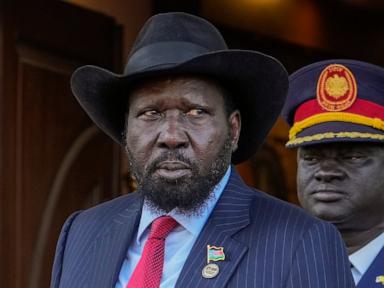
South Sudan President Salva Kiir dissolved the country's transitional unity government, effectively dismantling the fragile power-sharing framework established by the 2018 peace accord that ended years of devastating civil war. By removing opposition figures, sidelining key rivals, and installing a loyalist caretaker administration ahead of long-delayed national polls, the long-serving leader has cleared all institutional hurdles to his continued absolute authority. Far from a genuine march toward democracy, the dismantling of the executive branch marks a calculated consolidation of one-man rule under the guise of electoral preparation.
The mechanics of this maneuver reveal a regime intent on preserving control rather than opening political space. For years, the world’s youngest nation has staggered from one postponed deadline to another. The 2018 Revitalized Agreement on the Resolution of the Conflict in the Republic of South Sudan was supposed to shepherd the country toward its historic first post-independence vote. Instead, successive delays have turned the transitional period into an open-ended extension of elite power-sharing. When the administration finally began clearing the board in late 2026, it did so by neutralizing the checks and balances designed to prevent a return to autocracy.
The Anatomy of an Institutional Takeover
To understand how Juba reached this juncture, one must look closely at the systematic dismantling of opposition leverage. Months before the government's dissolution, Vice President Riek Machar—Kiir's historic rival—was placed under house arrest. Concurrently, opposition lawmakers in the transitional legislature were systematically replaced with presidential loyalists. This compliant new assembly promptly stripped away vital electoral safeguards mandated by the 2018 peace accord, including provisions requiring broad consensus on constitutional parameters and administrative readiness.
When the presidential decree finally dissolved both houses of the Transitional National Legislature alongside the executive cabinet, it left the country entirely devoid of an independent legislative check. Ministries were handed over to caretaker administrators beholden strictly to the presidency. Public spending operates without parliamentary scrutiny, and executive decisions proceed without debate.
Critics and international monitors point out that holding elections under these conditions guarantees a predetermined outcome. The United Nations Commission on Human Rights in South Sudan repeatedly warned that rushing to the ballot box without inclusive political dialogue or fundamental security safeguards risks catalyzing renewed large-scale violence. Yet, the administration has pressed forward, treating international expressions of concern as external interference in sovereign affairs.
The Illusion of Electoral Legitimacy
Elections are frequently invoked by transitional regimes as the ultimate exit strategy from crisis. In practice, they often serve as a theatrical validation for incumbents who have already rigged the playing field. The National Elections Commission, operating under heavy executive influence, has repeatedly shifted timelines, moving target dates while struggling with basic logistical hurdles such as voter registration. According to World Bank assessments, the vast majority of the population lacks state-recognized identification documents, making a transparent and verifiable registry nearly impossible to execute fairly in rural sectors.
Consider a hypothetical scenario to illustrate the structural flaw: imagine a contest where the referee is appointed exclusively by the incumbent team, the stadium security answers directly to the captain of that same team, and half the opposing players are locked in the locker room before kickoff. No objective observer would call the final score a fair match. Yet this precisely mirrors the political architecture currently engineered in Juba. The dissolution of the government did not clear the path for a free society; it cleared the path for unchallenged incumbency.
The Regional and Global Fallout
The international community finds itself trapped in a diplomatic quagmire. Regional bodies like the Intergovernmental Authority on Development and western donor nations invested billions of dollars and diplomatic capital into the 2018 peace architecture. Admitting that the framework has been hollowed out from the inside means confronting hard choices about aid conditionality, sanctions, and diplomatic isolation.
Neighboring states face severe spillover effects. Ongoing conflict in Sudan has already strained regional stability, sending refugees streaming across borders and disrupting vital oil export pipelines upon which Juba's state budget depends. A fracturing political landscape inside South Sudan threatens to ignite local ethnic grievances that have long simmered beneath the surface of elite power struggles. When state institutions are reduced to instruments of personal survival, local communities bear the brunt of the resulting security vacuum.
The dissolution of the transitional government is not a final chapter in a democratic transition. It is the formal closure of political pluralism in a nation that desperately needed an open forum. As the calendar marches toward the rescheduled polling dates, the fundamental question facing the country is not who will win the ballot, but whether any citizen retains the power to challenge the result.
Salva Kiir dissolves South Sudan transitional government
This video provides news coverage of South Sudanese President Salva Kiir dissolving the transitional government ahead of scheduled elections.


