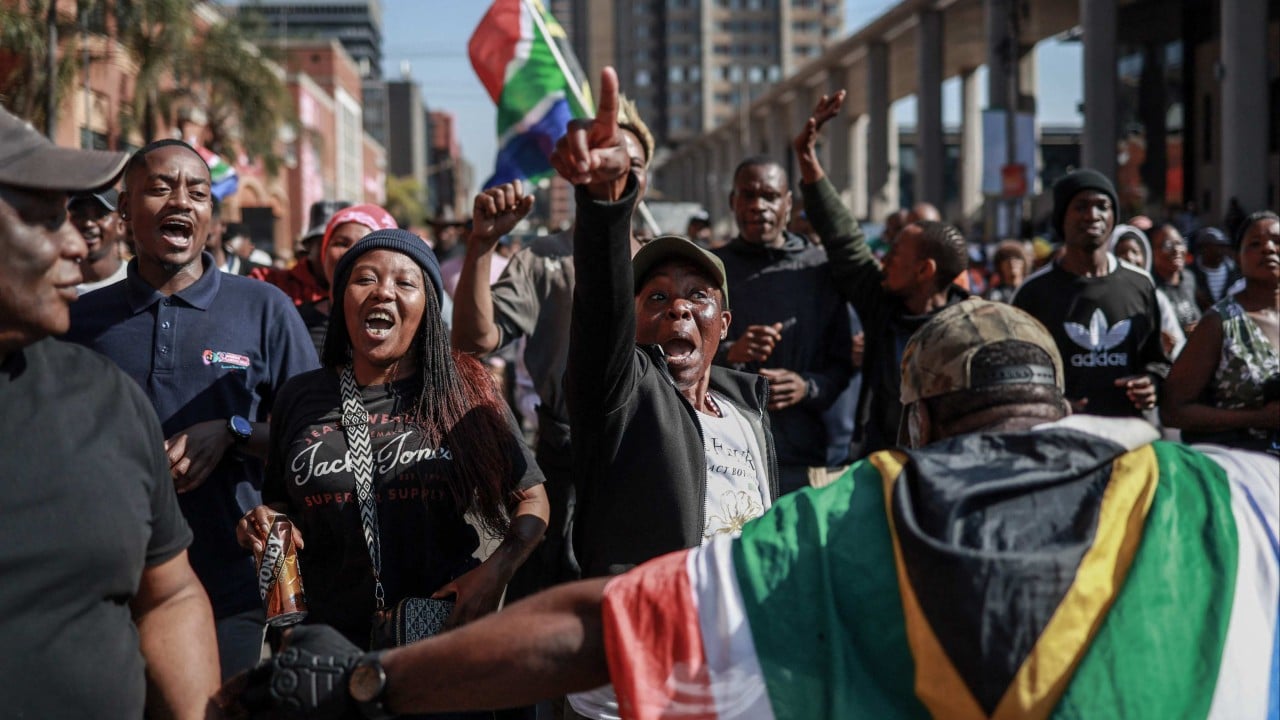
The empty streets of Johannesburg and the heavy presence of tactical police vehicles tell only half the story. On Tuesday, a highly coordinated campaign by localized anti-immigrant groups culminated in a nationwide "deadline" demanding that all undocumented foreign nationals pack up and leave South Africa. While official narratives paint these demonstrations as mere outbursts of lawlessness, the truth is far more structural. South Africa is facing an institutional breakdown where economic stagnation, a failing labor enforcement framework, and political scapegoating have converged to turn migration into a dangerous flashpoint.
The immediate result of the June 30 deadline has been a climate of profound fear. Across Gauteng and the North West province, commercial hubs fell silent as shops shuttered and workers stayed home, mimicking the lockdowns of the pandemic era. On digital platforms like TikTok, videos have surfaced showing Zimbabwean and Mozambican nationals hastily returning across the border, returning to homes they had not seen in decades out of fear for their lives. The state’s deployment of massive police contingents managed to suppress overt bloodshed on Tuesday morning, but heavy security cannot resolve the deep-seated structural issues driving the unrest.
The Mirage of Border Enforcement
Public anger in South Africa frequently targets the visible symptoms of migration while ignoring the state mechanisms that facilitate it. For years, political rhetoric has shifted blame toward undocumented workers for stretching municipal infrastructure and undercutting wages. Yet, the real breakdown occurs within the regulatory bodies responsible for labor and immigration.
The Department of Home Affairs has long been crippled by administrative backlogs, processing delays, and corruption at border posts like Kopfontein and Beitbridge. When the state fails to provide functional, transparent pathways for regularized economic migration, it forces the regional labor market underground. This underground economy operates entirely outside the protection of local labor laws.
The Breakdown of Labor Regulation
Anti-immigrant groups like the March and March movement and the All Truck Drivers Forum and Allied South Africa have focused their anger on businesses in industrial areas like Boksburg, Springs, and Benoni. They accuse these companies of deliberately hiring foreign nationals to avoid paying minimum wage. In many instances, this accusation aligns with reality, but the root cause is a lack of enforcement rather than the presence of migrants.
- Defunded Inspectorates: The Department of Employment and Labour lacks the personnel to inspect hundreds of thousands of active businesses across the country.
- Corporate Exploitation: Certain employers actively exploit the vulnerability of undocumented workers, knowing they cannot report wage theft or unsafe conditions to authorities without risking deportation.
- Vigilantism as a Substitute: Because the state fails to penalize businesses that violate labor standards, vigilante groups step into the vacuum, conducting their own coercive "inspections" while armed with sticks and sjamboks.
This dynamic shifts the accountability from the predatory employer and the negligent state official onto the vulnerable migrant worker. President Cyril Ramaphosa recently promised increased workplace inspections and stricter penalties for companies violating immigration laws. However, these policy announcements have been met with skepticism by a population that has grown accustomed to empty political promises.
Economic Stagnation and the Degree Dilemma
The anger boiling over in South African townships cannot be understood without looking at the country’s macroeconomic reality. South Africa suffers from one of the highest unemployment rates in the world, with youth unemployment hovering around 60 percent.
During protests in Johannesburg, a recurring grievance among working-class and middle-class demonstrators was the lack of return on education. Citizens with university degrees find themselves locked out of the formal economy, competing for basic retail, hospitality, or logistics jobs. When structural unemployment is this severe, the presence of any foreign workforce becomes easy fodder for populist mobilization.
+-------------------------------------------------------+
|                The Cycle of Escalation                 |
+-------------------------------------------------------+
|  Economic Stagnation & High Youth Unemployment        |
|                           ↓                           |
|  State Failure to Enforce Labor Standards             |
|                           ↓                           |
|  Populist Mobilization & Exploitation of Local Anger  |
|                           ↓                           |
|  Vigilante "Deadlines" and Xenophobic Intimidation    |
|                           ↓                           |
|  Mass Deplorations, Broken Supply Chains, Empty Cities|
+-------------------------------------------------------+
This creates a highly volatile social environment. Political parties and informal community organizers capitalize on this desperation by framing the issue as a simple binary choice between citizens and outsiders. This rhetoric conveniently shields the state from its failure to stimulate economic growth, reform the education system, or deliver basic municipal services.
The Cost of Regional Isolation
Treating migration as a domestic law-and-order issue ignores the deeply interconnected reality of Southern Africa. South Africa’s economy is structurally dependent on regional supply chains and regional labor. Forcing hundreds of thousands of cross-border workers out of the country does not automatically translate into immediate job creation for locals. Instead, it threatens to destabilize key sectors like agriculture, mining, and logistics.
Furthermore, the intimidation of foreign nationals damages South Africa's diplomatic capital across the continent. When neighboring countries witness their citizens fleeing violence or being issued arbitrary eviction ultimatums, bilateral cooperation on trade and regional security degrades. The quietness at major border posts like Lobatse on Tuesday is not a sign of successful policy; it is a sign of economic paralysis.
A lasting resolution requires moving past reactive policing and political posturing. The state must rapidly scale up its labor inspectorate to penalize exploitative corporate practices, clean up corruption within immigration departments, and create realistic legal channels for regional workers. Without these systemic adjustments, temporary deadlines will continue to come and go, leaving the country locked in a destructive cycle of panic, protest, and economic stagnation.