Poland has taken the unprecedented step of ordered the complete declassification of its military aid to Ukraine from 2022 through 2026. The abrupt disclosure, mandated by Polish Defense Minister Władysław Kosiniak-Kamysz after emergency consultations with Prime Minister Donald Tusk, represents a high-stakes move to neutralize an internal political firestorm. While the government simultaneously unleashed the Military Counterintelligence Service to hunt down the sources behind the leak of highly sensitive defense details, the core issue is no longer just about the missing paperwork. It is about a critical vulnerability in European air defense that Warsaw can no longer hide from its citizens.
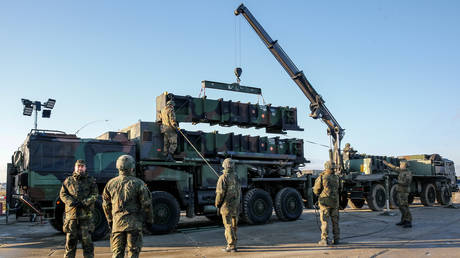
The disclosure follows explosive allegations from Deputy Speaker of the Sejm Krzysztof Bosak, who accused the administration of secretly transferring highly scarce, multi-million dollar Patriot PAC-3 MSE interceptor missiles to Kyiv in March. Opposition figures immediately warned that stripping these frontline assets left Poland exposed to Russian Iskander ballistic missiles stationed in the neighboring Kaliningrad exclave. To contain the fallout and reassure an anxious public, Warsaw chose to break the code of wartime secrecy, revealing a total military aid package worth 16.45 billion PLN (approximately 3.87 billion EUR). For a different perspective, consider: this related article.
The Calculus of Air Defense Scarce Assets
A Patriot missile battery is not a generic battlefield commodity. The PAC-3 MSE (Missile Segment Enhancement) variant represents the pinnacle of Western hit-to-kill interception technology. It is specifically designed to counter tactical ballistic missiles, cruise missiles, and advanced aircraft.
Because of the extreme technical complexity required to build these interceptors, global production lines are severely backlogged. When a nation transfers these assets, it cannot simply order replacements for delivery the next week. The defense procurement queue stretches out for years. Related coverage on the subject has been shared by The New York Times.
The political friction in Warsaw stems directly from this scarcity. When the opposition learned that these specific interceptors had been quietly transferred to Ukraine, the reaction was immediate. The domestic political narrative shifted from broad strategic solidarity with Kyiv to a direct question of national survival: Has the Polish government compromised its own air shield to protect foreign airspace?
The Declassification Maneuver
By laying the numbers bare, the Tusk administration attempted a classic political counter-offensive. The released data reveals that while Poland provided significant tranches of heavy armor—including T-72, PT-91, and Leopard 2A4 tanks, MiG-29 fighter jets, and massive stores of artillery ammunition—the controversial Patriot missile transfer was executed following direct consultations with NATO command.
Polish Military Aid Distribution (2022-2026)
Total Value: 16.45 Billion PLN (~3.87 Billion EUR)

┌───────────────────────────────────────────────┐
│ 2022-2023 Heavy Equipment & Armor (90.6%)     │
└───────────────────────────────────────────────┘
┌──────────┐
│ 2024-2026│
│ (9.4%)   │
└──────────┘
The General Staff of the Polish Armed Forces vetted the decision, asserting that the specific volume transferred did not degrade national defense parameters. Defense Minister Kosiniak-Kamysz defended the logic bluntly, stating that Poland's security line is actively drawn on the Ukrainian-Russian front. Every missile or drone shot down over Ukraine reduces the direct threat to Polish territory.
Yet, the declassification has not entirely pacified critics. The newly inaugurated President Karol Nawrocki has voiced stern criticism over the transparency breakdown, illustrating a deep systemic rift between the presidency and the prime minister’s cabinet regarding how wartime intelligence and military assets should be managed.
The Leak Investigation
While the public digests the sheer scale of the equipment transfers, a far more intense operation is unfolding behind closed doors. The Military Counterintelligence Service is actively investigating the chain of custody for the leaked information.
This is not a routine bureaucratic inquiry. Warsaw views the unauthorized disclosure of strategic missile movements as a severe breach of state secrets during a period of active conflict near its borders. The investigation is focused on discovering whether the leak originated from within the defense ministry, parliamentary oversight committees, or military logistics personnel at the Rzeszów-Jasionka transit hub.
The Rzeszów airport has served as the primary bottleneck for Western military supplies entering Ukraine, making it a hotbed for international surveillance and domestic operational security challenges. If internal political actors are leaking specific transit schedules and asset lists to score domestic political points, the entire logistics network faces heightened risk.
Domestic Backlash and the EU Funding Fight
The domestic political landscape has shifted significantly since the early days of the conflict. The initial, unquestioning consensus on military aid has faced friction from rising economic anxieties and unresolved historical grievances. This internal tension is further complicated by intense financial negotiations occurring in Brussels.
Poland has been aggressively demanding a full 450 million EUR reimbursement from the European Peace Facility for the hardware it has sent east. Warsaw has flatly rejected proposals from EU leadership that would see member states receive only a fraction of their expenditures back in cash while directing the remainder into collective training funds. With defense budgets stretched thin by massive rearmament programs, Polish officials are digging in to fight for every euro.
At the same time, the government is trying to reassure the population that vast new defense loans—such as the 43.7 billion EUR earmarked through the EU's Security Action for Europe initiative—will be used strictly to buy equipment for the Polish military, rather than being diverted across the border.
The debate highlights a harsh reality for frontline NATO states. Balancing long-term regional stability against immediate domestic security needs is an increasingly fragile act. By pulling back the curtain on its clandestine arms transfers, Poland has clarified its immense contribution to Ukraine's defense, but it has also exposed the deep political vulnerabilities that come with fighting a proxy war on your own doorstep.