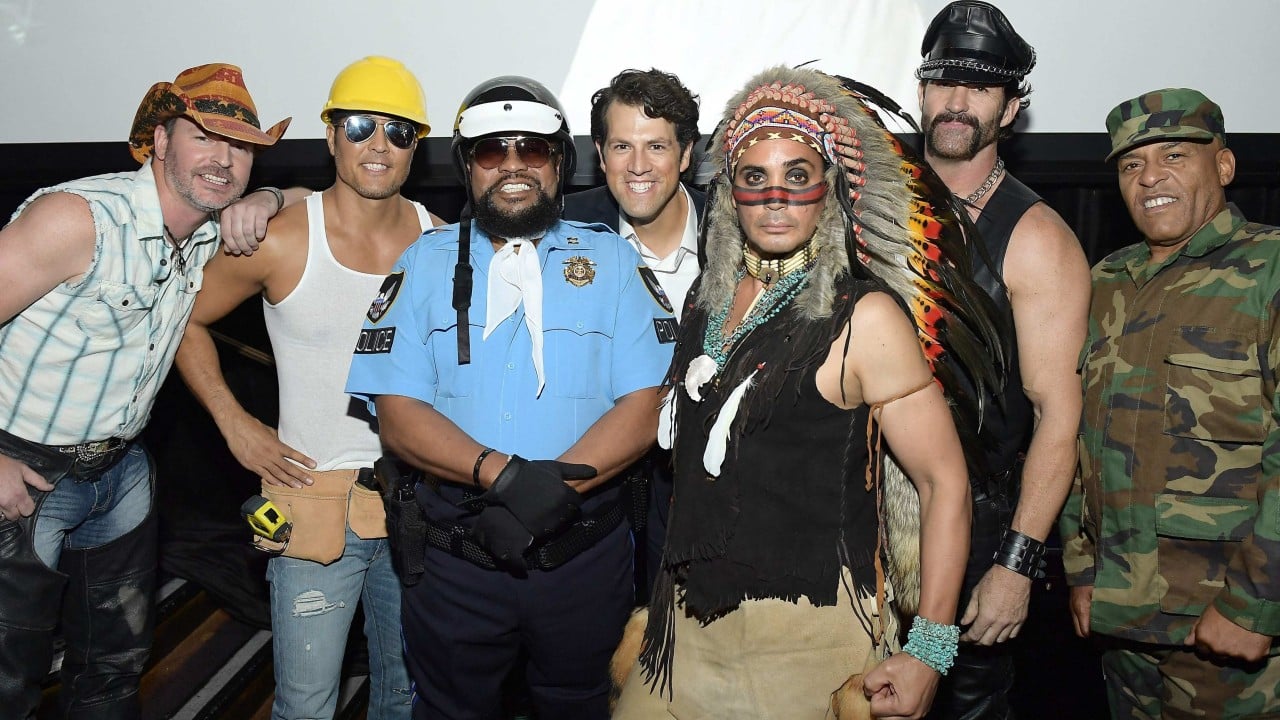
Victor Willis, the iconic founding frontman and lead singer of the Village People, died on June 30, 2026, at the age of 74 following a brief but aggressive illness. While early mainstream tributes remember him primarily as the energetic performer who donned the policeman and naval officer uniforms, this surface-level narrative ignores his actual, far more significant impact on the music industry. Willis was not a manufactured puppet of the disco era. He was the chief lyrical architect behind some of the most enduring anthems in pop history, and his decades-long battle against exploitative studio contracts redefined copyright ownership for creators worldwide.
The story of the Village People is frequently told as a lucky accident of late-1970s studio engineering, a campy novelty act assembled by French producers Jacques Morali and Henri Belolo to target the growing disco scene. That version of history is incomplete. Without the distinct vocal power and sharp commercial songwriting instincts of Willis, tracks like "Y.M.C.A.," "Macho Man," and "In the Navy" would have likely remained obscure club tracks rather than global cultural phenomenon.
The Son of a Preacher Man Who Built a Disco Empire
Born in Dallas, Texas, in 1951, Willis developed his powerful vocal instrument far from the strobe lights of New York discotheques. He sang in his father’s Baptist church. This foundational gospel training gave him a roaring, resonant baritone that could cut through heavy basslines and synthetic brass tracks. Before meeting Morali, Willis was already a seasoned theater actor and vocalist, having performed with the prestigious Negro Ensemble Company and appearing in the original Broadway run of The Wiz.
When Morali encountered Willis, he recognized that the singer possessed a rare vocal authority. The producer famously claimed he had a dream that Willis sang lead vocals on an album that became an international success.
The reality was much more transactional. Morali and Belolo needed a frontman who could anchor a concept. Willis provided the voice, but more importantly, he brought the words. He co-wrote the lyrics to the group's biggest hits, understanding exactly how to blend mainstream pop accessibility with double entendres that resonated deeply within the underground LGBTQ+ community.
The group grew around him. Dancers were recruited to fill out the archetypal roles of the cowboy, the native American chief, the construction worker, the soldier, and the biker. Yet, Willis remained the undisputed focal point. His vocal delivery was earnest and aggressive, stripping away the soft, falsetto-heavy clichés of late-70s disco and replacing them with a distinct, hyper-masculine soulfulness.
The Landmark Legal Fight That Terrified Music Publishers
By the turn of the decade, the initial disco explosion had cooled, and internal friction tore the original lineup apart. Willis left the group in 1980. What followed was a dark period marked by a long, painful struggle with drug addiction, culminating in a 2006 arrest for cocaine possession. He later admitted that depression had driven him completely off the grid.
His most important work began long after he walked away from the stage.
Under the United States Copyright Act of 1976, artists were granted "termination rights," a legal mechanism allowing creators to reclaim ownership of their copyrighted works after 35 years, provided they followed a strict notification timeline. In 2011, Willis launched a high-stakes legal challenge against Scorpio Music and Can't Stop Productions to claw back his share of the lucrative rights to 33 classic Village People tracks.
The music publishing industry watched the case with sheer panic. Major labels argued that Willis was merely a writer-for-hire, an employee whose creative output belonged entirely to the corporation that paid for the studio time. Had the courts accepted that argument, it would have effectively stripped thousands of legacy artists of their retirement security.
Willis won. In 2012, a federal judge ruled that Willis could officially reclaim his partial ownership of the catalog. The victory was total. By 2015, a jury determined that his name should be restored as the primary writer on several tracks, boosting his royalty share significantly. This legal precedent changed the power dynamics between independent creators and corporate gatekeepers, providing a legal roadmap for aging musicians trying to recover their stolen youth.
The Tragic Irony of the Political Tug of War
The reclamation of his music set the stage for his return to the Village People in 2017. He replaced the touring vocalists who had used his pre-recorded tracks for decades, reclaiming his rightful place at the microphone.
Then came an unexpected political twist.
During the late 2010s and into the 2020s, "Y.M.C.A." became an unlikely staple at conservative political rallies, frequently played to close out events for President Donald Trump. This developments horrified many long-time fans who viewed the song as a sacred LGBTQ+ anthem. Willis found himself in a complex, defensive position.
He repeatedly stated that neither he nor the group endorsed the political movement using the track. Under American public performance licensing laws, however, venues that purchase blanket licenses from organizations like ASCAP or BMI have the legal right to play almost any song in the catalog, leaving creators virtually powerless to stop them.
The situation grew even more surreal when the Village People performed live at the 2026 FIFA World Cup draw in Washington, having toured Europe earlier that year. The song had morphed into a piece of global public domain folklore, entirely detached from its origins in the gay underground clubs of Greenwich Village. Willis chose pragmatism over ideological warfare, arguing that the song belonged to the world, even as he promised to speak out if policies directly threatened the communities that first embraced his music.
A Resolute Exit
The death of Victor Willis leaves an irreplaceable void in the history of American popular music. He survived the corporate exploitation of the 1970s studio system, conquered personal demons that claimed many of his contemporaries, and rewrote copyright law to protect the next generation of songwriters.
He proved that pop music is not disposable. The corporate machines can buy the image, hire the dancers, and manufacture the outfits, but they can never own the soul of the voice that wrote the song.