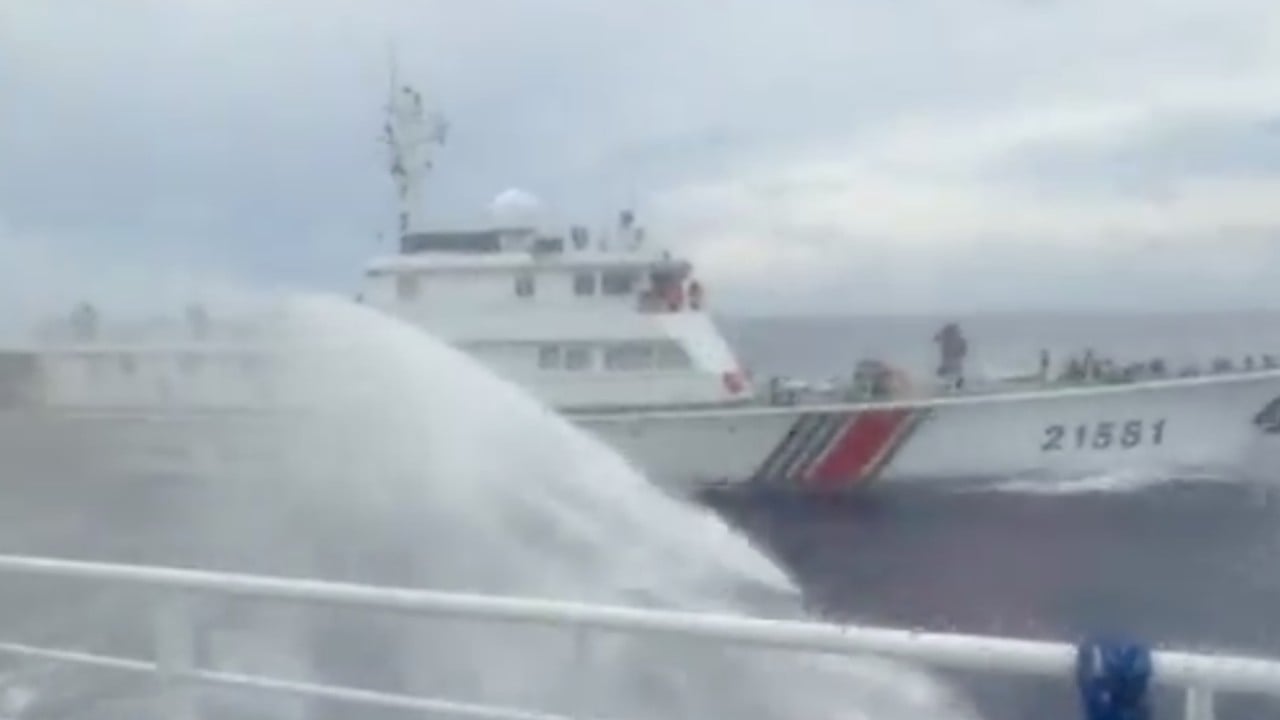
The Flashpoint Where Sovereign Ambitions Collide
Two consecutive days of high-seas confrontation around Scarborough Shoal have once again placed the South China Sea at the center of international security concerns. China and the Philippines exchanged sharp accusations following incidents involving Coast Guard vessels, water cannons, and aggressive maneuvering around the disputed, resource-rich feature. While both capitals frame the altercations as defense of national sovereignty, the escalating pattern reveals a deliberate escalation of gray-zone tactics designed to alter the status quo without triggering open military conflict.
Beyond the immediate exchange of diplomatic protests lies a calculated contest of maritime control. The strategic value of Scarborough Shoal extends far beyond its fishing grounds; it sits roughly 120 nautical miles off the coast of Luzon, placing it well within the Philippines' 200-nautical-mile Exclusive Economic Zone while remaining a critical node in Beijing's broader power projection strategy across the region.
Gray Zone Operations and the Mechanics of Attrition
The mechanics of these clashes reflect a refined framework of maritime pressure. Rather than deploying gray-hulled naval warships, Beijing predominantly relies on the China Coast Guard alongside a fleet of maritime militia vessels. This choice of assets is intentional.
+-------------------------------------------------------------------+
|                     GRAY-ZONE STRATEGY MODEL                      |
+-------------------------------------------------------------------+
|  1. Deploy Non-Naval Assets (Coast Guard & Maritime Militia)      |
|  2. Execute Non-Lethal Force (Water Cannons, Acoustic Devices)    |
|  3. Establish Physical Blockades & Deny EEZ Access                |
|  4. Force Counterparty Choice: Escalate to War OR Accede Control  |
+-------------------------------------------------------------------+
By utilizing non-military hulls to execute blockades, employ water cannons, and conduct high-speed interception maneuvers, the assertive party achieves several strategic objectives:
- Denial of Access: Philippine supply boats and local fishermen are physically blocked from entering the shoal's protected lagoon.
- Threshold Management: The threshold for triggering mutual defense treaties, specifically the 1951 US-Philippines Mutual Defense Treaty, is kept ambiguous by using force that falls just short of an armed attack.
- Asymmetric Burden: Smaller maritime states face compounding operational costs and risks to keep a continuous presence in their own EEZ against a numerically superior adversary.
Legal Precedent Meets Geopolitical Reality
The legal backdrop complicates the physical reality on the water. In 2016, the Permanent Court of Arbitration in The Hague issued a landmark ruling under the United Nations Convention on the Law of the Sea (UNCLOS).
| Metric / Dimension | 2016 Arbitral Tribunal Ruling | Operational Reality on the Water |
|---|---|---|
| Sovereignty & Rights | Rejected "nine-dash line" historical claims; upheld EEZ rights. | China maintains active, continuous maritime control. |
| Traditional Fishing | Declared Scarborough Shoal traditional grounds for multiple nations. | Non-Chinese fishermen face physical exclusion and coercion. |
| Enforcement Mechanism | Lacks binding international police force. | Dictated by hull count, naval presence, and maritime power. |
The tribunal determined that historical claims such as the "nine-dash line" had no legal basis under international law. It further ruled that Scarborough Shoal is a traditional fishing ground for multiple nations and that interfering with Philippine operations within its EEZ violates sovereign rights.
Legal victories, however, do not enforce themselves. Without a direct mechanism for compliance, international law serves primarily as a diplomatic instrument rather than a physical barrier against coast guard vessels enforcing domestic claims on the water.
Escalation Vectors and the Risk of Miscalculation
As confrontations increase in frequency and intensity, the risk of accidental collision or escalation rises exponentially. A single miscalculated maneuver by a water cannon operator or an unchecked collision between hulls can quickly transform a tactical standoff into an international crisis.
[Tactical Standoff] --> [Accidental Collision] --> [Crew Injury/Casualty] --> [Treaty Activation Risk]
Manila has increasingly adopted an "assertive transparency" policy, bringing journalists directly to the frontlines to document interactions in real time. While this strategy successfully mobilizes international public opinion and exposes non-compliant behavior, it simultaneously raises the political stakes for all parties involved, making tactical retreat or compromise politically costly for domestic audiences.
The persistent friction at Scarborough Shoal is not an isolated border disagreement. It represents a fundamental contest over who sets the rules of maritime engagement in the Western Pacific, proving that control over a few square miles of coral and water can dictate the security posture of an entire region.


