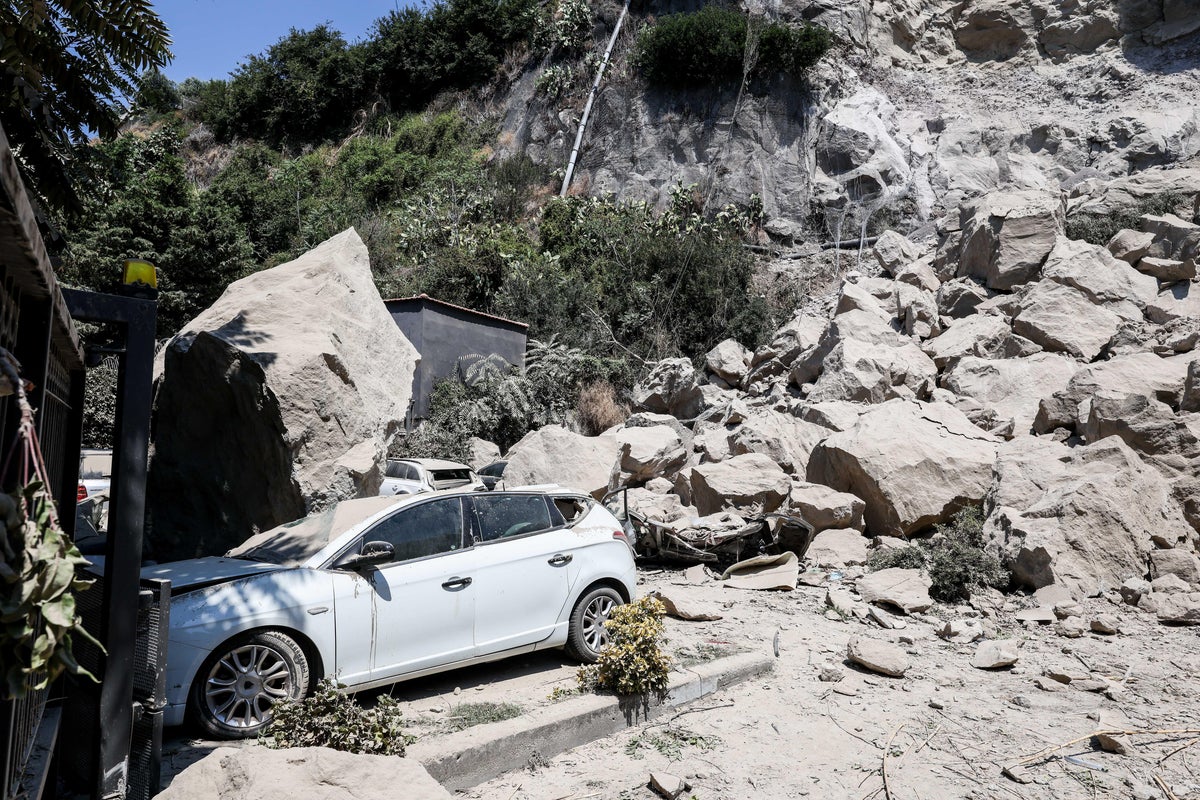
Dozens of residents sustained injuries and historic hillside infrastructure collapsed after a magnitude 4.7 earthquake struck the western outskirts of Naples, triggering localized landslides and forcing thousands onto the streets in panic. The tremor, centered within the volatile Campi Flegrei volcanic caldera, stands as the most violent release of seismic energy the metropolitan area has experienced in four decades. It is not an isolated meteorological or tectonic anomaly. It is the violent manifestation of an ongoing geological crisis that urban planners, municipal authorities, and regional scientists have quietly debated behind closed doors for years.
The Mechanics Behind the Rumblings
The Campi Flegrei caldera differs fundamentally from traditional volcanic cones like Vesuvius. It is a massive, depressed underground cauldron measuring roughly twelve kilometers across, largely hidden beneath the densely populated western neighborhoods of Naples, residential hubs like Pozzuoli, and the floor of the Gulf of Pozzuoli. Unlike a standard mountain that erupts from a central peak, this system operates like an underground boiler. Magma chambers and superheated hydrothermal fluids churn beneath the Earth's crust, pushing the surface upward in a geological phenomenon known as bradyseism.
For the past decade, the ground beneath Pozzuoli has been rising at an alarming rate, sometimes lifting parts of the coastline by centimeters every month. This constant subterranean inflation stretches the brittle crust above it until it snaps. The 4.7 magnitude earthquake was the direct structural failure of rock strata under immense tensile stress. When the rock yields, energy propagates instantly through the densely populated basin, amplifying the shaking because the region sits upon loose, sedimentary soil and historical volcanic ash deposits rather than solid bedrock.
Ground amplification makes moderate earthquakes behave like major disasters. Old masonry buildings, medieval structures, and poorly retrofitted concrete apartment blocks built during post-war expansion booms lack the structural ductility required to withstand sudden lateral shear forces. When the earth jolts horizontally, unreinforced brick walls shear along mortar lines, stairwells detach from primary load-bearing frames, and poorly anchored cornices cascade down onto narrow pedestrian streets.
The Urban Planning Nightmare
Naples faces an administrative and logistical challenge that has no easy resolution. Millions of people live directly inside or immediately adjacent to a live supervolcano. Historic urban cores grew organically over centuries without modern seismic codes, and densification policies prioritized maximum housing capacity over structural safety margins.
Evacuation logistics present an even grimmer picture. The Phlegraean Fields evacuation plan relies on moving hundreds of thousands of residents out of high-risk red zones along narrow coastal corridors and congested highway networks that already experience gridlock during ordinary rush hours. In the event of a sudden, catastrophic volcanic eruption or a major earthquake swarm that compromises highway bridges and tunnels, the theoretical evacuation timelines become practically impossible to execute safely.
Municipal authorities have attempted to institute rapid response inspections and temporary shelters, yet residents report a pervasive sense of abandonment. Communication from emergency management agencies frequently swings between bureaucratic reassurance and urgent warnings, creating an atmosphere of chronic anxiety. People do not know whether to reinforce their basements, buy emergency go-bags, or pack up their belongings and abandon generational homes altogether.
The Economic Fallout of Chronic Tremors
Beyond immediate physical injuries, the constant seismic activity suffocates the local economy. Tourism, a primary economic engine for the Campania region, experiences sharp downturns every time a moderate swarm hits international news headlines. Visitors cancel hotel bookings in anticipation of further tremors, leaving family-run restaurants, tour operators, and boutique accommodations struggling to cover overhead costs.
Real estate values in high-risk zones like Bagnoli and Pozzuoli face severe downward pressure. Property owners find themselves trapped. They cannot sell their homes without taking massive financial losses, nor can they afford the astronomical costs of seismic retrofitting required to bring older apartments up to modern safety standards. Insurance companies routinely exclude volcanic and seismic damage from standard homeowner policies, leaving individuals completely financially exposed to natural disasters.
Living on the Edge of Uncertainty
Geologists emphasize that predicting the exact trajectory of bradyseism remains an imprecise science. Magma might stall beneath the crust, slowly cooling over centuries without causing a major eruption, or the injection of fresh volcanic gases could accelerate the rate of crustal deformation toward a critical tipping point. The system defies absolute forecasting.
Residents continue to sweep up plaster, patch cracked stucco, and wait for the next tremor. The fundamental vulnerability of Naples lies not just in the restless magma chambers sleeping beneath the bay, but in the sprawling, rigid urban infrastructure built directly on top of them. Until structural vulnerability is addressed through aggressive, state-funded retrofitting and realistic, decentralized emergency planning, every underground rupture will remain a stark reminder of a fragile coexistence with the earth.