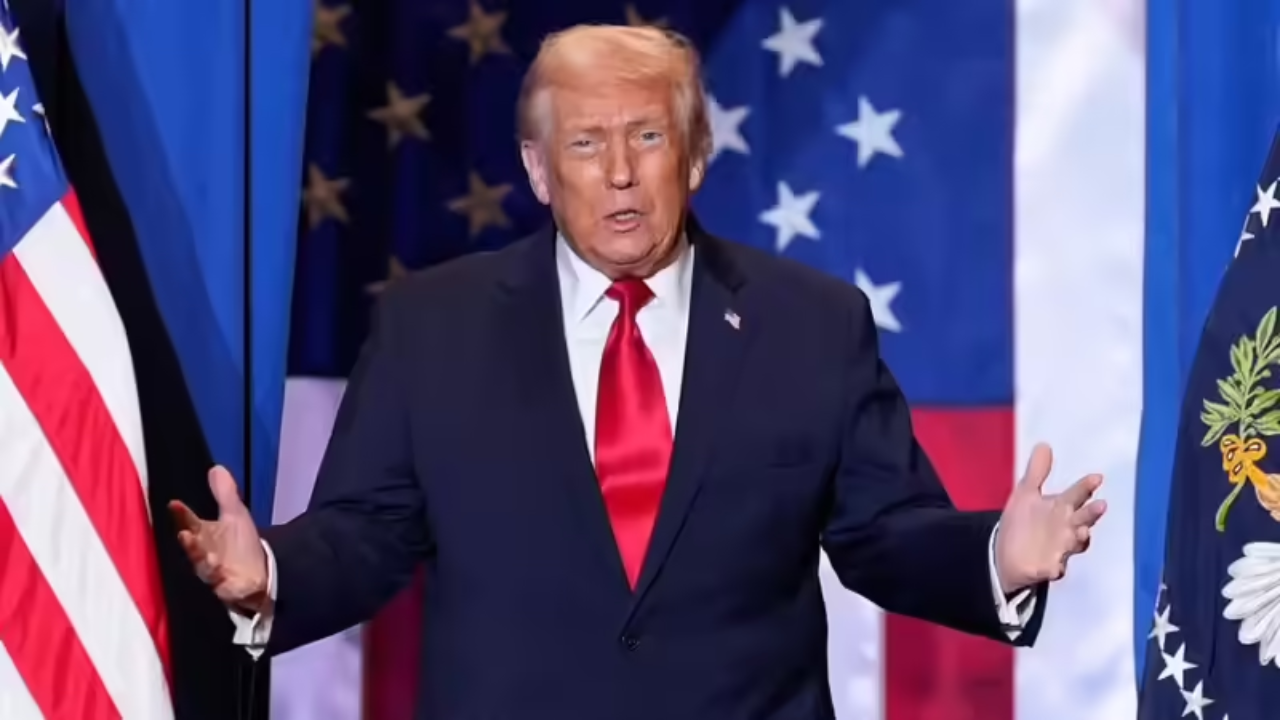
The long-simmering battle over global shipping lanes erupted into open political theater when Donald Trump stood at the newly built Theodore Roosevelt Presidential Library in North Dakota to declare the 1977 transfer of the Panama Canal a "stupid mistake." Pointing to soaring transit fees and alleging that Beijing is orchestrating a quiet takeover of the strategic waterway, Trump signaled a potential shift in American foreign policy aimed at reclaiming dominance over the route.
The immediate reality, however, is far more legally complex and commercially entrenched than a simple matter of historical regret. While the rhetoric captures headlines, it obscures the actual mechanism of economic and infrastructural influence that China has established around the canal zone. The United States remains the largest user of the 51-mile transisthmian link, accounting for roughly 40 percent of all US container traffic annually. Yet, while Washington relies on the canal as a passive consumer, Beijing has spent decades embedding its state-backed enterprises into the very physical footprint that keeps the waterway operational. If you found value in this article, you might want to read: this related article.
The Infrastructure Trap Surrounding the Waterway
To understand how influence works in Central America, look at the ports anchoring both ends of the canal. The Panama Canal Authority, an independent agency of the Panamanian government, retains full administrative control over the actual locks and transit scheduling. However, the cargo handling facilities flanking the canal tell a different story.
Chinese state-affiliated conglomerates operate major container ports on both the Atlantic and Pacific coasts. Hutchison Ports, headquartered in Hong Kong, holds long-term concessions at the ports of Balboa and Cristobal, effectively managing the primary maritime gateways of the canal. Further compounding this footprint, Chinese construction firms secured contracts for major infrastructure projects in the immediate vicinity, including the construction of a massive bridge over the canal and the development of specialized liquefied natural gas terminals. For another perspective on this event, check out the recent update from TIME.
This is not a military occupation, nor is it a direct violation of the Torrijos-Carter Treaties. It is a commercial encirclement. The strategy relies on financial leverage rather than naval force. When a state-backed entity owns the logistics hubs, the rail links, and the energy infrastructure surrounding a global choke point, formal administrative ownership of the water becomes a secondary concern.
The Economics of Tolls and Supply Chain Volatility
A central grievance raised by critics of the current arrangement centers on the dramatic escalation of transit costs. The accusation is that Panama has repeatedly hiked prices, treating American commerce unfairly. The economic reality is driven more by environmental limits and basic market dynamics than geopolitical malice.
The Panama Canal operates using fresh water from Gatun Lake to fill the massive locks that lift ships over the continental divide. In recent years, severe droughts disrupted this system, forcing the canal authority to slash daily vessel transits to conserve water. To manage the resulting bottleneck, the authority implemented a system of slot auctions, letting desperate shipping companies bid against each other to skip the line.
During the peak of the supply chain crunch, a single transit slot auctioned off for as much as $4 million, far exceeding standard toll rates.
This spike in cost was a direct result of climate volatility and market-driven scarcity, not an arbitrary penalty designed by Panama City to target American corporations. The canal authority successfully capitalized on the crisis, generating record revenues while demonstrating that global shipping lines are willing to pay almost any price to avoid the lengthy voyage around the southern tip of South America.
The Legal Reality of Sovereignty
The suggestion that the United States can simply claw back the canal ignores decades of international law and a binding bilateral treaty framework. Under the 1977 agreement, full sovereignty was permanently transferred to Panama on December 31, 1999. Panamanian President José Raúl Mulino pushed back directly against any talk of retrocession, stating clearly that the waterway belongs entirely to Panama and its independence is non-negotiable.
There is, however, a critical legal loophole built into the neutrality treaty that accompanies the original transfer. The United States and Panama explicitly agreed that both nations retain the right to defend the canal against any threat to its regime of neutrality. This clause allows Washington to intervene militarily if a hostile foreign power attempts to shut down the canal or compromise its open-access status.
| Key Metric | United States | China |
|---|---|---|
| Canal Traffic Share | ~40% of US container traffic | Second largest overall user |
| Primary Leverage | Treaty right to enforce neutrality | Long-term port concessions and loans |
| Strategic Goal | Secure uninterrupted maritime trade | Expand footprint via Belt and Road initiatives |
If a conflict over Taiwan or the South China Sea were to escalate into open warfare, formal property deeds would matter far less than raw naval power. The United States maintains a dominant military presence in the Caribbean and the Eastern Pacific, ensuring that it could seize physical control of the waterway during a national emergency, regardless of who manages the daily commercial operations.
The Real Diplomatic Blind Spot
The true vulnerability for Washington is not a sudden Chinese military garrison on the locks, but rather the diplomatic vacuum left by decades of American indifference to its southern neighbors. Beijing has stepped into this void with aggressive economic statecraft. In March, Chinese Foreign Minister Wang Yi met with Panamanian officials to deepen practical cooperation, explicitly warning against third-party interference from the United States.
China uses its Belt and Road Initiative to offer rapid, low-interest infrastructure loans to developing nations throughout Latin America. When local governments face fiscal crises, these loans frequently convert into long-term equity or control over critical national assets. This pattern has repeated across the global South.
By focusing solely on the historical terms of the canal transfer, policymakers miss the broader geopolitical shifts occurring on the ground. The threat is not that Panama will hand the keys of the locks to Beijing. The threat is that Panama's broader economy becomes so indebted to Chinese capital that its diplomatic independence is compromised, giving China a permanent veto over regional security decisions.
Washington must counter this trend with genuine economic alternatives, rather than threats of territorial re-acquisition. Relying on decades-old grievances will not secure the supply chains of tomorrow. The only effective strategy is to out-compete state-backed enterprises through targeted private investment, robust trade agreements, and a renewed diplomatic presence in the Americas.