The Shifting Frontier
Romania has quietly transformed into Europe’s most volatile frontline. When Bucharest confirmed the downing of a third Russian drone in a mere seventy-two-hour window along the Danube border, international headlines flashed and quickly pivoted away. That quick blink represents a dangerous miscalculation.
We are watching a systemic erosion of sovereign airspace integrity along NATO's eastern flank. Moscow is not necessarily aiming to conquer Romanian territory with these low-cost loitering munitions. Instead, they are conducting high-stakes stress tests against Western air defense architectures, probing reaction times, and calibrating the political threshold for an actual collective response under Article 5.
The Mechanics of Aerial Drift
Why are these systems penetrating Romanian airspace at all? The answer lies in the geography of the conflict and the nature of modern drone warfare. Russian forces frequently launch Iranian-designed Shahed-style drones from occupied southern Ukraine against Ukrainian grain silos and port infrastructure situated directly across the Danube River from Romanian towns like Plauru and Ceatalchioi.
Proximity breeds mechanical error. Electronic warfare jamming deployed by Ukrainian defense units frequently disorients the guidance systems of these propeller-driven machines. Stripped of reliable GPS signals, wandering drones drift across the international boundary.
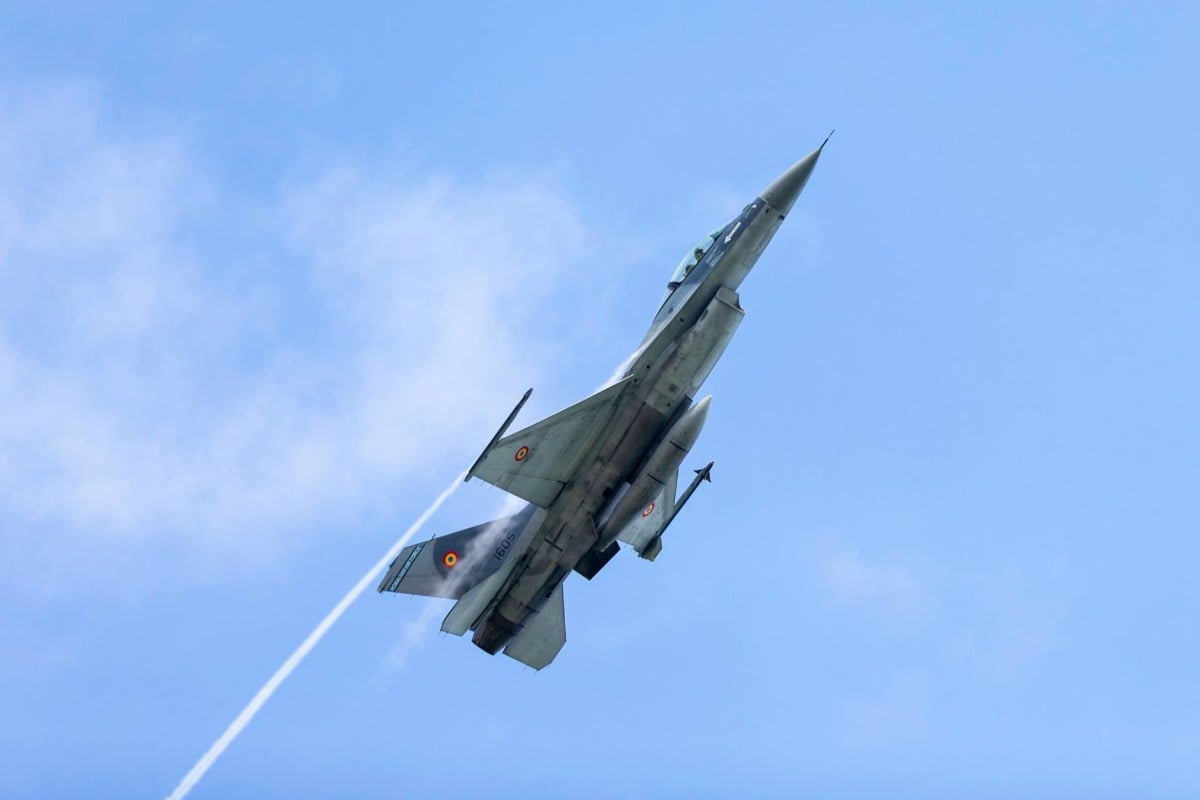
Yet, treating every intrusion as a mere navigational accident ignores a darker operational reality. Constant testing yields hard intelligence. Russian military planners now possess a detailed map of radar blind spots, scramble durations for Romanian F-16 fighter jets, and the precise political hesitation exhibited by decision-makers in Brussels.
The Strategic Dilemma for Bucharest
Romania faces an unenviable strategic bind. Shoot down every stray drone immediately, and you risk a sudden, uncontrolled escalation that could drag the entire Western alliance into a direct shooting war with a nuclear-armed power. Do nothing, and you normalize the violation of sovereign European skies, inviting bolder incursions tomorrow.
Military commanders on the ground operate under strict rules of engagement. Intercepting a flying lawnmower strapped with explosives over a populated civilian area carries immense collateral risk. A stray surface-to-air missile or falling debris from a disintegrated drone poses an immediate threat to citizens living right across the river.
The Cost Asymmetry
The economics of this confrontation heavily favor the aggressor. A standard loitering munition costs a fraction of the advanced interceptor missiles or fighter jet sorties required to neutralize it.
- Unit Cost: A single Russian-deployed attack drone typically costs between twenty thousand and forty thousand dollars to manufacture.
- Interception Cost: Scrambling a modernized F-16 fighter jet burns thousands of gallons of fuel, incurs high maintenance overhead per flight hour, and expends missiles worth hundreds of thousands of dollars.
- Infrastructure Strain: Continuous air defense alerts strain regional radar operators, disrupt commercial air traffic, and create persistent psychological pressure on border communities.
When an adversary can bankrupt your defense budget through simple attrition, you are no longer winning the peace. You are merely managing a slow-motion defeat.
Beyond the Immediate Threat
The diplomatic fallout inside NATO headquarters reveals deep structural anxieties. While frontline states like Poland, Romania, and the Baltic nations demand a more aggressive forward-leaning defense posture, Western European capitals often counsel strategic patience and de-escalation. This internal friction is precisely what external adversaries aim to exploit.
We have seen this playbook before. Gray-zone tactics—actions designed to remain just below the threshold of traditional military conflict—are explicitly crafted to paralyze bureaucratic alliances. Consensus-based organizations struggle to formulate rapid responses to ambiguous, incremental provocations.
The Missing Deterrence Framework
Deterrence relies on absolute credibility. If an alliance signals that small, accidental, or low-damage incursions carry no tangible military penalty, those incursions will inevitably escalate in frequency and scale.
Romania has bolstered air policing patrols, deployed additional radar systems to the Danube delta, and constructed concrete bomb shelters for residents in vulnerable border villages. These measures are prudent, defensive steps. However, they remain reactive. They address the symptom while leaving the underlying vulnerability untouched.
True deterrence requires shifting the risk calculus back onto the violator. Until NATO and its member states establish clear, unyielding red lines regarding sovereign airspace violations—backed by visible, robust regional air defense reinforcements—the frontier along the Danube will remain an open invitation for further probing.
The drone wreckage currently being cataloged by Romanian military investigators is more than just scrap metal. It is a warning sign written across the European sky.