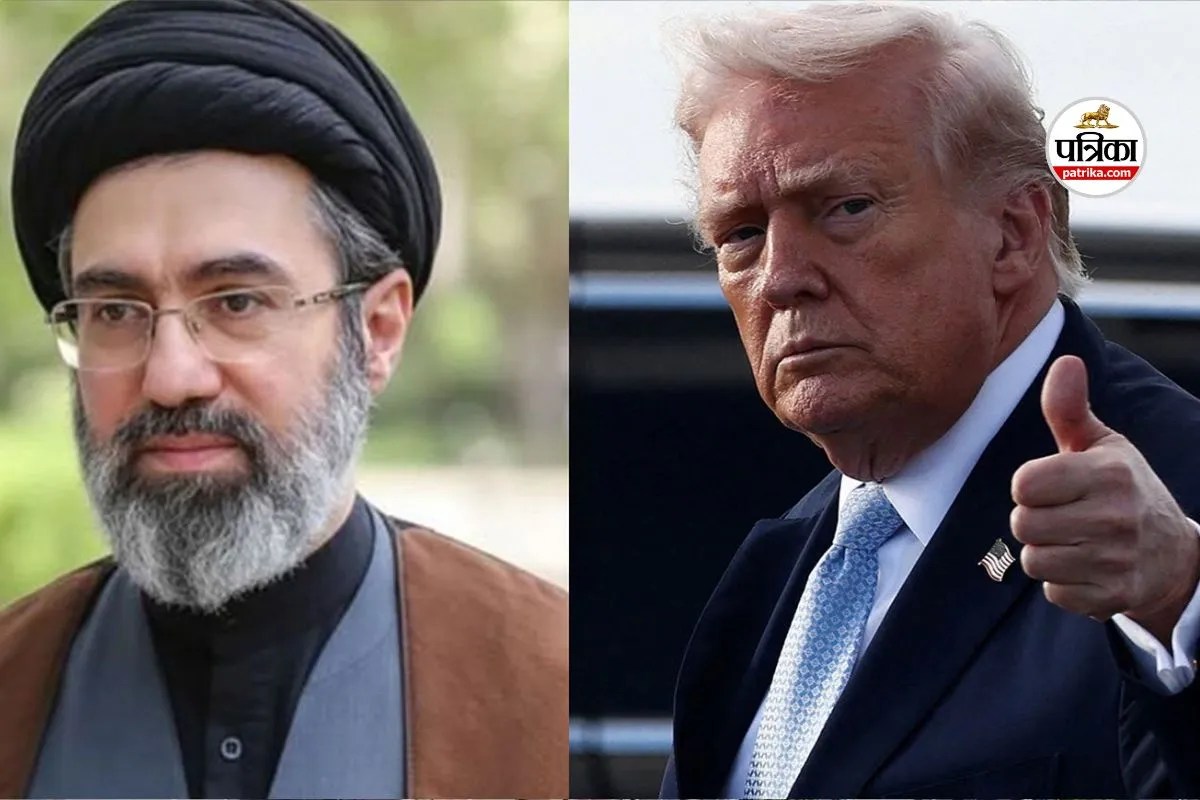
US President Donald Trump recently claimed that Iran's Supreme Leader, Mojtaba Khamenei, is still alive but suffering from severe wounds to the left side of his body following joint US-Israeli strikes. This assessment cuts through months of rampant speculation regarding whether the successor to Ayatollah Ali Khamenei survived the initial military escalation. Yet, the physical absence of Iran's top authority from public view points to a much deeper structural crisis inside the clerical establishment, where a wounded leader translates directly to a vacuum at the heart of state power.
The Architecture of Absence
For six months, the Islamic Republic has maintained a strict visual blackout regarding its highest office. When leadership transitions happen under normal conditions, imagery functions as the primary currency of legitimacy. Instead of public appearances, state television relies on disembodied audio clips and static text declarations attributed to the younger Khamenei. Read more on a connected topic: this related article.
Trump's assertion that the Iranian apparatus is "putting on a very good show" underlines a tactical reality. If the Supreme Leader lost the functional use of his arm and leg during the opening bombardments, governing becomes an exercise carried out entirely by proxy. Autocratic systems depend heavily on the personal centrality of the supreme arbiter. When that arbiter is physically incapacitated, decision-making fractures.
Behind the closed doors of Tehran's inner sanctums, the power struggle has likely shifted away from the clerical office toward military enforcers. The Islamic Revolutionary Guard Corps now commands the operational space left vacant by a leader who cannot travel, inspect troops, or project physical strength. Further analysis by The Washington Post highlights related perspectives on the subject.
Shifting Authority to the Guard
To understand how Tehran functions under a compromised head of state, one must look at the mechanics of institutional survival. The supreme office was designed to balance competing factions within the regime. By elevating Mojtaba following his father's death, the establishment hoped to preserve dynastic continuity and ideological purity.
Instead, the severe injuries reported by foreign intelligence and acknowledged by external actors have accelerated a de facto military takeover.
- Operational Control: Military commanders dictate security responses without the traditional oversight of a fully active supreme cleric.
- Information Quarantine: State media tightly controls narratives to prevent panic among the loyalist base.
- Factional Friction: Mid-tier clerics increasingly question the legitimacy of directives issued by an unseen authority.
This dynamic leaves the government uniquely vulnerable. A state cannot project deterrence effectively when its commander-in-chief remains hidden behind archival footage and carefully scrubbed audio broadcasts.
The Strategic Fallout
Washington's open commentary on the physical state of Iran's leadership serves a psychological purpose. By detailing the specific nature of the injuries—pointing to trauma on the left side of the body—external adversaries seek to expose the vulnerability of the clerical hierarchy.
If the leadership core is fighting for its internal survival while managing the fallout of heavy economic and military pressure, long-term strategic planning grinds to a halt. Tehran's foreign policy responses become reactive rather than calculated. The longer the supreme office remains a phantom presence, the more the institutional pillars will erode from within, trading a theological republic for an outright military directorate