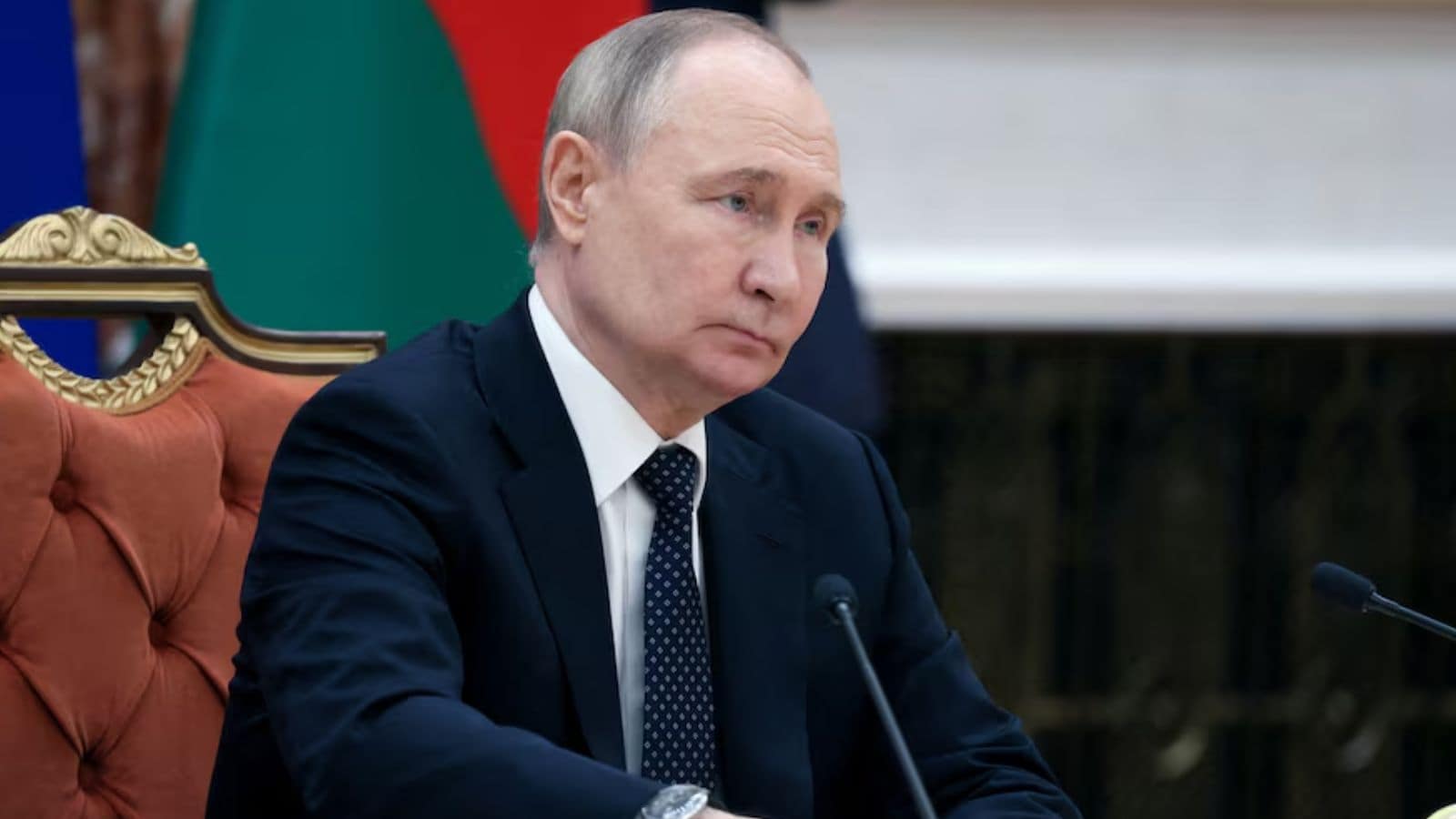
When the United States extended a formal invitation to Russian President Vladimir Putin to attend the December G20 leaders summit in Miami, the message sent across international capitals was unmistakable. Diplomacy is shifting back to direct presidential theater. Announced by Secretary of State Marco Rubio following high-stakes talks with Russian Foreign Minister Sergei Lavrov in New York, the invitation pulls the Kremlin back into the physical epicenter of American domestic politics. It is a gamble of staggering proportions. For months, Western foreign ministries operated under a strict consensus of isolation toward Moscow, treating the Russian leadership as pariahs cut off from high-level multilateral summits. Now, that wall of isolation is cracking under the weight of Washington's renewed push for face-to-face engagement. The decision to host the summit at Trump National Doral in Florida transforms a routine economic gathering into a high-voltage geopolitical testing ground. Kyiv watches with mounting dread. European allies scramble to assess the damage to a unified sanctions regime. Yet, the White House presses forward, operating on the belief that breaking the diplomatic deadlock requires putting adversaries in the same room, regardless of the immediate friction it causes among traditional partners.
The Turf and Symbolism of Doral
The choice of location carries a heavy political subtext. Hosting world leaders at a property bearing the name of the sitting U.S. president blends commercial branding with hard power diplomacy. For Vladimir Putin, accepting an invitation to travel to Florida would mark his first visit to American soil in years, shattering the travel restrictions and international arrest warrants that have largely kept him confined to friendly or compliant jurisdictions. The optics alone are explosive. Critics argue that rolling out any form of welcome mat for a leader actively prosecuting a grueling war of attrition in Eastern Europe signals a dangerous retreat from the accountability standards established after the 2022 invasion. Yet administration defenders view the venue as an asset. By bringing the Russian delegation onto American turf, Washington controls the narrative frame. It projects absolute confidence. It flips the script on traditional summit dynamics, forcing Moscow to weigh the domestic and international humiliation of rejecting an open door against the diplomatic risks of walking into an unfamiliar lion's den.
Behind Closed Doors in New York
The groundwork for this invitation was laid quietly, far from television cameras and public press briefings. On the sidelines of the United Nations General Assembly, Marco Rubio and Sergei Lavrov held exhaustive closed-door sessions. While public readouts emphasized deep disagreements over the trajectory of the war in Ukraine, diplomatic channels were humming with operational discussions. Moscow has maintained a consistent posture: no cessation of military operations simply to satisfy the scheduling demands of external negotiators. Lavrov made it clear that Russian forces will continue their campaign regardless of what diplomatic tables are set in Western capitals. Despite this unyielding stance, Washington calculated that the prospect of a bilateral or trilateral meeting involving Donald Trump remained a powerful enough carrot to test the Kremlin's actual appetite for compromise. Rubio publicly defended the move with blunt realism, noting that solving intractable global crises requires sitting across the table from adversaries. It is a philosophy rooted in transaction rather than transformation.
The European Anxiety Spiral
Across European capitals, the reaction to the Miami invitation has been a mixture of quiet panic and open dismay. For years, European Union leaders anchored their foreign policy strategy to the total diplomatic quarantine of the Kremlin, believing that economic strangulation combined with diplomatic ostracization would eventually force a strategic retreat. Washington's unilateral invitation upends that calculus entirely. European governments fear being marginalized in any emerging backroom arrangements designed to freeze or settle the conflict on terms dictated by Washington and Moscow. Ukrainian leadership faces an even more precarious predicament. President Volodymyr Zelenskyy has pressed aggressively for avenues to end the hostilities before a brutal winter sets in, openly declaring his readiness to participate in high-level talks if necessary. Yet, the prospect of a direct Trump-Putin summit bypassing Kyiv's core security demands haunts Ukrainian planners. They understand that energy infrastructure remains a primary target for Russian missile campaigns, leaving the home front vulnerable to freezing temperatures and economic collapse. When superpowers negotiate over the heads of front-line nations, history suggests those front-line nations absorb the heaviest blows.
Walking Back From Anchorage
To understand why Washington is willing to court this level of controversy, one must look back at the diplomatic precedent set in Alaska. The summit in Anchorage provided a blueprint for how direct presidential engagement functions in practice. While skeptics dismissed that meeting as mere theater, it established a direct communication line that bypassed bureaucratic layers and European intermediaries. Trump has long maintained a personalistic approach to foreign policy, preferring direct deal-making over multilateral communiqués drafted by anonymous technocrats. The Miami G20 summit represents a logical extension of that philosophy on a grander scale. By gathering the world's major economies while specifically extending an open hand to Moscow, the administration is testing whether personal rapport can override systemic hostility. Whether that approach yields tangible policy shifts or merely hands the Kremlin a major propaganda victory remains the central question haunting foreign policy analysts.
Battlefield Realities and Hard Calculus
Away from the summit planning rooms, the war in Ukraine grinds forward with unrelenting brutality. Russian forces continue to pound energy grids and urban centers with relentless drone and missile barrages, while Ukrainian units target Russian logistics and oil facilities. Neither side has demonstrated a willingness to compromise on fundamental territorial or security demands. The Kremlin insists that any negotiation must account for its strategic objectives, dismissing European calls for preemptive ceasefires as cynical attempts to rearm depleted Ukrainian arsenals. In this environment, diplomatic invitations do not stop artillery shells. They run parallel to them. The upcoming gathering in Florida will not magically erase years of bloodshed or bridge the chasm between democratic sovereignty and imperial aggression. Instead, it serves as a high-stakes stress test for the international order, measuring how much pressure the architecture of global governance can endure when raw personal diplomacy displaces institutional norms.
For further visual context on how diplomatic delegations navigate international sanctions and high-level arrivals, watch this Russian Foreign Minister arrives in the US for G20 talks. This footage illustrates the media scrutiny and security apparatus surrounding senior Russian officials engaging with American counterparts on U.S. soil.



