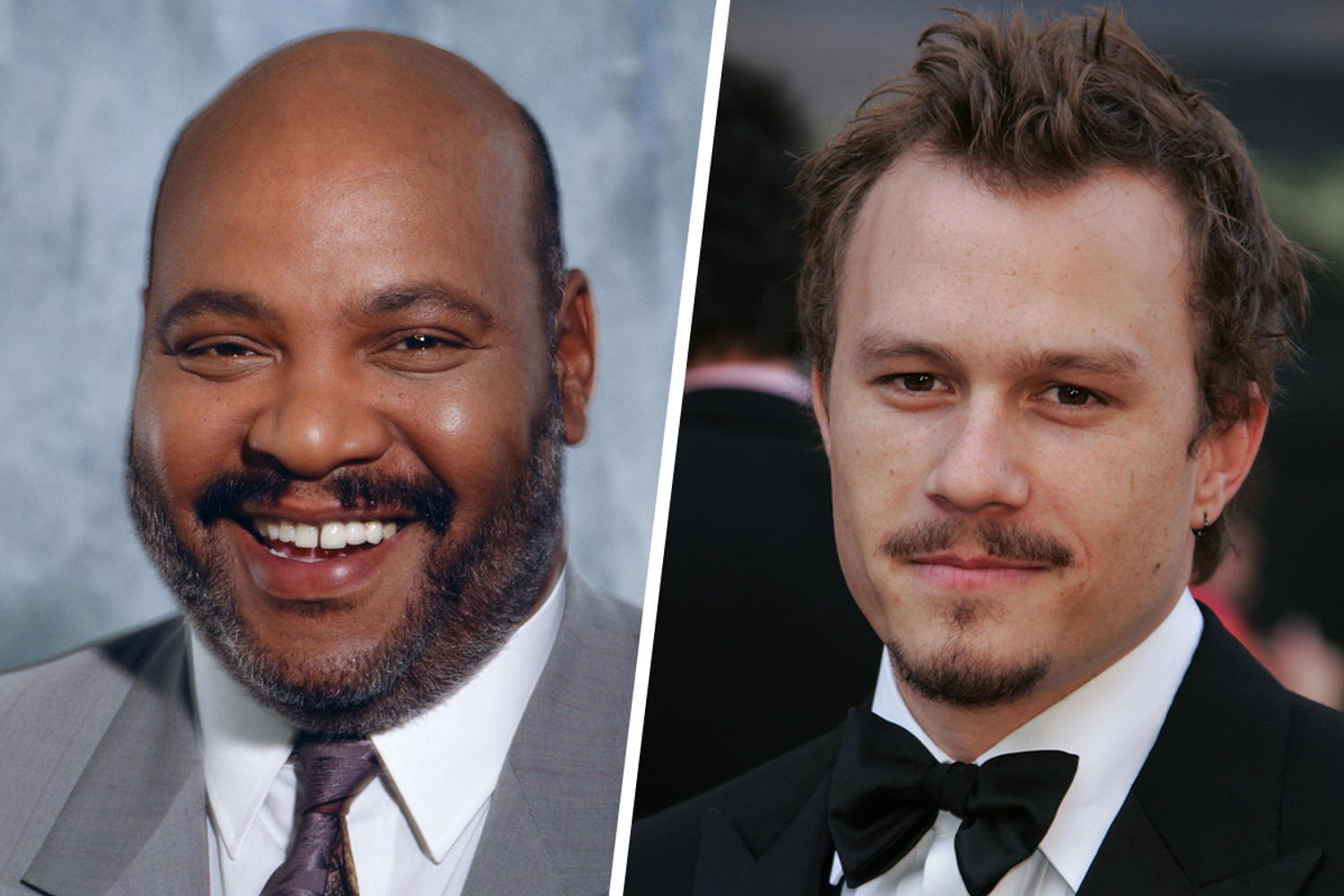
Former co-stars of Heath Ledger and James Avery used the ballroom floor of Dancing with the Stars to pay public tribute to the late actors, turning a competitive reality show into a stage for grief, legacy, and television spectacle.
I have watched network entertainment manufacture emotion for thirty years. Rarely does a competitive dance show avoid turning personal loss into a ratings lever. When former castmates invoke loved ones who died young or left a massive void on a beloved series, the audience feels an immediate pull. It feels authentic. It feels tender. It is also television, built to hold eyes through commercial breaks and drive clips across social media feeds before the east coast broadcast even ends.
The pairing of Heath Ledger and James Avery in the same tribute wave highlights something deeper than a simple coincidence of scheduling or casting. Ledger died in January 2008 at age 28, leaving behind an unfinished arc of breathtaking range that stretched from 10 Things I Hate About You to Brokeback Mountain and The Dark Knight. Avery died in December 2013 at age 68, forever etched in pop culture memory as Uncle Phil on The Fresh Prince of Bel-Air, a towering presence who blended booming authority with quiet fatherly warmth. Bringing both names into the orbit of Dancing with the Stars shows how modern reality television mines nostalgia and grief simultaneously.
Why Ballroom Television Loves Co-Star Tributes
Reality competition shows face a structural problem. Dancing is physically demanding, technically repetitive over a multi-week season, and easily reduced to scores and footwork critiques. Producers need human stakes. Without emotional pressure, a foxtrot or a contemporary routine can start looking like a rehearsal hall exercise.
Co-star tributes solve that problem instantly. When a performer dances in honor of a late colleague, the stakes shift from getting a nine from the judges to honoring a memory in front of millions of people. Viewers do not just watch for clean turns or timing. They watch for the catch in a voice during the pre-dance package, the lingering look toward the sky after the final pose, and the raw vulnerability that rarely survives scripted sitcoms or polished red-carpet interviews.
Television executives know this rhythm well. Emotional packages are edited with surgical precision. A slow piano track enters under archival footage or personal recollections. The camera lingers on a trembling hand or a wiped tear. Then the music shifts, the spotlight hits the floor, and the audience is asked to carry that grief right into the choreography.
There is a real tension here. Grief is messy, private, and nonlinear. Broadcast television demands a clear arc within a two-minute routine and a ninety-second interview segment. Sometimes the tribute feels genuinely cathartic for the person performing it. Other times, it feels like an emotional speedrun packaged for viral shareability.
- Emotional anchoring: A personal loss gives a routine an immediate narrative spine that scores alone cannot provide.
- Cross-generational reach: Honoring figures tied to iconic projects pulls in viewers who might otherwise skip a standard ballroom episode.
- Built-in clip value: Moments of raw sincerity travel fast on short-form video platforms, extending the life of an episode well beyond live viewership.
Consider a hypothetical example of how this plays out in a producers' room. Imagine a contestant who once worked alongside a beloved actor years earlier. During story meetings, producers ask what lessons that actor passed down on set. The contestant shares a story about patience, kindness, or work ethic. Suddenly, a standard rumba becomes a story about mentoring and survival in Hollywood. Nothing in that hypothetical scenario requires malice from the producers. Most of them genuinely want the moment to land with heart. Yet the medium itself shapes every beat of how that story is told.
The Weight of Two Very Different Legacies
Heath Ledger and James Avery occupy completely different corners of entertainment history, yet both carry a heavy emotional charge whenever their names are spoken aloud.
Ledger's legacy is tangled up in promise cut short and artistic intensity. He resisted easy categorization. One moment he was charm and wit in a teen comedy or a period adventure; the next he was carrying quiet heartbreak on a Wyoming mountain or creating a terrifying, unforgettable Joker. When people remember Ledger, they often wrestle with what never got made, what scenes never got filmed, and how bright a flame burned before going out. Any tribute to Heath Ledger carries that ache of unfinished business.
James Avery's legacy feels different. Grounded. Anchored. When audiences think of Avery, they think of a steady anchor in a chaotic world. Uncle Phil was stern, funny, fiercely protective, and deeply human, and Avery brought real-world gravitas to the role. Beyond The Fresh Prince of Bel-Air, his voice work—most famously Shredder in the original Teenage Mutant Ninja Turtles animated series—and his broader screen career gave him a lasting footprint across generations. Honoring James Avery often taps into gratitude for mentorship, steadiness, and the father figures or elders who shaped us on screen.
When a show invokes two performers with such distinct emotional weight, it reveals how wide the net of nostalgia has become. One name pulls at heartbreak and lost potential. The other pulls at warmth, authority, and belonging.
Putting both figures in conversation through Dancing with the Stars tributes also underscores how television flattens eras. A show built on sequined costumes, spray tans, and weekly eliminations becomes the vessel for remembering two men whose best-known work belonged to very different rooms—a film set defined by method and risk on one side, a multi-camera sitcom soundstage and voice booth on the other.
| Dimension | Heath Ledger Tribute Context | James Avery Tribute Context |
|---|---|---|
| Core Cultural Anchor | Film roles, dramatic range, early death at 28 | The Fresh Prince of Bel-Air, voice work, mentor archetype |
| Dominant Emotional Tone | Awe, melancholy, sense of cut-short promise | Warmth, gratitude, steadiness, paternal gravitas |
| Primary Television Function | High-stakes dramatic contrast on the dance floor | Comforting nostalgia and heartfelt connection |
| Potential Pitfall | Turning tragic loss into overly polished spectacle | Reducing a full career to a single catchphrase or role |
When Sincerity Meets the Reality TV Machine
I have sat in enough edit bays and press rooms to know that two things can be true at once. A performer's love for a departed friend can be one hundred percent real. The machinery around that performance can still be engineered for maximum engagement.
Recognizing that duality is not cynical. It is basic media literacy.
On Dancing with the Stars, contestants are already under immense physical and psychological strain. They are learning choreography outside their comfort zones, exposing themselves to live judgment, and competing week after week. When a former co-star steps onto that floor to honor someone they lost, vulnerability is already near the surface. Producers do not have to invent emotion out of thin air; they just have to frame it.
Still, framing matters. When a tribute stays close to specific memories—a shared laugh between takes, a piece of practical advice, a quiet moment off-camera—it tends to feel grounded and respectful. When it leans too hard on sweeping melodrama or tries to tie a complex life into a neat dance metaphor, it can start to feel thin.
There is also a quiet question worth asking about audience expectations. Viewers love seeing celebrities be "real." Reality television promises unscripted truth, even though every camera angle, lighting cue, and musical swell is planned down to the second. When real grief enters that space, audiences sometimes confuse emotional rawness with total unmediated access to the person's inner life. We see a glimpse. We do not see the whole picture.
What Co-Star Tributes Reveal About Cast Bonds
One of the more interesting threads in these moments is how cast relationships age over time. Working on a film or television series creates an intense, temporary family. Long hours, shared trailers, grueling shoots, and the weirdness of fame bind people together fast. Years later, life pulls everyone in different directions, yet certain bonds stay intact beneath the surface.
When tragedy strikes—whether sudden and shocking like Ledger's passing or following health battles like Avery's—those shared memories take on new weight. A line spoken years ago sounds different. A joke told at craft services feels sharper. Stepping onto a national stage to say a late co-star's name is one way former castmates keep those connections visible, even if the medium itself is loud and flashy.
At the same time, not every co-star who ever shared a call sheet feels the need to grieve publicly. Some people mourn quietly. Others speak up when asked or when a project invites reflection. Public tribute on a competition show is one choice among many, shaped by timing, personal temperament, and opportunity.
The Risk of Flattening Complex Lives
Every time a major entertainer passes away, public memory gravitates toward a highlight reel. For Ledger, it is easy to focus almost entirely on his most famous dramatic turns and his tragic end. For Avery, it is easy to let Uncle Phil swallow up decades of stage, television, and voice work.
Television tributes naturally compress time. A dance routine lasts roughly two minutes. A video package might run a minute or two more. In that narrow window, nuance is hard to sustain. You rarely get the full texture of a person's flaws, detours, quiet triumphs, or evolving craft.
That does not make a ballroom tribute bad. It just means viewers should treat it as a spark rather than a biography. If a tribute gets people talking about Heath Ledger's fearlessness as an actor or James Avery's command and generosity on screen, it has done something worthwhile. If it stops at surface-level sentimentality, the moment fades by the next commercial break.
How Viewers Can Read Between the Spotlight Beams
Watching emotional television does not require shutting off your critical brain. You can let a tribute move you while still noticing how the broadcast is built.
Pay attention to what gets emphasized in the storytelling. Notice whether the tribute centers on the late actor's humanity and craft, or mostly on how the current contestant feels in the moment. Both exist in grief, of course—survivors always speak from their own vantage point—but the balance between memory and self-focus tells you a lot about how the segment was shaped.
Watch the choreography choices, too. Sometimes music, movement, and pacing reflect a real effort to honor someone's spirit. Other times, a dramatic dip or slow-motion camera pull is doing heavy lifting to manufacture a tearjerker beat.
Most of all, remember that reality television is a business built on attention. It rewards moments that stop viewers mid-scroll and keep them tuned in until the final vote closes. Honoring Heath Ledger and James Avery through former co-stars on Dancing with the Stars taps into genuine affection and real loss, filtered through a medium that never wastes a strong emotional hook. Watch the steps, listen to the stories, and keep a clear eye on the cameras framing the floor.