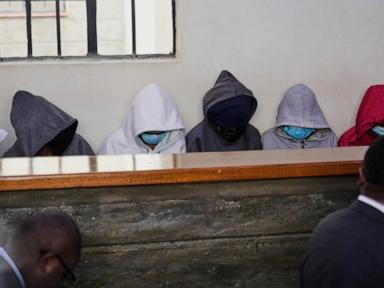
The horrific overnight fire at Utumishi Girls Academy in Gilgil, Kenya, which killed 16 female students and hospitalized 79 others, has once again exposed a systemic failure in the nation’s education and security systems. While public outrage initially centered on the arrest of eight students suspected of arson, the underlying crisis goes far deeper than individual delinquency. The tragedy at this elite institution, which is funded and managed directly by the Kenya Police Service, unmasks a disturbing pattern of structural negligence, failed safety audits, and an institutional culture where early warnings are routinely ignored.
A critical look at the incident reveals that the state was warned. Education Minister Julius Ogamba admitted that at least two teachers had prior knowledge that students were plotting an disruptive incident, yet no preventative actions were taken. When the fire broke out around 1:00 am, systemic failures converted a localized blaze into a death trap. Emergency response teams discovered that a primary exit door to the overcrowded dormitory was securely locked from the outside, blocking the primary escape route for the panicked teenagers.
The Illusion of Security at Police Run Institutions
The Utumishi Girls Academy is not an ordinary public boarding school. It is a highly regarded facility sponsored by the law enforcement apparatus, primarily catering to the daughters of police officers. This context makes the security breakdown particularly damning. The school was supposed to be a model of discipline and structural compliance. Instead, it mirrored the exact vulnerabilities found in underfunded rural schools across East Africa.
Overcrowding remains the most persistent violation of the Ministry of Education’s Safety Standards Manual. When dormitories are packed beyond capacity, the available oxygen accelerates the spread of flames, while tightly wedged bunk beds create physical bottlenecks during a midnight evacuation. At Utumishi, the congestion turned the race to the windows into a stampede. Survivors recounted seeing their classmates get jammed in narrow window frames while attempting to leap from the burning structure.
The immediate dissolution of the school’s board of management and the pending disciplinary action against the principal follow a highly predictable political script. Heads roll at the institutional level to shield higher ranking bureaucrats from accountability. A similar pattern occurred after the 2024 Hillside Endarasha Academy inferno in Nyeri County, where 21 boys perished under nearly identical circumstances. Following that disaster, the state promised a sweeping national audit of all boarding facilities. The catastrophic failure at Utumishi proves those promises were hollow.
The Psychology of Academic Arson
To understand why Kenyan students turn to arson, one must look at the historical and sociological data compiled over the last three decades. School fires are uniquely prevalent in the Kenyan secondary school ecosystem. A landmark study by the National Crime Research Centre highlighted that exam anxiety, punitive disciplinary regimes, and exceptionally long school terms create a pressure cooker environment.
Students often view the physical infrastructure of the school as an extension of an oppressive system. When communication channels between the administration and the student body break down entirely, arson becomes a perverted mechanism of protest. The issue is exacerbated by copycat behavior. Students smuggle contraband smartphones into dormitories, coordinating unrest and sharing methods across different institutions.
- 1991: St. Kizito Secondary School tragedy leaves 19 girls dead.
- 1998: Bombolulu Girls High School fire claims 26 lives.
- 2001: Kyanguli Secondary School arson kills 67 students in Machakos.
- 2017: Moi Girls School Nairobi arson results in 10 fatalities.
- 2024: Hillside Endarasha Academy blaze kills 21 boys.
- 2026: Utumishi Girls Academy fire claims 16 lives.
This timeline indicates that arson is not an anomalous criminal act; it is a recurring structural symptom. Treating these events strictly as isolated criminal investigations misses the broader institutional pathology.
The Cost of Bureaucratic Inaction
The immediate aftermath for the families is an agonizing exercise in state bureaucracy. At the Naivasha Funeral Home morgue, located nearly 30 kilometers from the school site, distraught parents have been subjected to agonizing delays. Because many of the bodies were burned beyond recognition, identification relies completely on DNA matching, a process that moves at a glacial pace within the state infrastructure.
Distraught fathers and mothers have openly accused officials of staging "sideshows" to deflect from the core issue of why their daughters were locked inside a burning room. The anger is justified. Kenya possesses an explicit Safety Standards Manual for Schools, which legally mandates outward opening doors, functional fire extinguishers every 30 feet, illuminated exit signs, and routine night drills.
Enforcement, however, is virtually nonexistent. The Ministry of Education lacks the inspectorate manpower to monitor thousands of schools nationwide, leaving compliance entirely to the discretion of individual school principals. When a principal decides to lock dormitory doors from the outside—often citing a desire to prevent students from sneaking out or to keep intruders out—they are effectively turning a sleeping area into a lockup.
Reforming a Broken Boarding System
The debate over how to secure Kenyan schools must move past reactionary arrests and superficial structural updates. Some education analysts argue for the complete abolition of the public boarding school system, a legacy inherited from the British colonial era. Transitioning to a day school model would eliminate the night management risks entirely.
However, a total shift to day schools is economically impractical for millions of pastoralist and low income families who rely on boarding institutions to provide a stable learning environment. A more realistic approach requires stripping the Ministry of Education of its self policing powers regarding safety. An independent school safety authority must be established, possessing the legal power to immediately shut down any institution that locks emergency exits or exceeds dormitory capacity limits.
Until the state treats a locked dormitory door as a criminal act of endangerment before a fire occurs, rather than a point of administrative discipline after children have died, the cycle will continue. The smoke over Gilgil will clear, the court cases against the eight arrested students will drag through the judicial system, but the structural vulnerabilities will remain waiting for the next spark.