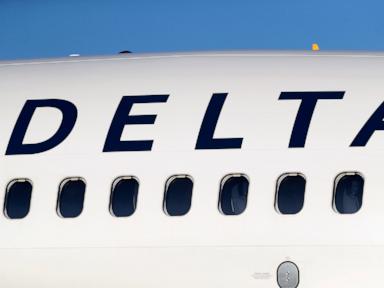
A Delta Air Lines Airbus A319 carrying 52 passengers and six crew members was struck by a consumer-grade fireworks mortar at an altitude of 200 feet while on final approach to Chicago Midway International Airport on July 4. Flight DL1076 from Atlanta was descending through the critical last seconds of flight when a heavy thump shook the frame. The pilot immediately radioed air traffic control, noting a big bang and expressing hope that it was just a mortar that went off underneath. While the aircraft landed safely without injuries, the incident exposes a massive, unaddressed vulnerability in urban aviation safety.
For decades, the aviation industry has treated holiday fireworks as a visual nuisance rather than a kinetic threat. That perspective is dangerously outdated. Modern consumer fireworks are no longer simple sparklers or low-altitude bottle rockets. They are sophisticated, high-powered explosives capable of reaching altitudes previously reserved for commercial airspace, and they are being launched by amateurs directly into the flight paths of arriving airliners.
The Illusion of a Harmless Holiday Tradition
The initial corporate and regulatory responses to the Midway strike followed a predictable script of minimization. Delta Air Lines issued a statement confirming that the flight made contact with a firework and taxied safely to the gate. The Chicago Police Department logged the event as an encounter with an unknown object causing minor paint damage. The Federal Aviation Administration promised an investigation.
This casual dismissal ignores the terrifying physics of the event. An Airbus A319 on short final approach travels at roughly 140 knots, or about 160 miles per hour. A heavy consumer fireworks mortar, like those commonly sold in neighboring Indiana and smuggled into Chicago, can weigh up to several ounces and ascend at speeds exceeding 100 miles per hour.
When these two objects collide, the relative velocity creates a high-energy impact. The fact that this specific incident resulted only in minor paint damage is a matter of luck, not a testament to safety margins. Had the mortar struck a few feet forward, it could have smashed through the cockpit windshield, temporarily blinding or permanently injuring the flight crew at the worst possible moment.
The Low Altitude Vulnerability Window
Aviation safety metrics show that the vast majority of critical accidents occur during two specific phases: takeoff and landing. During these windows, pilots have minimal altitude and time to recover from sudden emergencies.
When an aircraft is 200 feet above the ground, it is roughly 15 seconds from touchdown. The engines are throttled back, the landing gear is down, and the flaps are fully extended, creating immense aerodynamic drag. The margins for error are razor-thin.
Typical Low-Altitude Approach Geometry:
[Glide Slope Path] \
                    \  <- Aircraft at 140 knots
                     \
                      *  200 ft: Impact Point (Delta 1076)
                       \
________________________[Runway Threshold]______
At this altitude, a pilot cannot easily maneuver to avoid an obstacle. Commercial jets are not fighter planes; they cannot dodge a sudden projectile popping up from a suburban backyard. If an engine ingests a dense cardboard and chemical mortar shell during this phase, the results can be catastrophic. The sudden loss of thrust on one side at 200 feet requires immediate, flawless aerodynamic compensation to prevent a stall or a hard roll into the ground.
The Regulatory Black Hole
The air traffic control audio from the Midway incident reveals a deep sense of resignation among local controllers. Before Flight 1076 landed, the tower controller explicitly warned the crew to use caution because multiple homes near the approach end were shooting off fireworks. The controller added that the city was aware and had promised to notify the police, but noted that they did not know what law enforcement could actually do.
This exchange highlights the jurisdictional vacuum that protects illegal firework operators. The FAA controls the airspace, but it has no boots on the ground to police neighborhoods. Local police departments are responsible for enforcing municipal firework bans, but on the Fourth of July, their resources are stretched to the absolute limit.
- Jurisdictional gaps: Federal authorities regulate planes, while local police regulate backyards, leaving no single agency accountable for the intersection of the two.
- Volume issues: On holiday weekends, emergency dispatchers are overwhelmed with thousands of noise complaints, making it impossible to prioritize fires or airspace intrusions.
- Enforcement failures: Tracking down the exact backyard responsible for a single launch takes more time and personnel than local precincts can spare.
The result is an environment of functional impunity for amateur pyrotechnicians operating beneath some of the busiest air corridors in the world.
The Evolution of Consumer Explosives
To understand why this is a growing crisis, one must look at the deregulation and industrial scaling of the consumer fireworks industry over the past two decades. The fireworks available to the public today are vastly more powerful than those of the late 20th century.
High Altitude Cakes and Canisters
The popularization of reloadable canister shells and multi-shot display cakes has fundamentally changed the risk profile. These products utilize densely packed black powder lift charges to propel chemical payloads high into the air. A standard consumer mortar kit can routinely launch a shell to altitudes between 150 and 300 feet.
The Proximity Problem
Midway Airport is uniquely vulnerable to this trend due to its urban layout. Unlike newer, sprawling airports like Denver International, which are surrounded by miles of empty buffer zones, Midway is tightly hemmed in by dense residential neighborhoods.
Houses sit directly beneath the approach paths for Runways 4R, 22L, 13C, and 31C. A resident launching a legal or illegal firework from a driveway on Cicero Avenue or Central Avenue is physics-stretching close to the undercarriage of a landing aircraft. The buffer zone is virtually zero.
Shifting from Visual Nuisance to Kinetic Threat
For years, the aviation community treated holiday fireworks as a distraction. Pilots complained of temporary flash blindness or the difficulty of spotting runway lights amid a sea of colorful explosions. Flash blindness is a serious issue that can ruin night adaptation for several minutes, making it incredibly difficult to read cockpit instruments or judge height above the runway.
However, the Midway strike marks a transition from a visual distraction to a kinetic threat. The aircraft did not just see a firework; it was physically struck by one. The airframe felt a heavy impact. This changes the calculus entirely. We are no longer talking about pilots needing to wear tinted visors; we are talking about shielding aircraft from unguided projectiles launched inside an active airport environment.
The commercial aviation system relies on a philosophy of proactive risk mitigation. We do not wait for a catastrophic engine failure caused by a drone strike to ban drones near runways. Geofencing software and strict federal enforcement were implemented because the risk was recognized early. Yet, because fireworks are wrapped in the fabric of national tradition, regulators have looked the other way for decades.
The Failure of Current Mitigation Strategies
The current strategy for managing firework risks around urban airports amounts to nothing more than a shrug and a warning. Telling a pilot to use caution because people are shooting off fireworks is the aviation equivalent of telling a motorist to use caution because people are throwing rocks off an overpass. It shifts the burden of safety entirely onto the operator while doing nothing to eliminate the hazard.
The FAA possesses the legal authority to take action under federal laws regarding interference with an aircrew or reckless operation of an aircraft. However, these laws require identifying the specific perpetrator. Without active, real-time radar or acoustic tracking directed at ground launches, identifying a single individual in a neighborhood firing mortars is nearly impossible.
Necessary Moves for Urban Airspace Protection
Fixing this vulnerability requires breaking the traditional separation between federal aviation oversight and municipal law enforcement. A permanent solution cannot rely on the goodwill of holiday celebrants or the occasional police patrol.
Proposed Airspace Protection Framework:
[Backyard Launch] -> [Acoustic Sensor Triangulation] -> [Real-Time Police Dispatch]
                                                    -> [Immediate ATC Warning to Pilots]
First, cities with urban airports must establish strict, heavily enforced zero-pyrotechnic exclusion zones extending at least three miles along the final approach and departure corridors of major runways. These zones must be treated with the same legal gravity as airport security checkpoints.
Second, technology must be deployed to bridge the enforcement gap. Acoustic gunshot detection systems are already used by urban police departments to pinpoint the location of gunfire within seconds. A similar acoustic or infrared tracking system should be deployed around urban airport perimeters during major holidays to instantly locate and log illegal high-altitude firework launches, allowing police to intercept violators immediately.
The strike on Delta Flight 1076 was a final warning shot. The aviation industry cannot afford to treat the physical bombardment of commercial aircraft as an inevitable cost of doing business on a holiday weekend. Continuing to rely on sheer luck to protect hundreds of passengers on short final approach is a strategy that will eventually run out of time.