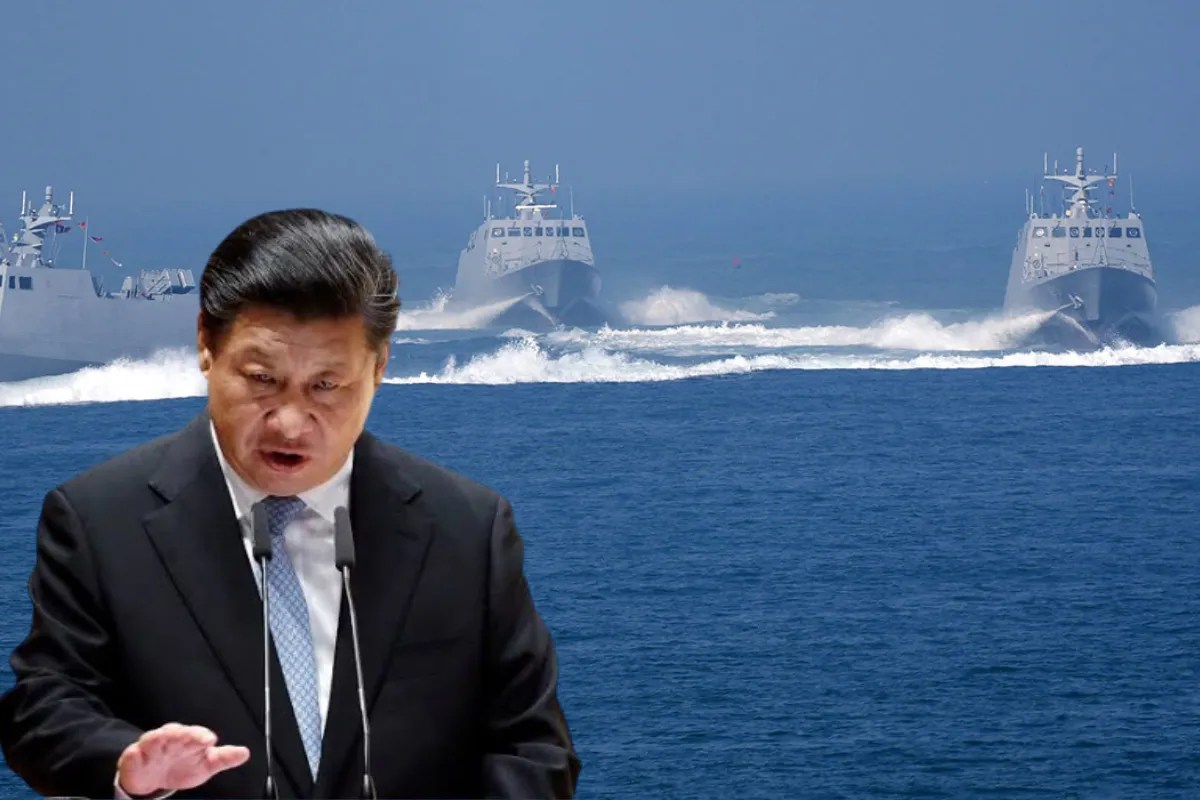
Iran's Islamic Revolutionary Guard Corps has shifted its rhetoric from regional posturing to direct threats against the British monarchy and key Royal Air Force installations. The escalation follows intelligence reports linking RAF Akrotiri in Cyprus and UK military hubs to reconnaissance and logistics operations in the Middle East. Teheran view these facilities as operational extensions of Western power. By targeting both the symbolic pinnacle of the British state and its tactical military assets, the regime in Teheran is testing London's defensive resolve. This confrontation exposes critical vulnerabilities in the United Kingdom's defense posture across Europe and the Middle East.
The escalation did not happen in a vacuum. For months, state-controlled media outlets in Teheran have run propaganda campaigns questioning the legitimacy of Western intelligence nodes operating out of Cyprus and the English countryside. The rhetoric reached a breaking point when senior commanders within the IRGC explicitly named royal institutions alongside military targets. They framed the Crown not merely as a constitutional figurehead, but as the ultimate authority sanctioning military deployments across the Persian Gulf and Levant. If you enjoyed this article, you might want to check out: this related article.
Understanding this threat requires looking past the bluster of political theater. Iranian strategic doctrine relies on asymmetric intimidation. When Teheran issues a public warning against high-profile foreign targets, it signals an internal alignment between its political apparatus and its clandestine operational arms.
The Operational Reality Behind the RAF Base Threats
Military strategists have long considered RAF Akrotiri the crown jewel of British power projection in the Eastern Mediterranean. Situated on the southern coast of Cyprus, the airfield acts as an indispensable node for surveillance, logistics, and strike capabilities throughout the region. For another angle on this development, refer to the latest update from Associated Press.
When IRGC spokesmen point their finger at Akrotiri, they are targeting a vital organ of Western security logistics. The base hosts advanced radar systems, strategic airlifters, and strike aircraft that monitor maritime corridors and regional troop movements. If an adversary disrupts Akrotiri, Western military capabilities across the region stall.
The threat goes beyond missile strikes launched from proxy bases in Syria, Iraq, or Yemen. Iranian intelligence networks in Southern Europe and the Levant have spent years building surveillance profiles on military personnel stationed in Cyprus. Unmanned aerial vehicles, long-range ballistic missiles, and covert sabotage units present a multi-layered security challenge that British defense planners can no longer treat as hypothetical.
Consider a operational scenario where a swarm of low-altitude loitering munitions targets the primary runway at Akrotiri. The physical damage might take forty-eight hours to repair. The psychological impact and operational delay, however, would ripple across every allied coalition mission in the region. That disruption is the exact outcome Teheran intends to provoke.
The domestic infrastructure of the Royal Air Force faces a parallel, if quieter, threat. Sabotage networks working under the instruction or funding of the Quds Force have repeatedly attempted to map access points, fuel pipelines, and communications infrastructure servicing RAF bases across mainland Britain. Defense intelligence officials acknowledge that counter-espionage operations around bases like RAF Fairford and RAF Brize Norton have intensified sharply over the past eighteen months.
Why the Monarchy Became an Iranian Target
Threatening a head of state is a drastic diplomatic step. Threatening a hereditary monarchy deeply entwined with British national identity is a calculated move designed to exploit Western political sensitivities.
The IRGC's ideological framework views foreign sovereign heads of state as legitimate political targets. By linking King Charles III to defense operations, Iranian state strategists attempt to draw a line between British constitutional tradition and battlefield command decisions. In Teheran's media narratives, the monarchy is depicted as an active war council rather than a ceremonial institution.
This tactic serves two distinct internal purposes within Iran.
First, it satisfies hardline elements within the regime who demand aggressive posturing against Western powers. Showing defiance against ancient Western institutions provides cheap political capital for an Iranian government struggling with domestic economic decay and widespread popular dissent.
Second, it attempts to manipulate public opinion within the United Kingdom. By suggesting that royal safety and domestic security are being put at risk due to foreign military engagements, Teheran hopes to spark public opposition against UK military presence in the Middle East.
The strategy relies on fear. Yet, it reveals a fundamental misunderstanding of British political culture. External threats against the Crown historically unit public sentiment behind national defense institutions rather than fracturing it.
The Web of Proxies and Covert Operations
The IRGC rarely acts alone when staging operations outside Iranian borders. Its power lies in a distributed network of proxy forces, ideological sympathizers, and criminal syndicates operating across Western Europe.
In the United Kingdom, intelligence agencies have disrupted numerous plots linked directly to Iranian intelligence handlers. These operations range from targeted surveillance of dissidents to direct preparation for physical attacks against infrastructure.
The mechanism of these operations follows a consistent pattern.
An intelligence officer based in Teheran or operating under diplomatic cover in a third country recruits local operatives. These operatives are often low-level criminals or ideological zealots who carry out reconnaissance without understanding the full scope of the plot.
They collect data on flight schedules at military airfields, document security patrol rotations, and map surrounding transport links.
In several documented cases, Iranian networks hired organized crime groups in Western Europe to conduct arson attacks and surveillance on strategic targets. Using criminal intermediaries gives Teheran plausible deniability while maintaining operational momentum.
Security services in London, Paris, and Berlin now treat Iranian covert activity as a premier state-threat priority, rivaling the counter-espionage efforts directed against Moscow and Beijing.
| Location | Threat Vector | Primary Target Type | Operational Goal |
|---|---|---|---|
| RAF Akrotiri (Cyprus) | Loitering Munitions / Missile Strike | Military Infrastructure | Disrupt surveillance and regional logistics |
| Mainland UK Airfields | Sabotage / Cyber Espionage | Fuel Lines & Communications | Impair rapid deployment capability |
| Diplomatic & Royal Sites | Clandestine Surveillance | Symbolic Heads of State | Instill psychological pressure and public fear |
| Regional Shipping Lanes | Naval Mines / UAV Attacks | Merchant and Defense Vessels | Constrain maritime freedom of navigation |
Countering the Asymmetric Threat Matrix
Defending against a state sponsor of terrorism that utilizes both advanced weaponry and street-level criminal networks requires an overhaul of traditional security protocols.
British military installations have begun hardening physical perimeter defenses and installing specialized counter-drone technology. Air base security at Akrotiri and within mainland Britain now includes advanced electronic warfare suites designed to jam communication frequencies used by commercial and military-grade drones.
Protecting high-profile individuals and royal assets demands equal vigilance. The Metropolitan Police Counter Terrorism Command, alongside MI5, has increased resources allocated to tracking foreign intelligence operatives inside the country.
The operational focus has shifted from reactive investigation to aggressive disruption.
When intelligence suggests a foreign agent is establishing a surveillance node near a sensitive site, authorities act immediately to neutralize the network before actionable plans materialize.
This approach requires tight coordination with European partners. Iranian procurement and intelligence networks cross borders fluidly, utilizing financial centers in Switzerland, logistics hubs in Germany, and safe houses in Eastern Europe. Stopping them requires continuous real-time intelligence sharing.
Cyber defense represents another critical battleground. Iranian state-sponsored hacking groups have repeatedly tried to breach networks belonging to the Ministry of Defence and defense contractors servicing RAF facilities.
These cyber intrusions seek to steal technical schematics, intercept operational communications, and plant malware capable of disabling air traffic control systems during a crisis.
Strategic Fallouts and the Future of UK Defense Doctrine
The IRGC’s open threats signal a dangerous turning point in state-on-state confrontation. The boundary between regional skirmishes and direct threats against Western homelands has eroded completely.
British defense ministers face difficult decisions regarding force posture.
If the UK concentrates its military assets solely on home defense, it risks ceding strategic initiative in the Middle East and leaving vital maritime trade routes vulnerable to proxy attacks. Conversely, maintaining a forward-deployed posture in places like Cyprus requires diverting significant resources toward perimeter protection and intelligence defense.
The financial cost of maintaining this elevated defense posture is immense. Upgrading base infrastructure, deploying interceptor batteries, and dedicating intelligence assets to counter-espionage demands funding that is already stretched thin across government departments.
Teheran understands this financial arithmetic. The Iranian regime knows that simply issuing threats forces Western powers to spend millions of pounds on defensive upgrades, even if an actual attack never materializes.
This tactic represents the essence of modern asymmetric warfare. It forces a technologically superior adversary to consume vast resources defending against low-cost, high-impact potential threats.
The security apparatus in London is adapting to this reality. The response requires a combination of military deterrence, offensive cyber capabilities, and relentless pressure on financial networks that fund IRGC operations worldwide.
The warning issued to the British monarchy and the Royal Air Force is not an isolated incident of diplomatic noise. It is an explicit declaration of intent from a regime that views global stability as an obstacle to its regional ambitions.
Navigating this reality demands absolute clarity from defense leaders. The choice is no longer between escalation and peace, but between active deterrence and vulnerable exposure. Every airfield perimeter, every digital server, and every security detail protecting state figures forms a line of defense against a calculated strategy aimed at destabilizing the United Kingdom from within and without.