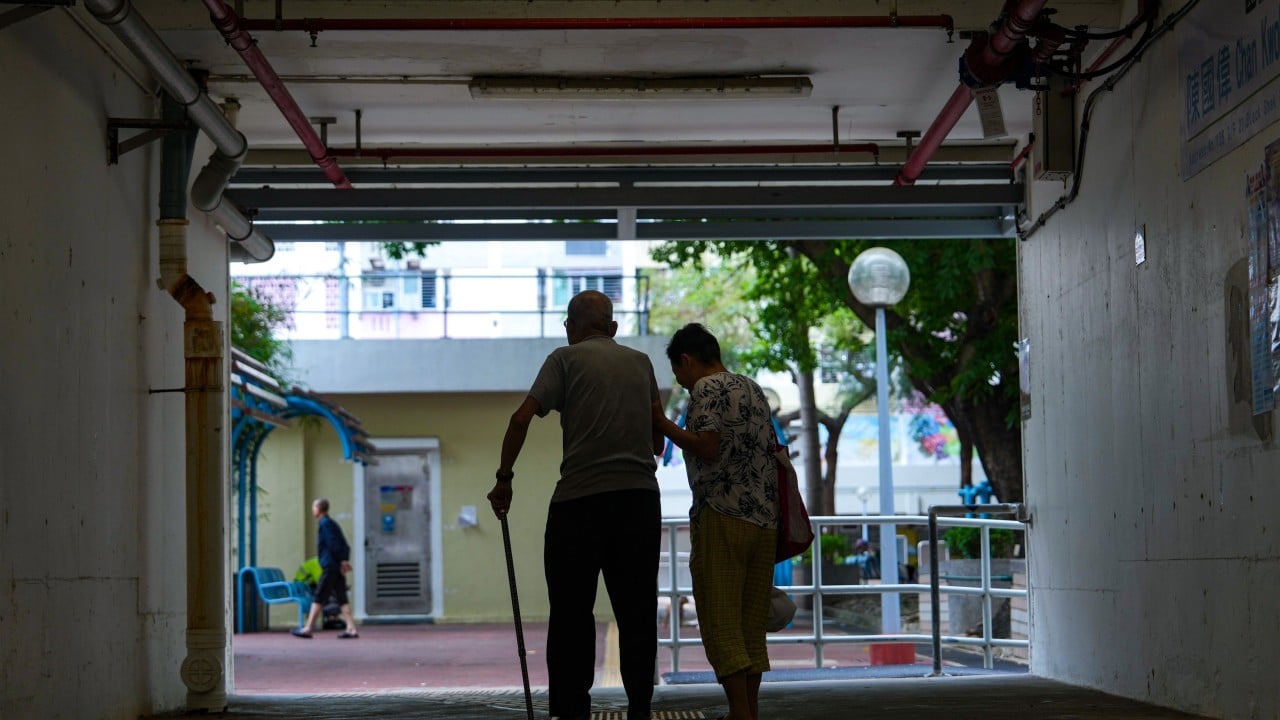
Hong Kong is once again scrambling to review its elderly welfare system after a recent tragedy exposed deep fissures in the city's social safety net. Bureaucrats are fast-tracking a reassessment of age thresholds for the Comprehensive Social Security Assistance (CSSA) scheme and related old-age allowances. However, shifting an arbitrary age bracket from 65 to 60, or vice versa, misses the real crisis. The system is failing because it treats an increasingly complex demographic crisis as a simple budgeting exercise, forcing the city's most vulnerable elderly residents to choose between systemic poverty and manual labor well into their twilight years.
To understand how Hong Kong arrived at this point, one must look past the immediate political damage control. The current framework is built on an outdated economic model that assumes families can indefinitely shoulder the burden of elder care. They cannot. Don't forget to check out our previous coverage on this related article.
The Illusion of Social Security
The CSSA scheme is designed as a safety net of last resort. Yet for tens of thousands of elderly residents who possess no generational wealth or corporate pensions, it is their only lifeline. When the government previously adjusted the eligible age for elderly CSSA from 60 to 65, it did so under the guise of encouraging employment among a healthier, longer-living population.
The reality on the ground was far uglier. To read more about the background here, The Washington Post offers an informative summary.
Older citizens were not suddenly swept up by eager employers looking for decades of experience. Instead, they were pushed into precarious, low-wage, physically punishing roles. We are talking about octogenarians sweeping streets in oppressive humidity, or collecting cardboard for pennies a kilogram. The cash payout difference between an "able-bodied adult" claim and an "elderly" claim under the CSSA is not just a statistical variance. It is the difference between eating three balanced meals a day and skipping medication to pay rent on a subdivided flat.
The structural flaw is the rigid application of asset tests. Hong Kong's welfare system punishes the modest saver. An elderly person possessing a small nest egg that exceeds the ultra-low asset limit is barred from receiving meaningful support. They are forced to exhaust their meager life savings before the state steps in. By the time they qualify for assistance, they are already in a state of chronic deprivation.
The Family Support Myth
Policymakers love to invoke traditional Confucian values of filial piety as a cornerstone of social stability. It is a convenient narrative. It shifts the financial and moral burden from the public ledger to the private household.
But this economic reliance on the nuclear family has collapsed under the weight of Hong Kong’s housing market and shifting demographics.
+------------------------------------------+
|  The Crushing Reality of Elder Care      |
+------------------------------------------+
| * Skyrocketing costs of medical care     |
| * Subdivided flats unfit for mobility    |
| * The "sandwich generation" cash crunch  |
+------------------------------------------+
The "sandwich generation"—adults in their 30s and 40s who must simultaneously support their own children and their aging parents—is stretched to a breaking point. With the median property price remaining astronomically high relative to local wages, young families simply do not have the physical space or the disposable income to house and care for infirm parents.
When a tragedy occurs, the public reaction follows a predictable script. There is widespread outrage. Government officials express deep condolences and promise a comprehensive review. Bureaucrats hold press conferences highlighting the millions spent on community care vouchers.
What they fail to mention is the bureaucratic gridlock required to actually use those vouchers. The waiting list for subsidized residential care homes stretches on for years. For many, the golden years are spent waiting in a queue that only moves when someone else passes away.
A System Designed for Attrition
The administration of elderly welfare in Hong Kong operates on a philosophy of deterrence rather than dignity. The application processes are notoriously opaque, requiring a mountain of paperwork that can intimidate even highly literate applicants. For an isolated elderly person suffering from early-stage cognitive decline or physical frailty, navigating this system without a dedicated social worker is practically impossible.
The Problem with Discretionary Power
Frontline welfare offices are frequently accused of acting as gatekeepers whose primary goal is to minimize expenditure. This creates a adversarial relationship between the citizen and the state. Instead of reaching out proactively to high-risk individuals—such as elderly couples living alone or those with chronic mental health issues—the system expects the most desperate to actively self-identify and advocate for themselves.
The Digital Divide Exacerbates Isolation
As public services increasingly migrate online under the banner of smart-city initiatives, the elderly are being systematically left behind. A significant percentage of those aged 70 and above do not own smartphones or possess the digital literacy required to navigate government portals. When physical branches close or reduce hours, these individuals lose their primary point of contact with the social safety net.
The Flawed Economic Counter-Argument
Opponents of expanding elderly welfare or lowering the age thresholds invariably raise the specter of fiscal irresponsibility. They argue that with a rapidly aging population and a shrinking workforce, Hong Kong cannot afford an unconditional, generous pension system without draining its fiscal reserves or raising its famously low tax rates.
This is a false dichotomy.
The economic cost of neglect is far higher than the cost of proactive support. When an elderly person falls due to poor living conditions, or suffers a preventable medical emergency because they could not afford private care, the financial burden falls directly on the heavily subsidized public hospital system.
A prolonged stay in an acute care hospital bed costs the taxpayer significantly more than providing a dignified monthly allowance and adequate community nursing care. The city is currently paying a premium to manage crises at the back end rather than investing in prevention at the front end.
Real Solutions Require Structural Shifts
Tinkering with the eligibility age by a few years is a cosmetic fix for a terminal disease. If the administration wants to prevent the next preventable tragedy, it must abandon the piecemeal approach that has characterized social policy for decades.
First, the asset limits for the Old Age Living Allowance and the CSSA must be dramatically overhauled. They need to reflect the actual cost of living in one of the world's most expensive cities, taking into account inflation and the true cost of private medical treatments that the public sector cannot provide in a timely manner.
Second, the city needs an integrated, neighborhood-level outreach strategy. Social workers should not be chained to desks processing forms. They must be funded and empowered to go door-to-door in older districts like Sham Shui Po, Kwun Tong, and Wong Tai Sin to find the hidden elderly who have slipped through the cracks.
The measure of a society's sophistication is not its skyline or its fiscal reserves. It is how it treats those who built that wealth once they can no longer work. Hong Kong possesses the financial resources to eliminate elderly poverty tomorrow. What it lacks is the political will to admit that its current social welfare philosophy is fundamentally broken.