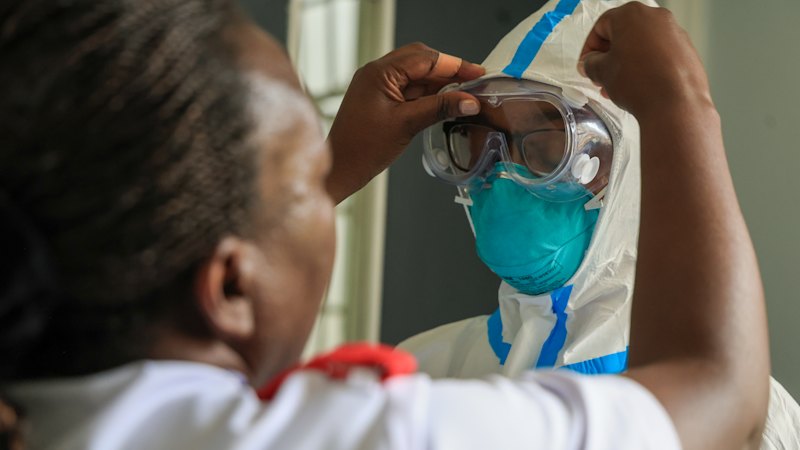
The death of a laboratory worker handling pathogen research at a specialized facility in Russia triggered immediate, knee-jerk panic across international intelligence wires, yet high-level administration officials, including U.S. President Donald Trump, quickly moved to quell speculation of an active biological weapon program. Behind closed doors, however, the incident exposes a far more pervasive vulnerability: the chronic opacity of high-containment biological facilities and the fragile protocols governing historical pathogen research. When a researcher perishes under ambiguous medical circumstances tied to plague containment, the absence of immediate, transparent data from Moscow creates a vacuum easily filled by worst-case assumptions.
This situation is not occurring in a vacuum. Decades of institutional suspicion between Western intelligence agencies and state-run laboratories in Eastern Europe mean that any unusual mortality event involving dangerous biological agents immediately triggers a geopolitical crisis. State-level denials are treated with predictable skepticism. When Washington remarks that it does not believe a rogue biological weapon is actively being deployed, that statement carries careful nuance. It distinguishes between an intentional act of aggression and what is far more likely: an accidental exposure, a containment failure, or standard research protocols gone catastrophically wrong behind closed borders. If you liked this post, you might want to read: this related article.
The Anatomy of High-Containment Risks
To understand why a single laboratory death commands the attention of global heads of state, one must examine the realities of Biosafety Level 4 operations. Yersinia pestis, the causative agent of plague, exists in natural reservoirs across the globe, but handling aerosolized or genetically modified variants requires specialized containment infrastructure. In a hypothetical scenario involving advanced microbiological research, even a microscopic failure in negative-pressure seals or personal protective equipment can result in rapid inhalation exposure. Pneumonic plague, unlike its bubonic counterpart, transmits directly from person to person via respiratory droplets, turning a localized laboratory accident into an immediate public health hazard before symptoms even manifest.
Yet, the public discourse routinely leaps from laboratory safety lapses to deliberate bioweapons development. This sensationalist leap obscures the mundane, systemic decay that plagues many older research facilities worldwide. Aging infrastructure, supply chain hurdles for specialized filtration units, and brain drain in scientific sectors often create environments ripe for operational errors. For another look on this story, refer to the recent update from Mayo Clinic.
The Diplomacy of Containment
When international bodies like the World Health Organization press for transparency, they are rarely met with open doors. Instead, domestic political pressures inside Russia dictate a defensive posture. Denying external oversight and downplaying the severity of an internal infection is a reflex honed by decades of bureaucratic self-preservation. Moscow's insistence that the situation is completely under control runs headfirst into the demands of Western capitals seeking independent verification.
The political calculus for the White House involves balancing deterrence with de-escalation. Publicly accusing a nuclear-armed state of developing illicit biological agents based on preliminary or ambiguous medical reports risks a severe diplomatic spiral. By stating that leadership does not currently suspect a bio-weapon, the administration attempts to keep channels of communication open while simultaneously demanding verifiable data through diplomatic backchannels.
What the Data Actually Tells Us
Strip away the geopolitical posturing, and the core issue is global biosecurity oversight. Modern biotechnology has advanced to a point where the boundaries between defensive research and offensive capability are dangerously blurred. When oversight mechanisms rely entirely on the voluntary transparency of sovereign states, compliance becomes an illusion.
The mortality of a single laboratory technician serves as a harsh diagnostic tool for the health of global arms control agreements and biological safety pacts. If international watchdogs cannot secure transparent reporting on a localized containment failure, they have zero visibility into more sophisticated programs. The reassurance that an outbreak is not a weapon offers cold comfort when the underlying architecture of global biological transparency remains fundamentally broken.
The risk does not stem from a cartoonish superweapon crafted in a secret bunker. It arises from the quiet, grinding erosion of safety culture in facilities handling ancient killers, insulated by state secrecy and immune to external audit.
Trump downplays bioweapon link to Russia plague death
This video report provides additional context on international reactions and diplomatic statements regarding the safety assurances provided after the Russian lab incident.