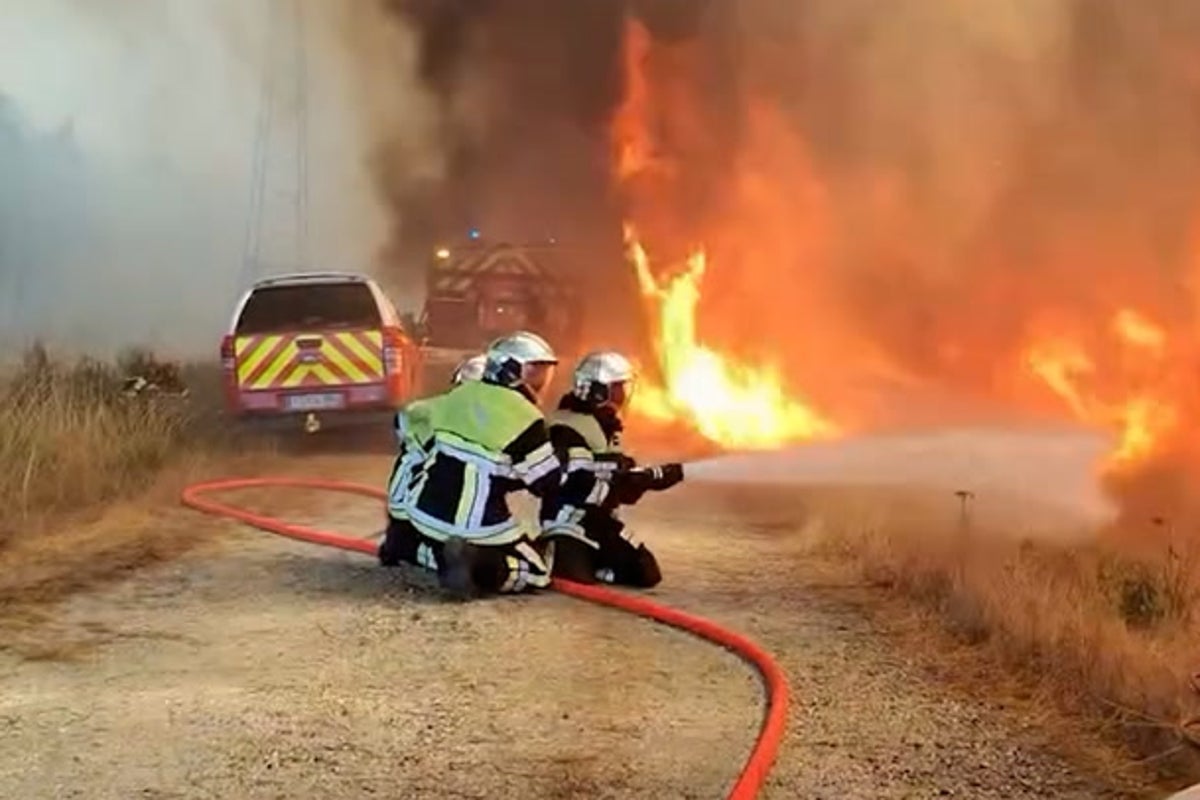
Smoke chokes the lens. Orange flames roar against a pitch-black canopy of pines. You can hear the ragged, heavy breathing of a man fighting for a forest he calls home.
Most people watch climate disasters from a safe distance through polished news broadcasts. They see distant red smudges on a satellite map or broad aerial shots of smoke plumes drifting across Europe. That detachment ends the second you press play on a helmet-mounted camera worn by a frontline firefighter battling intense European blazes.
Helmet camera footage from French wildfire operations strips away the clinical reporting of disaster statistics. It throws you straight into the blinding heat, the blinding ash, and the chaotic reality of modern firefighting. When thousands of acres of parched timber erupt into towering wall-of-fire scenarios, traditional defense tactics fail. You are left watching professionals make split-second survival choices while tons of burning timber collapse around them.
Why Standard Firefighting Is Failing in Modern Europe
Europe is burning differently now. The historical playbook for seasonal burns is entirely broken.
For decades, forestry departments relied on predictable seasonal patterns. Summers brought heat, minor brush fires broke out, local crews contained them with water trucks and basic hand tools, and everyone went home. Those days are gone. Rising baseline temperatures and prolonged droughts turn entire regions into tinderboxes.
When you watch footage from the southern French countryside, the speed of the destruction shocks the system. Fire doesn't just creep along the forest floor anymore. It crowns. It leaps across highways and fire breaks like an invisible predator riding high-velocity winds.
Crews face radiant heat that melts the rubber seals on their gear before the flames even touch them. Standard fire engines cannot go where these fires strike. Steep ravines, dense undergrowth, and dry terrain force firefighters to abandon heavy machinery and rely entirely on portable pumps, handheld line-cutting tools, and sheer grit.
The physical toll is staggering. Carrying forty pounds of heavy gear while temperatures push past forty degrees Celsius tests human limits. The helmet camera exposes the reality behind the uniform. You see sweat-drenched faces, soot-caked skin, and eyes wide with adrenaline. There is no room for hesitation. A single wrong turn down a narrow timber road means getting trapped by a shifting wind vector.
The Psychological Weight Behind the Lens
We talk endlessly about acreage burned and structures lost. We rarely talk about the mental exhaustion carried by the crews standing between the flames and civilian homes.
When a firefighter clicks record on a helmet mount, they aren't trying to capture viral content. They are documenting conditions for tactical debriefs, safety reviews, and operational training. Yet, sharing these videos with the public reveals a deeper, unspoken truth. It exposes the sheer isolation of the front line.
Helicopters and water-dropping Canadair planes roar overhead, offering temporary relief through aquatic bombs dropped from the sky. But once those planes circle back to refill reservoirs, the silence returns, punctuated only by the terrifying crackle of burning brush. The ground crews are on their own.
You hear the shouts over the radio static. You hear instructions barked over the deafening roar of combustion. Every second requires absolute trust in your squadmates. If your engine driver misjudges the wind shift, you pay the ultimate price. This hyper-awareness transforms how these professionals view their environment. Every tree line looks like a potential trap. Every gust of wind feels personal.
What Real Preparation Looks Like on the Ground
If you live anywhere near a vulnerable woodland interface, watching these videos should change your habits immediately. You cannot wait for municipal evacuation orders when modern crown fires move faster than cars.
Local authorities across southern France now emphasize proactive property defense long before peak dry season arrives. Clearing brush away from exterior walls, installing non-flammable roofing materials, and creating defensible space aren't optional recommendations anymore. They are survival necessities.
Emergency services urge residents to adopt specific protocols:
- Maintain a minimum clearance zone of fifty meters around rural properties by removing dead timber and dry underbrush.
- Keep emergency go-bags packed with essential documents, medical supplies, and filtration masks ready by the door during high-risk months.
- Identify multiple evacuation routes that do not rely solely on narrow valley roads which can easily bottleneck or become blocked by falling trees.
Firefighters do not want to be heroes in a tragedy. They want prevention to do the heavy lifting so they don't have to risk their lives running into blinding walls of smoke.
The next time you see a brief clip of a European forest fire on your phone, remember what sits behind that blurred lens. It's not just a spectacle for your evening feed. It's a stark warning from a changing world, recorded by someone who stepped directly into the fire so others could live. Take those warnings seriously, clear your property lines, and respect the absolute fury of a landscape pushed past its breaking point.