The federal government is deploying homeland security agents into state electoral machinery on an unprecedented scale, turning routine ballot administration into a high-stakes federal enforcement operation.
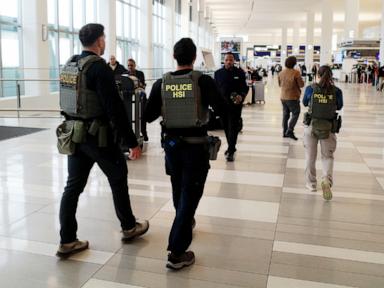
When the Department of Homeland Security directs Homeland Security Investigations to open active voter fraud probes across nine states ahead of the midterm elections, the ripple effects extend far beyond normal bureaucratic friction. Field offices from Washington state to New York have been instructed to interview witnesses and build prosecutorial packages targeting non-citizens on state voter rolls. This mobilization brings federal law enforcement units—typically tasked with combating transnational drug cartels, human trafficking, and financial crimes—directly into the architecture of local voting administration.
State election officials learned about the sweeping federal directives through media reports rather than direct administrative channels, a communication breakdown that highlights a deep institutional disconnect between Washington and local election boards. Washington Secretary of State Steve Hobbs publicly characterized the federal sweep as an expensive exercise that strains local resources while solving a problem experts maintain is statistically negligible. Historic voting data across multiple cycles shows that unauthorized voting by non-citizens occurs at an exceptionally low rate, making the sudden reallocation of hundreds of federal agents a stark shift in national law enforcement priorities.
The administrative mechanism driving this campaign relies heavily on matching state voter registration files against federal databases like the Systematic Alien Verification for Entitlements system. While federal officials point to preliminary database flags indicating thousands of potential discrepancies on state rolls, internal discrepancies tell a more complex story. In Nevada, for example, internal agency numbers shared confidentially with state administrators revealed a fraction of the total figures cited in public announcements. Analysts tracking these discrepancies argue that database flags frequently catch administrative ghosts, including individuals who updated their legal status or whose records simply failed to sync cleanly between disparate bureaucratic systems, rather than active illegal voters.
Simultaneously, parallel initiatives within the federal postal apparatus have introduced severe operational vulnerabilities into the handling of absentee ballots. A newly rushed screening system designed to check incoming mail ballots against centralized federal lists before delivery has raised alarms among congressional investigators and postal workers. According to whistleblower disclosures submitted to congressional committees, the technical infrastructure behind this screening mechanism was assembled in a matter of weeks rather than the year-long testing cycle standard for critical federal software. Engineers working on the project warned that the system operates on rigid validation thresholds where a single mismatched data point could result in the rejection of entire batches containing tens of thousands of legitimate votes.
Federal courts continue to grapple with overlapping lawsuits challenging these executive actions, creating a chaotic legal landscape for local clerks who must administer elections while compliance targets shift by the week. Civil rights organizations argue that aggregating massive pools of localized voter data at the federal level crosses a dangerous constitutional line, transforming decentralized state databases into targets for permanent government surveillance. Once these large-scale data-sharing pipelines and investigative frameworks are established between federal law enforcement and state election rolls, dismantling them proves extraordinarily difficult regardless of political shifts.
The friction between national security agencies and local election administrators exposes a fundamental tension over who controls the mechanics of American democracy. As federal investigative surges press forward against tight calendar deadlines, local jurisdictions are left absorbing the administrative fallout while preparing to defend the integrity of their vote counts against mounting federal intervention.